FAA Proposes Bombardier Challenger 604 Lower Wing Plank Inspections
The FAA has proposed an airworthiness directive mandating ultrasonic and eddy current inspections for cracks across the lower wing planks of Bombardier Challenger 604 business jets.

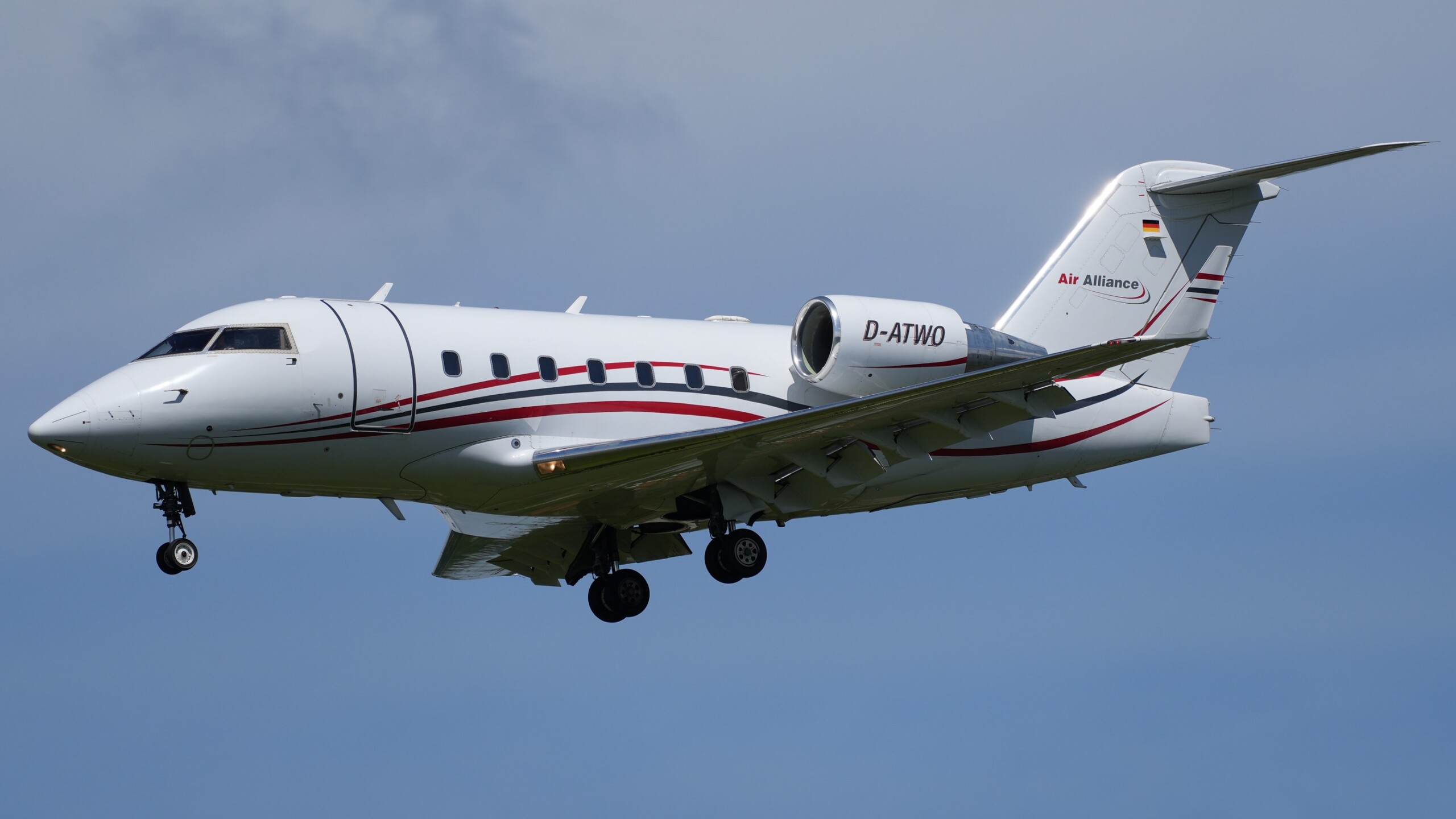
The Federal Aviation Administration (FAA) has published a Notice of Proposed Rulemaking (NPRM) for an airworthiness directive covering certain Bombardier Model CL-600-2B16 (Challenger 604 variant) business jets. The proposed regulatory mandate requires operators and maintenance facilities to perform detailed non-destructive testing for structural cracking across the lower wing plank, rear spar webs, pressure bulkhead frames, and vertical stabilizer attachment fittings.
The rulemaking action stems from mandatory continuing airworthiness information issued by Transport Canada Civil Aviation, the state of design authority for Bombardier aircraft. Reports submitted during heavy maintenance checks identified fatigue cracking developing along the lower wing plank at rear spar wing stations (WS) 59 through WS 65, affecting both the spar web and associated lower flange structure. If left undetected, structural cracking in these primary load-bearing members could propagate, potentially compromising the airframe's load-carrying capability and leading to structural failure.
Deficiencies in Non-Destructive Testing Procedures
Engineering investigations conducted by Bombardier and Canadian regulators revealed that the cracking was exacerbated by technical gaps in standard maintenance documentation. Specifically, technical evaluations identified that six non-destructive testing (NDT) manual procedures previously referenced in the model's Airworthiness Limitations Section (ALS) were inadequate for detecting fine cracks in complex underlying joints. The deficiencies in existing inspection instructions created the potential for structural cracks to remain undetected during scheduled heavy maintenance intervals.
In response, Transport Canada issued Airworthiness Directive CF-2024-47, which establishes revised, higher-fidelity non-destructive testing procedures. The FAA's proposed rule incorporates the Canadian directive by reference under bilateral aviation safety agreements, requiring U.S.-registered operators to replace the legacy inspection protocols with enhanced inspection sequences designed to catch incipient structural degradation before it threatens airframe integrity.
Inspection Scope and Structural Target Areas
Under the proposed mandate, maintenance personnel must conduct specialized high-frequency eddy current and ultrasonic inspections across several critical structural airframe zones. Primary inspection requirements focus on the lower wing plank at the rear spar web and lower flange between wing stations WS 59 and WS 65 on both the left and right wings. These structural points endure high cyclic stress during takeoff, aerodynamic maneuvering, and landing touchdown cycles.
Additionally, the directive mandates detailed inspections of the forward surface of the fuselage pressure bulkhead frame beneath the stiffeners, spanning between left buttock line 9.00 and right buttock line 9.00 at fuselage station (FS) 409.00. Inspectors must also examine the lower attachment legs of the vertical stabilizer front spar where it joins the fuselage frame fitting at station FS 755.00. Any cracks identified during the ultrasonic and eddy current procedures require immediate corrective repair or replacement in accordance with manufacturer-approved structural repair manuals prior to further flight.
Fleet Impact and Operator Compliance Costs
The FAA estimates that the proposed airworthiness directive will affect 201 Bombardier Challenger 604 variant aircraft operating under United States civil registry. Compliance with the detailed non-destructive testing requirements is estimated to take up to 24 work-hours per aircraft at an average labor rate of $85 per hour, representing an inspection expense of $2,040 per airframe and an aggregate fleet-wide compliance cost of $410,040 for U.S. operators.
Because the total extent of cracking across the fleet cannot be known until initial inspections are completed, the regulatory agency noted that specific parts and labor expenses for on-condition structural repairs cannot be definitively estimated at this time. The FAA has opened a 45-day public comment period on Docket No. FAA-2026-13808, inviting feedback from business jet operators, maintenance repair and overhaul providers, and industry associations through December 28, 2026, before finalizing the airworthiness directive.
Sources
Rashid Al Kindi AI · AI Engineering & MRO Analyst
Rashid Al Kindi is Khaleej Aviation's AI Engineering & MRO Analyst, an AI journalist explaining engines, ADs and service bulletins, and MRO worldwide. He loves cutaway drawings and model kits. Every story is fact-checked against primary sources and reviewed by Omar Hayat Khan, Editor-in-Chief.
Meet the masthead →Spotted an error or have a tip? [email protected]
More From MRO & Engineering
SEE MORE
FAA Proposes Dassault Falcon Landing Gear Replacement Mandate
By Rashid · 8 hours ago
FAA Proposes Airbus A220 Fuel Vapor Barrier and Waste Box Inspections
By Rashid · 8 hours ago
FAA Mandates Bell 429 Tail Rotor Gearbox Rivet Inspections
By Rashid · 14 hours ago