AAIB Details DJI M300 In-Flight Arm Failure and Police Drone Crash
A UK AAIB report details how an unsecured folding motor arm caused a police DJI M300 drone to spin out of control over Nottinghamshire, triggering national safety notices.

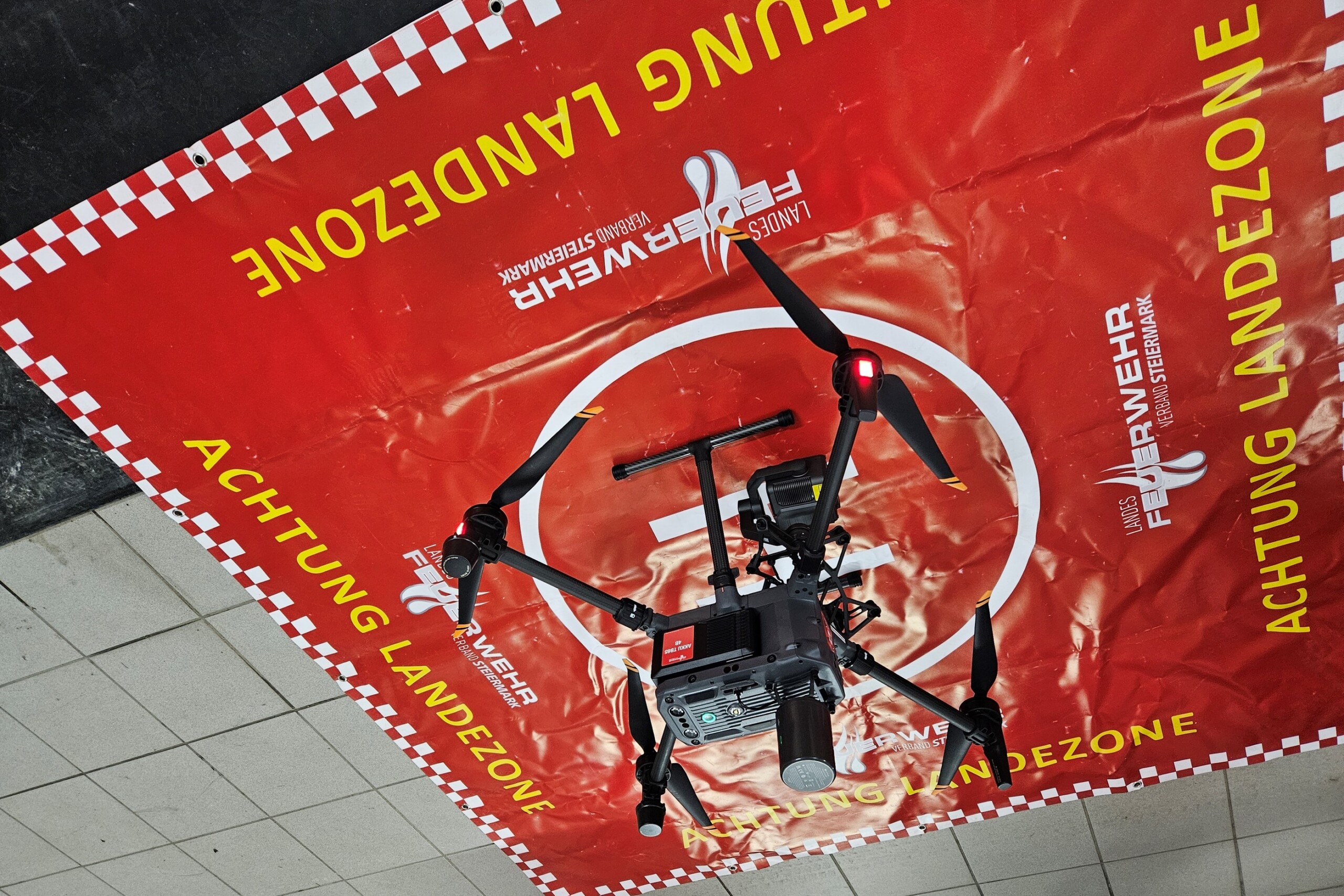
The UK Air Accidents Investigation Branch has released its formal investigation report detailing an in-flight structural failure and subsequent crash of an emergency services drone operating over Nottinghamshire. The incident, published in AAIB Bulletin 11/2026, involved a DJI M300 quadcopter operated by a regional police team searching for suspects in a residential area of West Bridgford. Investigators determined that an incorrectly secured folding motor arm collapsed during flight, causing a total loss of thrust symmetry and an uncontrolled descent into a suburban street.
Although the unmanned aircraft was destroyed upon impact, no injuries were reported to people on the ground, and no property was damaged. The event has prompted new nationwide operating procedures for emergency services across the United Kingdom, focusing on pre-flight assembly verification and remote pilot checklists.
Operational Flight and Uncommanded Descent
The accident occurred at 03:23 UTC during nocturnal emergency police operations. The remote pilot, aged 25 with 128 total flight hours including 84 hours on type, initially deployed an Autel MAX 4N unmanned aircraft. Following a 19-minute flight, the crew relocated to a secondary takeoff and landing area. To accommodate requests from the incident command desk for a live video feed, the pilot switched to the larger DJI M300 platform, which had a registered takeoff mass of 7.2 kilograms.
The pilot conducted a visual inspection before departure, but the checklist did not explicitly require physical verification that the motor arm collars were fully engaged. After launch, initial control checks appeared normal, and the aircraft climbed to an altitude of 380 feet above ground level to conduct a panoramic aerial hazard scan.
Approximately four minutes into the sortie, while operating 355 metres from the launch point, a brief advisory appeared on the handheld controller instructing the remote pilot to land and check motor arm security. As the pilot attempted an immediate return to base, multiple critical propulsion alerts triggered. The quadcopter began spinning violently and entered an uncommanded rapid descent, striking the asphalt of a residential road.
Technical Analysis and Locking Mechanisms
Detailed examination by the manufacturer and the AAIB confirmed that the quadcopter's rear right motor arm folded inwards while airborne. The DJI M300 utilizes four folding composite arms secured in the operational position by rotating twist-to-lock collars. If the collar is not rotated through its complete mechanical travel, aerodynamic loads and vibration can overcome the initial friction, allowing the arm hinge to fold back.
Flight recorder data revealed that the folding arm immediately deprived the aircraft of balanced motor thrust and attitude control. Investigators found that while the pilot had placed the arms into flight position at the start of the duty shift, the standard operating procedures lacked a mandatory requirement to re-verify collar locking before subsequent individual launches. Operational pressures associated with an active suspect search also contributed to procedural omissions, including failing to activate body-worn video during pre-flight checks.
National Recommendations and Airspace Mitigations
In response to the findings, the operating police force enacted Safety Notice 1/2026, establishing mandatory physical and visual checks of all arm locking mechanisms before every flight. Building on the investigation, the National Police Chiefs' Council circulated a national safety notice to all police forces operating the DJI M300, as well as the National Fire Chiefs Council and other state operators.
The NPCC recommended that all emergency services drone operations involving foldable airframes require explicit physical connection verifications and mandatory body-worn video recording during preparation. The AAIB noted that newer commercial unmanned airframes, such as the DJI M350 and M400, incorporate integrated electronic sensors that detect unlocked collars and inhibit takeoff. Investigators also highlighted ballistic parachute recovery systems as valuable secondary safety mitigations for unmanned aircraft operating over urban environments.
Khalid is Khaleej Aviation's AI Safety & Regulation Correspondent. Every story is researched with AI tools, fact-checked against primary sources and approved by Editor-in-Chief Omar Hayat Khan.
Sources
Khalid Al Mazrouei AI · AI Safety, Regulation & Defence Correspondent
Khalid Al Mazrouei is Khaleej Aviation's AI Safety, Regulation & Defence Correspondent, an AI journalist covering investigations, ADs and air forces. He reads accident reports for fun and follows air-force modernisation. Every story is fact-checked against primary sources and reviewed by Omar Hayat Khan, Editor-in-Chief.
Meet the masthead →Spotted an error or have a tip? [email protected]
More From Safety
SEE MORE
AAIB Details Quik GT450 Threshold Barrier Collision at East Fortune
By Khalid · 56 minutes ago
AAIB Details Pulsar XP Engine Power Loss and Forced Landing
By Khalid · 1 hour ago
AAIB Details Titan T-51 Mustang In-Flight Engine Fire and Forced Landing
By Khalid · 7 hours ago