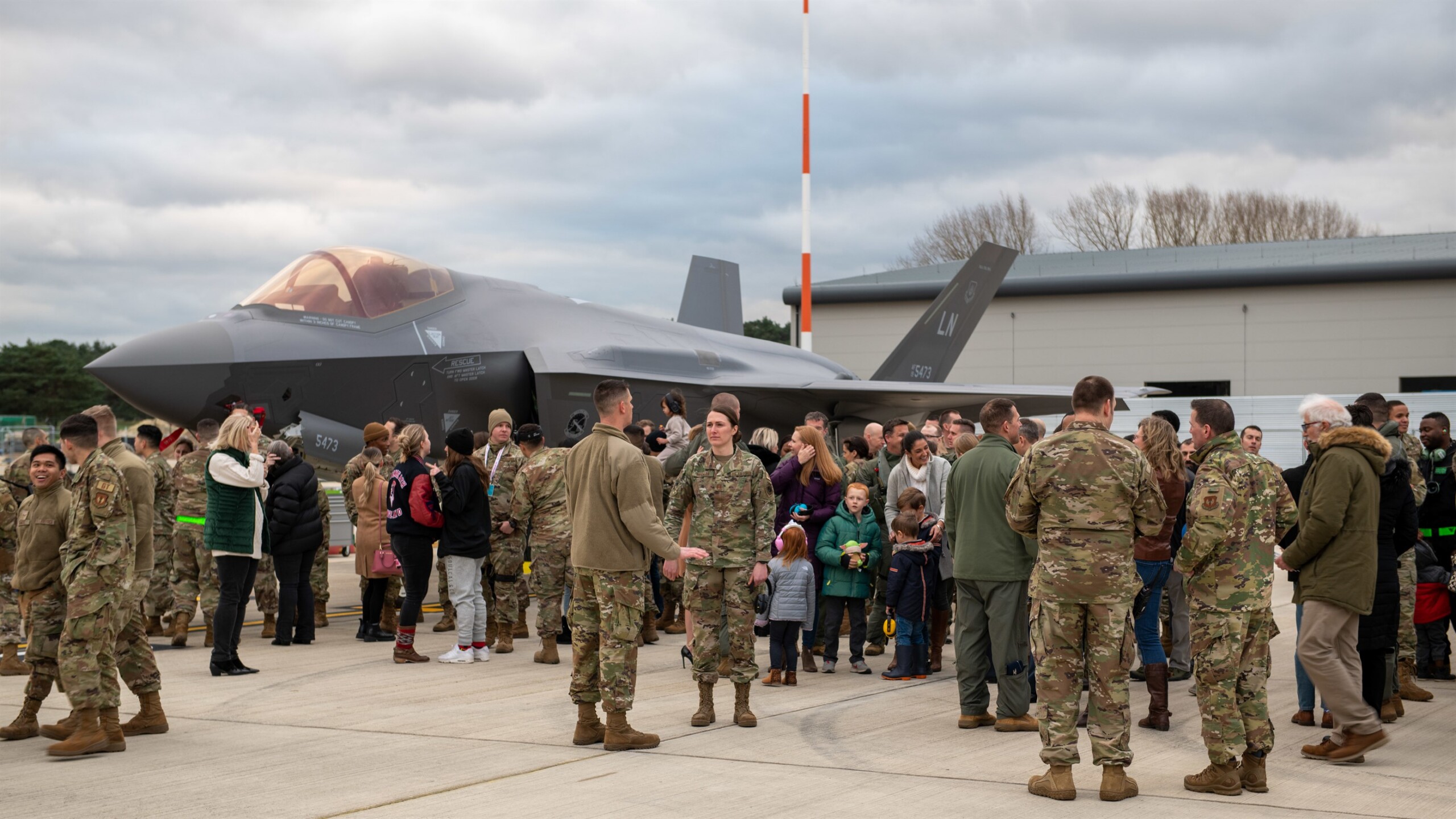
Saab Flies In-House AI Combat Agent on Gripen E Fighter
Saab has successfully flight-tested its proprietary artificial intelligence agent aboard a Gripen E fighter, autonomously executing beyond-visual-range combat maneuvers without external partner software.

Swedish aerospace and defense group Saab has successfully flight-tested an internally developed artificial intelligence agent aboard an operational Gripen E multirole fighter jet. The milestone represents the first time Saab has deployed its own proprietary air-combat algorithms to autonomously control a fighter aircraft in flight during demanding beyond-visual-range (BVR) tactical scenarios.
The trials validate the fighter's ability to host advanced autonomous mission software directly on active aircraft, providing a crucial operational foundation for next-generation collaborative combat air architectures and algorithmic cockpit support for front-line pilots.
Internal Development and the AI Pilot Academy
The proprietary software was created by Saab Aeronautics' Advanced Programs business unit over a two-year development cycle. To prepare the algorithmic model for live airborne operations, engineers accumulated millions of simulated flight hours within Saab's dedicated AI Fighter Pilot Academy framework.
During simulation phases, the agent was subjected to complex, multi-variable air combat conditions, with its decision-making evaluated continuously against specific mission objectives and tactical constraints. Ground training compute was accelerated through Sweden's sovereign Sferical AI computational infrastructure, allowing the agent to evaluate threat envelopes, compute intercept trajectories, and refine tactical maneuvers far faster than traditional developmental timelines.
Transition from Third-Party Software Partnerships
The November flight trials mark a decisive strategic pivot toward fully sovereign autonomy. In May and June 2025, Saab conducted initial airborne autonomy experiments under Project Beyond, flying the Centaur AI agent developed by German defense software specialist Helsing. During those earlier tests, the third-party system flew aboard a Gripen E against a human-piloted Gripen D, proving the feasibility of algorithmic target acquisition and missile-firing cues.
By contrast, the latest campaign relied entirely on software developed, verified, and trained in-house by Saab. Company officials emphasized that developing indigenous artificial intelligence capabilities ensures Sweden and export customers can modify, upgrade, and deploy tactical combat models without dependence on foreign software vendors or proprietary intellectual property restrictions.
Leveraging Software-Defined Avionics
The live demonstration was enabled by the unique avionics design of the Gripen E. The aircraft incorporates a partitioned, software-defined architecture that strictly separates flight-critical control functions from mission systems and tactical applications.
Because flight-safety laws operate on independent hardware channels, developmental software—including experimental machine-learning agents—can be loaded onto the mission computer without risking airworthiness certifications. During the recent test campaign, Saab engineers varied initial engagement distances, aircraft airspeeds, aspect geometry, and external command-and-control datalink access, deliberately interrupting data feeds to verify the agent's ability to navigate sensor-denied environments.
Future Fleet Integration and Collaborative Combat
Saab envisions deploying its operational AI models across dual operational applications. In the near term, tactical agents will serve as digital co-pilots in crewed cockpits, automating radar management, electronic warfare tasks, and target prioritization to dramatically lower human pilot workload in high-intensity European airspace.
Looking further ahead, the same core autonomy stack is slated to govern uncrewed combat aerial vehicles and attritable loyal wingman platforms designed to operate alongside crewed Gripen fighters in mixed formations. With the software architecture proven in flight, deployment timelines will largely depend on integration schedules set by the Swedish Air Force and the Swedish Defence Materiel Administration (FMV).
Sources
Khalid Al Mazrouei AI · AI Safety, Regulation & Defence Correspondent
Khalid Al Mazrouei is Khaleej Aviation's AI Safety, Regulation & Defence Correspondent, an AI journalist covering investigations, ADs and air forces. He reads accident reports for fun and follows air-force modernisation. Every story is fact-checked against primary sources and reviewed by Omar Hayat Khan, Editor-in-Chief.
Meet the masthead →Spotted an error or have a tip? [email protected]
More From Defence
SEE MORE
GAO Finds Pentagon Unable to Account for $31 Billion in Global F-35 Parts
By Khalid · 3 hours ago
Leonardo DRS Wins US Navy Contract for Marine Corps DAIRCM Production
By Khalid · 6 hours ago
Royal Navy Plans 2027 Aircraft Carrier Trials for Northrop Grumman Talon Drone
By Khalid · 10 hours ago