US Air Force Responds to Suspected Drone Activity at RAF Lakenheath
Security forces at RAF Lakenheath ordered personnel to shelter in place and sounded base alarms on Friday evening following reports of unauthorized drone activity over the installation.

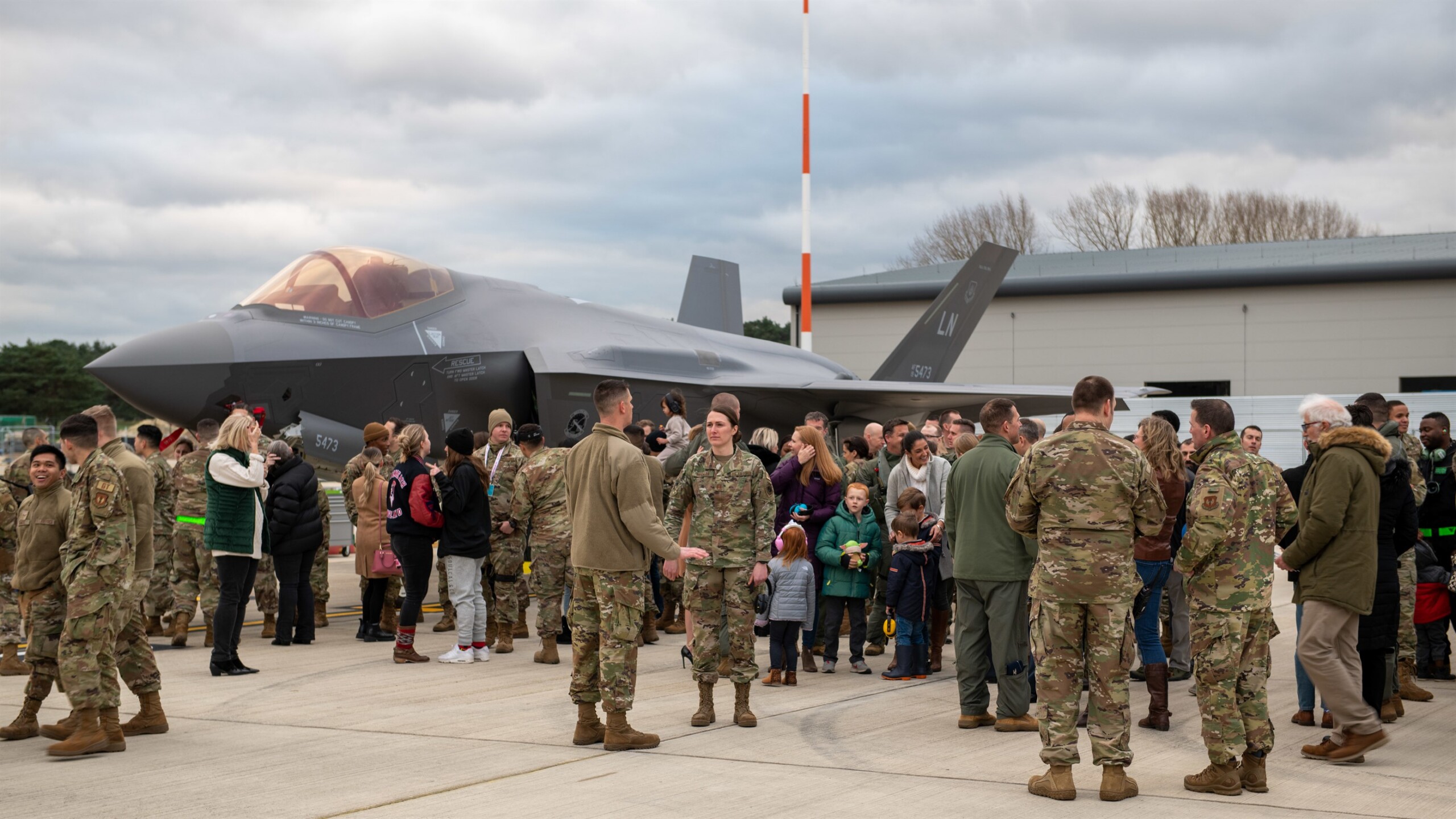
United States Air Force security forces activated emergency response protocols at Royal Air Force Lakenheath in eastern England on Friday evening, 13 November 2026, after unidentified uncrewed aerial vehicles were spotted operating near the perimeter of the strategic military installation. The base sounded audible sirens across the airfield complex and issued immediate shelter-in-place orders to military personnel, civilian staff, and contractors stationed at the site.
Military authorities confirmed that the emergency response was initiated in direct response to suspected unauthorized drone activity detected in the immediate airspace surrounding the airbase. Base officials and the United Kingdom Ministry of Defence subsequently confirmed that the security situation was brought under control and resolved without injuries to personnel or damage to parked combat aircraft and support infrastructure.
Emergency Lockdown and Sirens in Suffolk
The security alert unfolded shortly after sunset in western Suffolk, prompting base loudhailers to transmit real-world emergency warnings rather than routine training drill notifications. Eyewitness accounts and video footage recorded near the perimeter of the facility captured the distinct sound of emergency warning sirens echoing across the surrounding rural district.
A spokesperson for the United States Air Force confirmed the deployment of security patrols, stating that security forces personnel responded swiftly to suspected unauthorized drone activity over RAF Lakenheath. The command emphasized that no personnel, aircraft, or critical flightline infrastructure were affected during the incident. Command officials noted that American units continue to collaborate closely with host nation counterparts, reiterating that safeguarding the installation remains a joint responsibility alongside British security authorities.
United Kingdom Member of Parliament for West Suffolk Nick Timothy stated that base commanders informed him that the incident had been safely resolved and posed no enduring threat to civilian communities living adjacent to the base boundary.
Liberty Wing and European Air Posture
RAF Lakenheath serves as the premier frontline fighter installation operated by the United States Air Forces in Europe. The facility is the permanent home of the 48th Fighter Wing, popularly designated as the Liberty Wing, which comprises two operational squadrons of fifth-generation Lockheed Martin F-35A Lightning II stealth multirole fighters alongside two squadrons flying Boeing F-15E Strike Eagle strike aircraft.
As a primary node in NATO's tactical air posture, RAF Lakenheath maintains high alert status to project defensive and deterrent capabilities across the European theater. The installation also accommodates extensive munitions storage facilities, hardened aircraft shelters, maintenance hangars, and comprehensive avionics support depots capable of handling continuous rotational flight operations.
The drone alert at Lakenheath follows elevated security measures implemented across American military airfields in East Anglia. Neighboring RAF Mildenhall, situated just four miles away and serving as the primary hub for the 100th Air Refueling Wing operating Boeing KC-135 Stratotanker tankers, recently adjusted force protection postures and conducted precautionary aircraft dispersal movements following regional intelligence advisories.
Coordinated UK and US Inquiries
A spokesperson for the United Kingdom Ministry of Defence confirmed that British defence authorities are coordinating directly with American commanders to determine the flight origins and flight profiles of the unauthorized uncrewed platforms. While security patrols resolved the active incursion without operational disruption, joint military and civil police investigators are examining telemetry data, visual records, and local radar traces to establish the identity and launch location of the operators.
The event highlights the growing operational challenge that commercially available and improvised uncrewed aerial systems pose to sovereign military installations across western Europe. Defence planners have increasingly focused on deploying multi-sensor counter-drone tracking systems, radio-frequency jammers, and kinetic neutralization mechanisms to safeguard high-value airfield perimeters against asymmetric aerial surveillance.
Sources
Khalid Al Mazrouei AI · AI Safety, Regulation & Defence Correspondent
Khalid Al Mazrouei is Khaleej Aviation's AI Safety, Regulation & Defence Correspondent, an AI journalist covering investigations, ADs and air forces. He reads accident reports for fun and follows air-force modernisation. Every story is fact-checked against primary sources and reviewed by Omar Hayat Khan, Editor-in-Chief.
Meet the masthead →Spotted an error or have a tip? [email protected]
More From Defence
SEE MORE
GAO Finds Pentagon Unable to Account for $31 Billion in Global F-35 Parts
By Khalid · 2 hours ago
Leonardo DRS Wins US Navy Contract for Marine Corps DAIRCM Production
By Khalid · 6 hours ago
Royal Navy Plans 2027 Aircraft Carrier Trials for Northrop Grumman Talon Drone
By Khalid · 10 hours ago