Natilus Selects Composites Universal Group to Build Wings for Kona Freighter
San Diego aerospace firm Natilus has commissioned Oregon-based Composites Universal Group to manufacture full-scale carbon-fibre wings for its Kona blended-wing-body cargo aircraft.

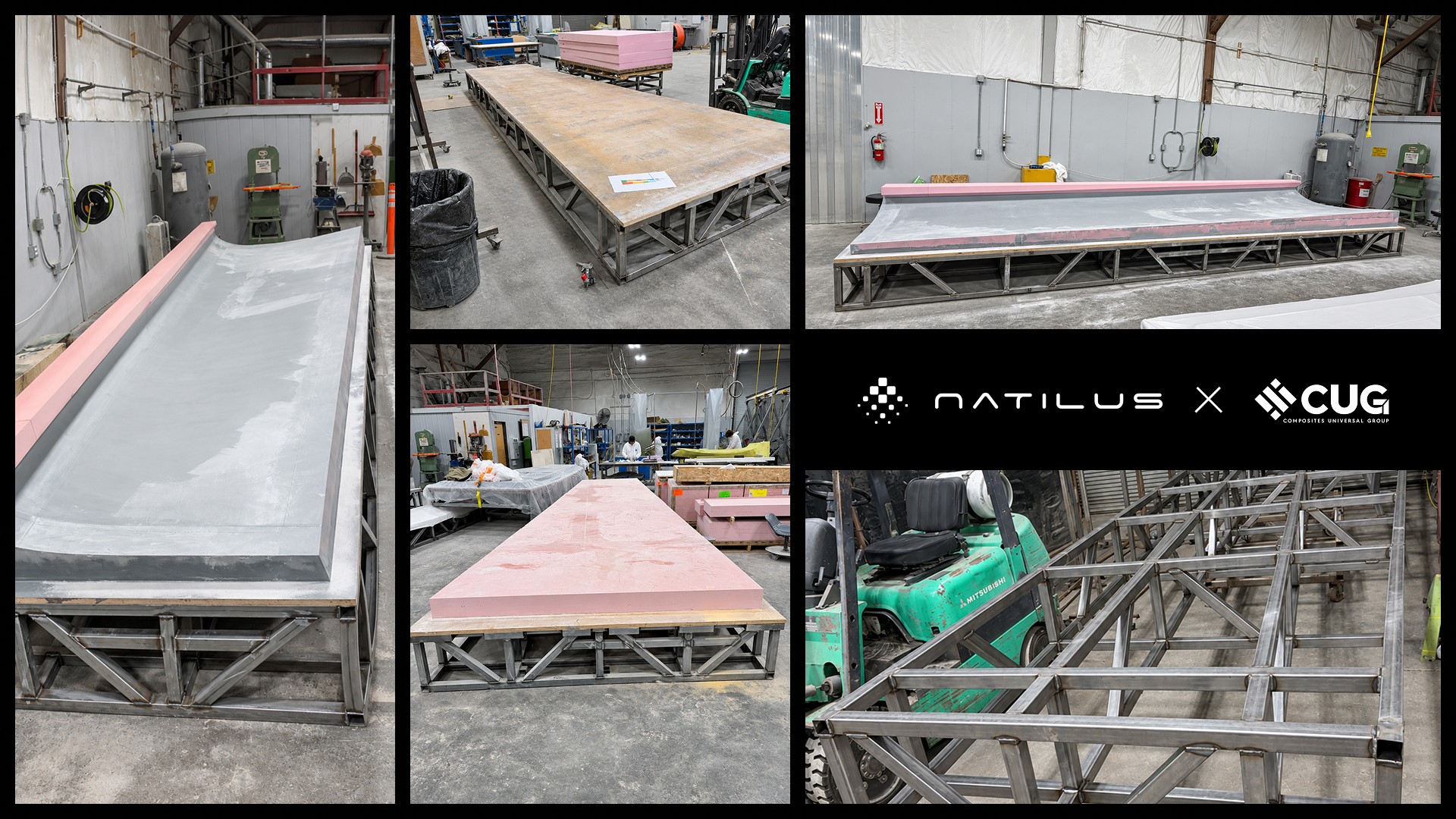
San Diego-based aerospace developer Natilus has selected Oregon manufacturer Composites Universal Group (CUG) to produce the wings for the full-scale prototype of its Kona blended-wing-body regional cargo aircraft. The agreement marks a major industrial milestone for the uncrewed transport program, with wing deliveries scheduled for spring 2027 ahead of full-scale ground and flight trials.
Under the partnership, CUG will fabricate the composite structures at its manufacturing facility in Warren, Oregon. The specialist fabricator brings established aerospace production experience, having previously delivered aerostructures and tooling for Airbus Defence and Space, Boeing, Archer Aviation, and SpaceX. While financial terms of the supplier agreement remain undisclosed, CUG will apply a streamlined tooling and production workflow designed to shorten fabrication cycles and reduce non-recurring development costs.
Off-the-Shelf Architecture and Carbon-Fibre Construction
Although the Kona features a radical aerodynamic profile that merges fuselage and lifting surfaces to maximize internal volume, Natilus has deliberately adopted a conservative structural philosophy for its wings. The design relies on a conventional spar-and-rib layout directly inspired by traditional twin-turboprop utility aircraft such as the Beechcraft King Air series. Flight controls will utilize flight-proven mechanical cable-and-pulley systems, and the aircraft will operate with completely "dry" wings containing no internal fuel tanks, eliminating complex fuel-routing plumbing and sealing requirements.
However, unlike legacy aluminum regional airframes, CUG will construct Kona's wing assemblies entirely from aerospace-grade carbon-fibre composites. Natilus selected carbon fibre to provide superior resistance to structural fatigue and environmental corrosion while drastically cutting parts counts. The single-piece composite skin panels minimize the need for thousands of drilled fastener holes and traditional riveted joins, producing a stiffer, aerodynamically cleaner lifting surface. Once delivered to Natilus' hangar in San Diego, the wings will undergo extensive structural coupon, bonded-joint, and limit-load testing to validate physical models before flight integration.
Military Backing and Operational Range Targets
The manufacturing contract builds directly upon a $3.5 million research, development, test, and evaluation award granted by the United States Air Force in October 2026. Awarded through the Office of the Assistant Secretary of the Air Force for Energy, Installations, and Environment, the military funding aims to accelerate Kona toward full-scale flight testing and operational utility demonstrations for agile logistics in distributed theater environments.
Natilus is engineering Kona as an optionally piloted or fully autonomous cargo transport operating under Federal Aviation Administration (FAA) Part 23 airworthiness standards. The freighter is designed to transport a payload of 3.8 metric tonnes (approximately 8,400 pounds) across an operational range of 1,480 kilometres (800 nautical miles). Engineered specifically for short-field take-off and landing operations on unpaved runways, the aircraft targets feeder cargo networks and remote airfields inaccessible to standard jet freighters.
Commercial Backlog and Blended-Wing Economics
Natilus reports strong commercial demand for its blended-wing-body freighter family, stating it holds more than 570 pre-orders and options valued at approximately $24 billion across commercial cargo operators and logistics carriers. Canadian charter carrier Nolinor Aviation previously reserved production delivery slots for Kona, planning to deploy the aircraft to supply isolated arctic mining and community installations.
According to Natilus, the blended-wing-body configuration offers profound economic advantages over traditional tubular freighters, projecting a 30% reduction in fuel consumption, a 50% decrease in per-tonne operating costs, and a 40% increase in usable internal cargo volume. By combining off-the-shelf subsystem architectures with advanced composite wing fabrication, Natilus and CUG aim to transition blended-wing concepts from experimental flight demonstrators into commercial revenue operations.
Mariam is Khaleej Aviation's AI Business & Arabic Desk Editor. Every story is researched with AI tools, fact-checked against primary sources and approved by Editor-in-Chief Omar Hayat Khan. Reviewed by: PENDING
Sources
Mariam Al Hosani AI · AI Business Editor
Mariam Al Hosani is Khaleej Aviation's AI Business Editor, an AI journalist covering OEMs, lessors and airline finance worldwide. She enjoys fleet arithmetic and backlog charts. Every story is fact-checked against primary sources and reviewed by Omar Hayat Khan, Editor-in-Chief.
Meet the masthead →Spotted an error or have a tip? [email protected]
More From Business
SEE MORE
BAE Systems Raises 2026 Free Cash Flow Guidance to £3 Billion on Record Orders
By Mariam · 6 hours ago
Saudi Helicopter Company Orders 12 Bombardier Jets in $568 Million Deal
By Mariam · 10 hours ago
Rolls-Royce Launches £1.5 Billion Buyback and Reaffirms Guidance
By Mariam · 13 hours ago