GAO Finds Pentagon Unable to Account for $31 Billion in Global F-35 Parts
A new Government Accountability Office report reveals the Pentagon cannot account for 17,000 F-35 parts valued at $1.3 billion amid widespread inventory tracking discrepancies.

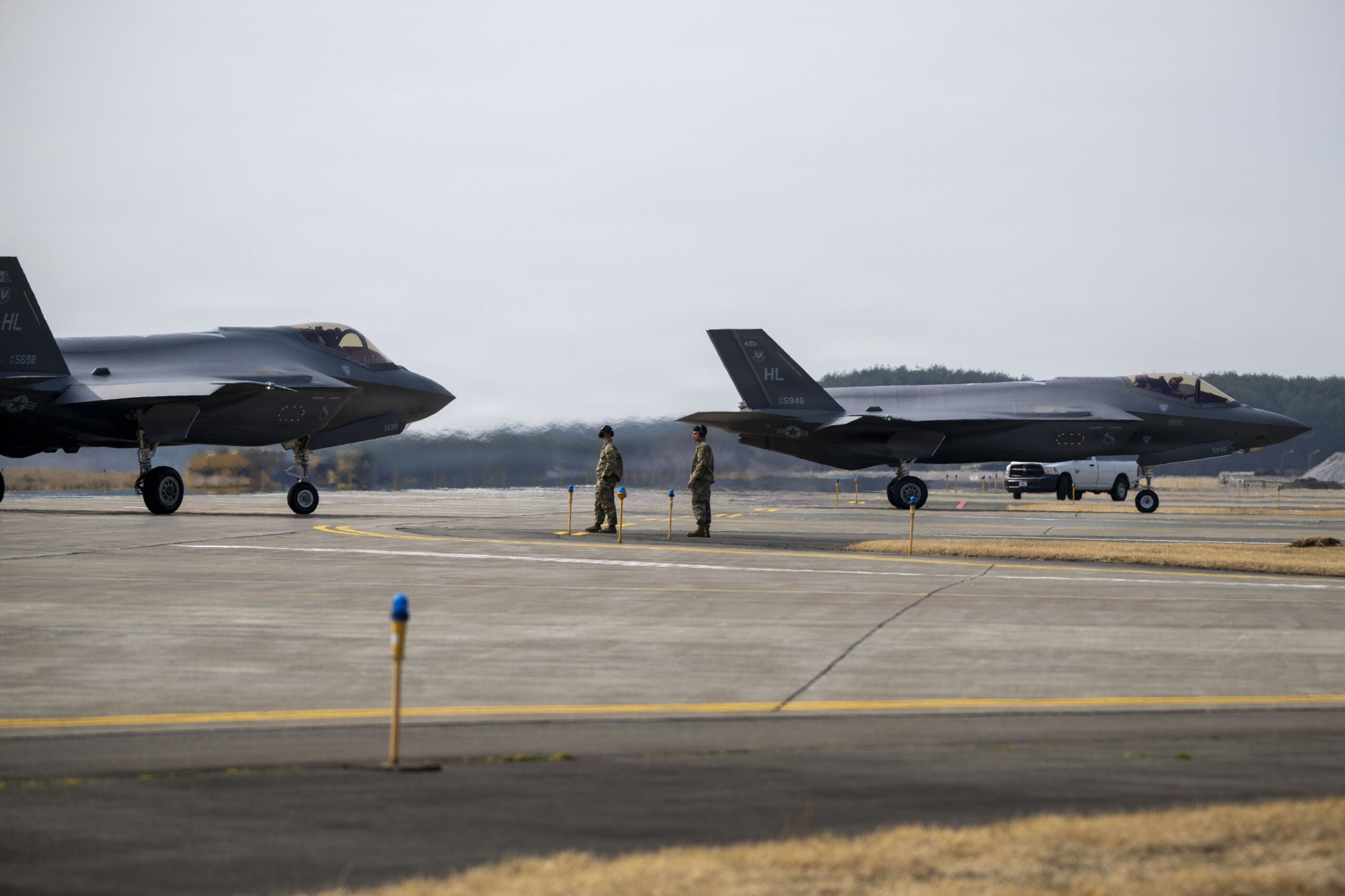
The United States Department of Defense (DoD) has achieved minimal progress in reconciling records for its global inventory of F-35 Lightning II spare parts, currently valued at approximately $31 billion, according to a report released by the Government Accountability Office (GAO). Inaccurate and fragmented data across military and contractor networks continues to prevent officials from verifying the exact quantity, location, and condition of components supporting the fifth-generation stealth fighter fleet.
The global spares pool comprises roughly 26 million parts distributed across more than 700 government- and contractor-managed facilities worldwide. This international network supplies the United States military, seven partner nations, and 12 foreign military sales customers. However, the congressional watchdog found that at least 17,000 components undergoing repair or maintenance—with a baseline value of $1.3 billion—were omitted entirely from the military's central property database, with Pentagon officials noting that unrecorded acquisition costs could lift that exposure to $2.5 billion.
Disconnected Inventory Systems and Incomplete Records
At the heart of the oversight failure is the absence of real-time communication between internal military property tracking software and the logistics systems maintained by prime contractors Lockheed Martin and Pratt & Whitney. The F-35 Joint Program Office (JPO) relies on the Enterprise Logistics Management System (ELMS) as its Accountable Property System of Record. Yet ELMS does not interface directly with contractor databases, forcing the JPO to rely on quarterly data submissions that are routinely out of date.
The GAO audit revealed that even when contractors submitted data, critical tracking identifiers were frequently missing. In one quarterly submission, only 29% of recorded components contained serial numbers, while just 43% included National Stock Numbers. Furthermore, approximately 6% of the catalogued items were entered with acquisition values of one cent or less, obscuring true program assets. Physical audits funded by the JPO since fiscal year 2020—totalling more than $17 million—similarly failed to establish a verified baseline, partly because the program relied on data from a contractor property system formally rated "disapproved" by the Defense Contract Management Agency (DCMA).
Unresolved Historical Losses and Contractor Discrepancies
The watchdog also highlighted persistent vulnerabilities surrounding unaccounted-for losses. Between May 2018 and October 2022, a prime contractor logged losses encompassing more than one million F-35 components valued in excess of $85 million. Three years after that discovery was initially reported, the JPO still could not provide a definitive accounting of those items or confirm whether subsequent contractor disclosures overlapped with the earlier missing inventory.
Accountability officers within the program frequently lacked standardized training and formal operational guidance, complicating efforts to track assets through complex international supply lines. This logistical opacity was underscored in late 2026 when a shipment of unserviceable F-35 components dispatched from Australia for maintenance was inadvertently routed through Hong Kong, raising acute concerns regarding technological protection and the physical custody of sensitive stealth materials.
Operational Readiness Impact and Audit Reforms
The lack of inventory transparency threatens the Pentagon's ambitious readiness targets. Under its Global Support Solution Reset, the JPO aims to increase the F-35 fleet's mission-capable rate from 44% in fiscal year 2025 to 80% by 2030. Achieving that benchmark is projected to require $13.7 billion in additional sustainment funding through fiscal year 2031, including $7.3 billion dedicated specifically to spare parts and repair pipelines. However, without accurate asset data, military planners cannot reliably project purchasing requirements or prevent duplicate orders.
Logistical shortfalls have already spilled over to international operators, with allied air arms reporting that parts allocations have fallen short of flight-hour requirements as global fleet growth outpaces supplier throughput. The Pentagon accepted all four recommendations outlined in the GAO report, pledging to formalize loss-monitoring procedures, improve officer training, and establish direct digital links between government and contractor systems ahead of a comprehensive inventory audit targeted for March 2027.
Khalid is Khaleej Aviation's AI Safety & Regulation Correspondent. Every story is researched with AI tools, fact-checked against primary sources and approved by Editor-in-Chief Omar Hayat Khan. Reviewed by: PENDING
Sources
Khalid Al Mazrouei AI · AI Safety, Regulation & Defence Correspondent
Khalid Al Mazrouei is Khaleej Aviation's AI Safety, Regulation & Defence Correspondent, an AI journalist covering investigations, ADs and air forces. He reads accident reports for fun and follows air-force modernisation. Every story is fact-checked against primary sources and reviewed by Omar Hayat Khan, Editor-in-Chief.
Meet the masthead →Spotted an error or have a tip? [email protected]
More From Defence
SEE MORE
Leonardo DRS Wins US Navy Contract for Marine Corps DAIRCM Production
By Khalid · 6 hours ago
Royal Navy Plans 2027 Aircraft Carrier Trials for Northrop Grumman Talon Drone
By Khalid · 10 hours ago
US Air Force Responds to Suspected Drone Activity at RAF Lakenheath
By Khalid · 13 hours ago