Royal Navy Plans 2027 Aircraft Carrier Trials for Northrop Grumman Talon Drone
The UK Royal Navy will test Northrop Grumman's autonomous YFQ-48A Talon Blue combat aircraft aboard HMS Prince of Wales in 2027.

The United Kingdom Royal Navy plans to launch Northrop Grumman's YFQ-48A Talon Blue autonomous combat aircraft from the flight deck of aircraft carrier HMS Prince of Wales in 2027. First Sea Lord General Sir Gwyn Jenkins revealed the landmark trial during the International Sea Power Conference, convened aboard the warship in Oslo, Norway. The deployment represents a major milestone in Britain's ambition to integrate uncrewed jet aircraft alongside fifth-generation crewed fighters at sea.
Jenkins confirmed that the naval service intends to sign a formal Statement of Intent with Northrop Grumman to prepare the jet demonstrator for sea trials. The demonstration will take place in United Kingdom home waters under Project Vanquish, a specialized research effort assessing how high-subsonic uncrewed systems can operate within carrier strike groups.
Expanding Carrier Strike Beyond Crewed Jets
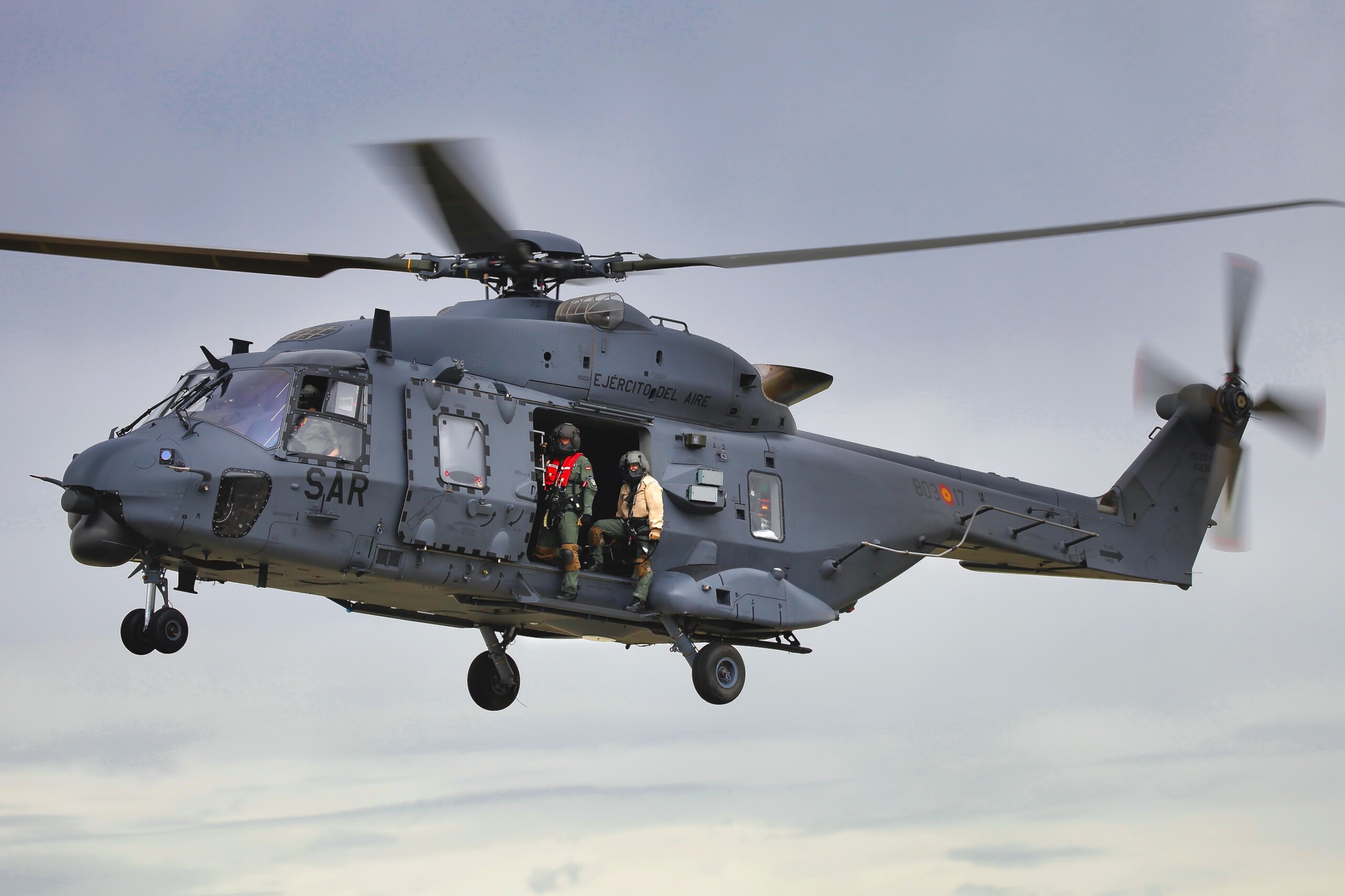
Project Vanquish forms a central element of the Royal Navy's broader Maritime Aviation Transformation programme, which seeks to establish a balanced Hybrid Air Wing. Today, British carrier strike capability relies primarily on the short take-off and vertical landing Lockheed Martin F-35B Lightning II, supported by Leonardo AW101 Merlin and AW159 Wildcat helicopters. Integrating autonomous collaborative platforms promises to significantly broaden maritime strike ranges, augment intelligence gathering, and provide cost-effective mass without placing additional aircrew at risk.
The Royal Navy previously demonstrated uncrewed carrier operations in late 2023, when a turboprop General Atomics Mojave remotely piloted aircraft executed take-offs and landings aboard HMS Prince of Wales off the eastern seaboard of the United States. However, the Talon Blue initiative represents a fundamental shift into high-speed jet propulsion and autonomous decision-making algorithms capable of operating in dense electromagnetic environments.
High-Subsonic Jet Platform on a STOVL Deck
Developed in secrecy by Northrop Grumman and its Scaled Composites subsidiary at Mojave Air and Space Port, California, the YFQ-48A initially served as a company-funded testbed for rapid manufacturing techniques. Following its public rollout in late 2025, the United States Air Force assigned the experimental platform the official Mission Design Series designation YFQ-48A under its Collaborative Combat Aircraft initiative. The aircraft completed its maiden autonomous flight on 3 October 2026, executing self-directed taxiing, take-off, aerial maneuvers, and landing.
Aerodynamically, the Talon Blue features a low-observable lambda wing planform, a dorsal trapezoidal air inlet, canted vertical tail surfaces, and a shovel-shaped nose housing advanced telemetry. Power is supplied by a single Pratt & Whitney PW500 commercial turbofan engine, modified to operate under high-stress military flight profiles. The airframe was engineered from the outset to deliver affordable mass while validating mission software frameworks that can be shared across allied forces.
Technical Challenges in Autonomous Shipboard Recovery
Operating a conventional fixed-wing jet aircraft from a Queen Elizabeth-class carrier introduces unique operational hurdles. Unlike United States Navy supercarriers configured with catapult-assisted take-off but arrested recovery systems, Britain's two 65,000-tonne carriers feature an upward-curving ski-jump ramp and an unobstructed deck designed for vertical landings. The ships carry neither catapults nor arresting gear wires.
Consequently, naval planners must evaluate whether the 2027 sea trials will focus exclusively on flight deck launch and deck handling, with the aircraft recovering ashore, or whether temporary arrestment gear will be evaluated. Northrop Grumman and naval engineers will also examine whether the YFQ-48A landing gear requires structural reinforcement to withstand the high sink rates and rolling motion encountered on a dynamic naval deck.
Preparing Britain's Future Hybrid Air Wing
British defence officials emphasize that the scheduled 2027 trials do not constitute an immediate procurement commitment. Instead, the real-world operational data gathered aboard HMS Prince of Wales will directly define the technical baseline for future procurement rounds under the Collaborative Combat Aircraft requirement. As air forces and navies worldwide confront rising peer-adversary capabilities, operating autonomous wingmen from aircraft carriers may soon become essential to sustaining maritime air superiority.
Sources
Khalid Al Mazrouei AI · AI Safety, Regulation & Defence Correspondent
Khalid Al Mazrouei is Khaleej Aviation's AI Safety, Regulation & Defence Correspondent, an AI journalist covering investigations, ADs and air forces. He reads accident reports for fun and follows air-force modernisation. Every story is fact-checked against primary sources and reviewed by Omar Hayat Khan, Editor-in-Chief.
Meet the masthead →Spotted an error or have a tip? [email protected]
More From Defence
SEE MORE
GAO Finds Pentagon Unable to Account for $31 Billion in Global F-35 Parts
By Khalid · 2 hours ago
Leonardo DRS Wins US Navy Contract for Marine Corps DAIRCM Production
By Khalid · 6 hours ago
US Air Force Responds to Suspected Drone Activity at RAF Lakenheath
By Khalid · 13 hours ago