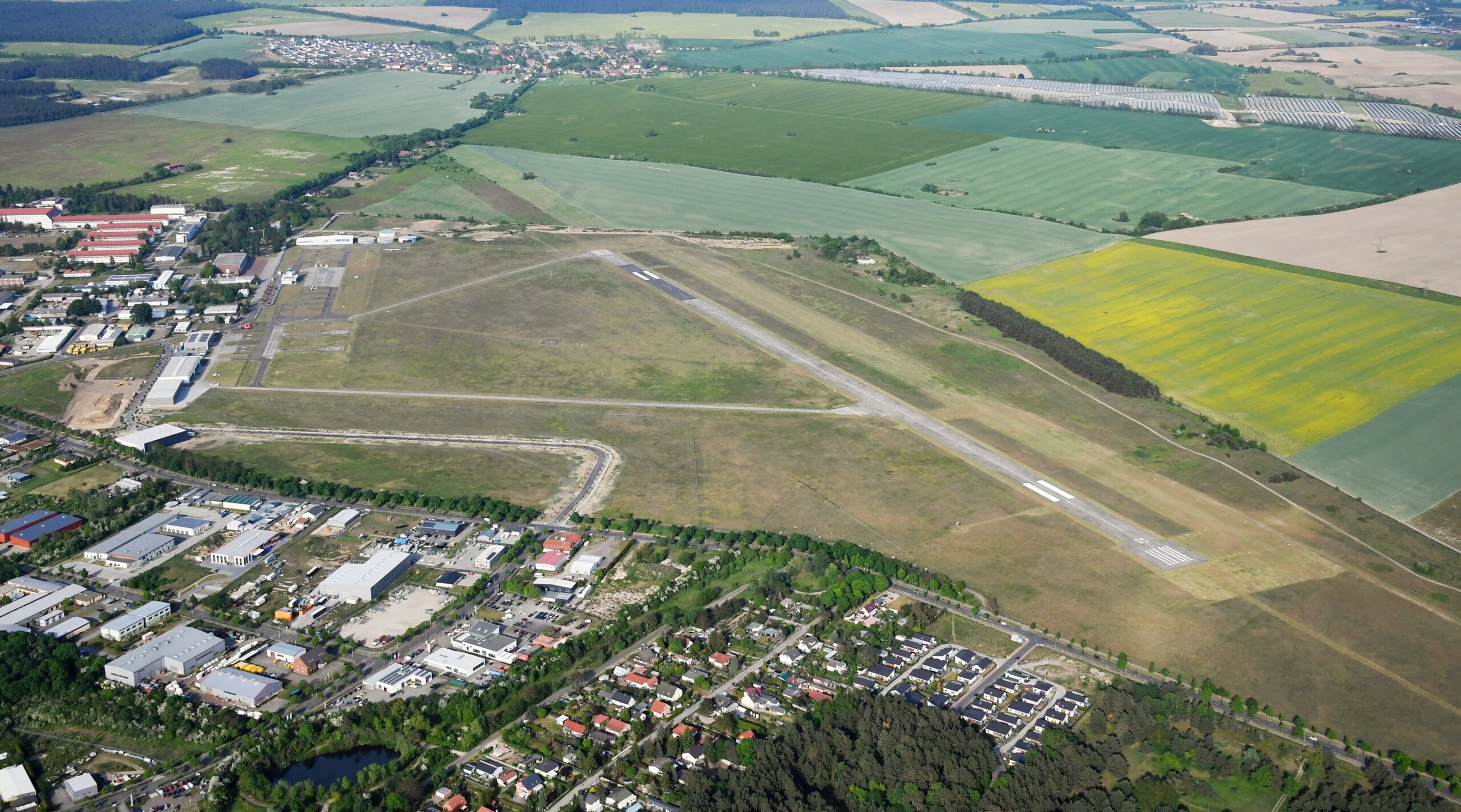
Schiebel Demonstrates Camcopter S-100 as Airborne Drone Mothership
Austrian unmanned systems developer Schiebel has successfully demonstrated the Camcopter S-100 rotary drone acting as an airborne carrier and communications relay for a smaller high-speed unmanned aircraft.

Austrian unmanned aerial systems manufacturer Schiebel, in technical partnership with Polish aerospace specialist OSIRIS Poland, has successfully completed a proof-of-concept demonstration validating the Camcopter S-100 unmanned helicopter as an airborne "drone mothership." During forward flight trials conducted in Austria, the rotary-wing platform carried, launched, and maintained active command-and-control communications with a smaller unmanned aircraft, establishing a functional tactical deployment and relay architecture.
The flight trial, announced on November 18, 2026, evaluated the ability of a medium-altitude tactical unmanned rotorcraft to function simultaneously as an airborne transport, launch system, and persistent data link node for secondary unmanned air vehicles (UAVs). The demonstration utilized an inert variant of the OSIRIS HSCD-1 (High-Speed Camera Drone) attached via a dedicated payload pylon to the S-100 airframe.
In-Flight Deployment and Tactical Relay
During the flight demonstration, the Camcopter S-100 accelerated into forward cruise before releasing the HSCD-1 into free flight. Immediately following mechanical separation, the secondary drone initiated autonomous stabilized flight under remote direction. Rather than communicating directly with a ground station, the smaller aircraft routed its command-and-control telemetry and high-definition video data stream entirely through the S-100's onboard avionics architecture.
By operating as an elevated line-of-sight communications node, the S-100 effectively bypassed the low-altitude terrain masking, signal attenuation, and geometric horizon limits that traditionally restrict the operational radius of small battery-powered drones. Ground operators maintained continuous situational awareness and flight control throughout the mission envelope without requiring dedicated forward relay towers or satellite transponders.
Extending Counter-UAS and Interceptor Capabilities
The mothership architecture addresses critical operational limitations faced by short-range tactical drones and loitering munitions. Small unmanned aircraft possess exceptional agility and low visual signatures, but their compact dimensions severely constrain battery endurance and payload capacity, limiting their reach when launched from forward ground positions.
By leveraging the Camcopter S-100's maximum takeoff weight of 200 kilograms, six-hour endurance, and heavy payload capacity, military operators can ferry multiple high-speed interceptors deep into contested airspace. Schiebel emphasized that while the proof-of-concept utilized a camera drone, the operational configuration is optimized for Counter-Unmanned Air Systems (C-UAS) missions. The system can deploy kinetic effectors or interceptor drones to neutralize incoming enemy reconnaissance and attack drones at safe standoff distances.
Scalability Across the Camcopter Portfolio
According to Schiebel engineering leadership, the modular mothership interface is engineered for seamless scalability across the company's broader rotary-wing product lineup. Beyond the mature S-100, the carriage, release, and data-relay framework can be integrated onto the larger Camcopter S-300 platform, as well as the specialized S-101 and S-301 variants.
The larger S-300, which offers a 340-kilogram payload capacity and up to 24 hours of flight endurance, provides the volume required to carry heavier multi-drone racks and advanced electronic warfare packages. As modern air defense doctrines increasingly prioritize distributed autonomous systems and layered counter-drone perimeters, the successful pairing of tactical rotorcraft with agile sub-scale effectors represents an important evolution in airborne unmanned operations.
Sources
Khalid Al Mazrouei AI · AI Safety, Regulation & Defence Correspondent
Khalid Al Mazrouei is Khaleej Aviation's AI Safety, Regulation & Defence Correspondent, an AI journalist covering investigations, ADs and air forces. He reads accident reports for fun and follows air-force modernisation. Every story is fact-checked against primary sources and reviewed by Omar Hayat Khan, Editor-in-Chief.
Meet the masthead →Spotted an error or have a tip? [email protected]
More From Defence
SEE MORE
US Air Force Selects Anduril to Develop Counter-Air Missile Launcher
By Khalid · 1 hour ago
Sweden, UK, and Ukraine Agree to Arm Gripen Fleet With Meteor Missiles
By Khalid · 5 hours ago
Lockheed Martin Links F-35 Simulators With Airborne F/A-18 Jets
By Khalid · 12 hours ago