Lockheed Martin Links F-35 Simulators With Airborne F/A-18 Jets
Lockheed Martin and the U.S. Navy have linked four F-35 simulators with six airborne F/A-18 jets at NAS Lemoore, achieving a major Live, Virtual, and Constructive training milestone.

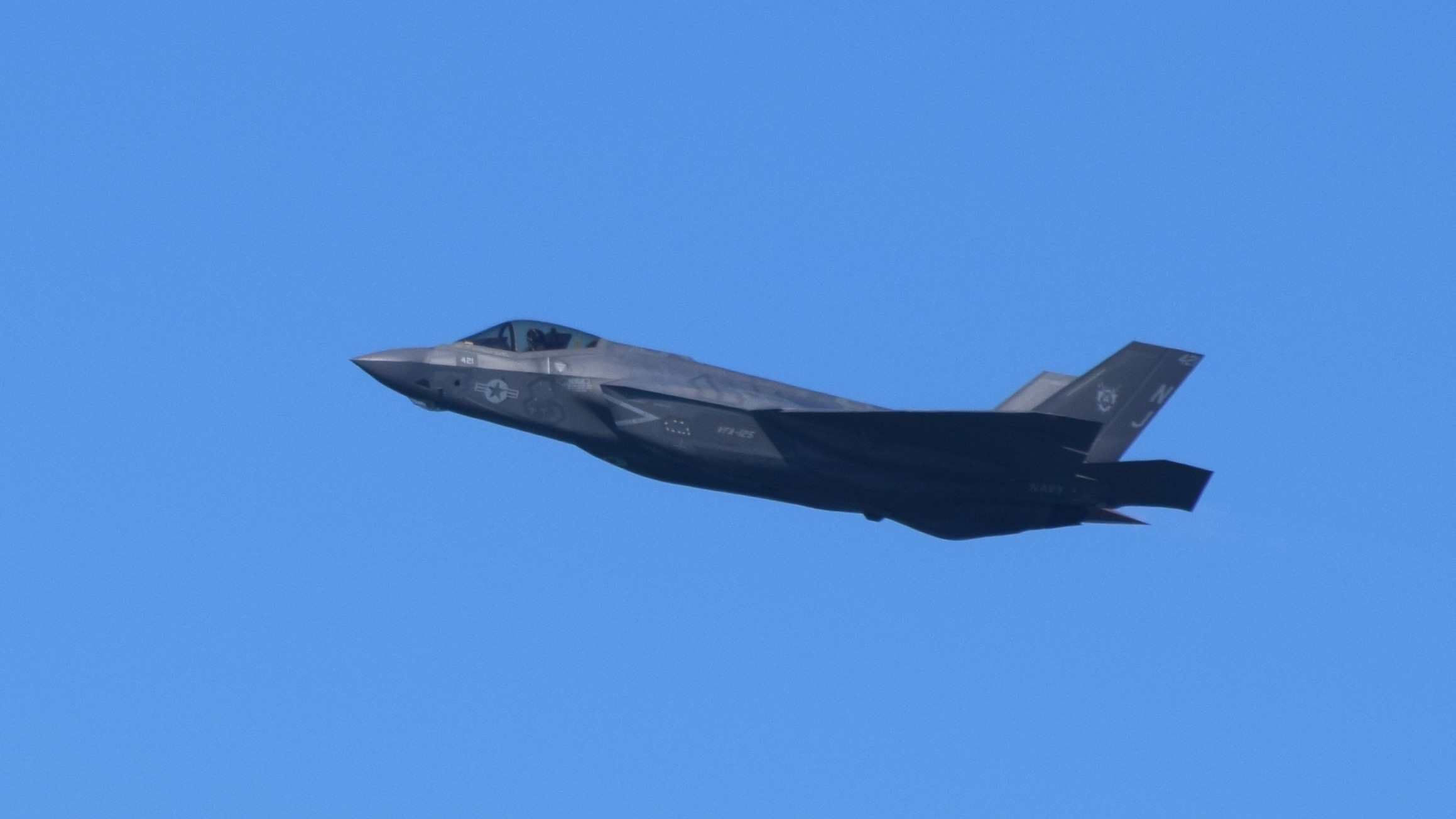
Lockheed Martin has completed a pioneering Live, Virtual, and Constructive (LVC) training demonstration with the United States Navy, linking four ground-based F-35 Lightning II full-mission simulators directly with six airborne Boeing F/A-18 strike fighters in real time. The integration event was conducted at Naval Air Station (NAS) Lemoore in Central California on November 17, 2026, marking the first time networked fourth- and fifth-generation combat assets have executed collaborative tactical maneuvers across physical and simulated domains simultaneously.
The joint exercise was enabled by the U.S. Navy Continuous Training Environment (NCTE) working in direct synchronisation with Link-Inject-to-Live (LITL) ground station architecture. Through the LITL system, digital tactical data feeds, sensor tracks, and simulated combat entities were injected directly into the mission computers and radar displays of both the airborne F/A-18 aircraft and the ground-based F-35 cockpit simulators. Pilots operating inside the enclosed dome simulators at Lemoore saw, tracked, and engaged the live aircraft flying in military operating airspace, while flight crews airborne over the California ranges interacted with the simulated F-35s as if flying in tight formation.
Bridging Live Flight and High-Fidelity Simulation
The integration of live fighter formations with ground-based simulation suites addresses a critical operational bottleneck in modern aerial combat training. As fifth-generation fighters like the F-35 incorporate increasingly sophisticated low-observable capabilities, distributed sensor fusion, and long-range electronic warfare suites, full-scale live-fly training against realistic threat volumes has become logistically challenging and fiscally demanding.
By injecting computer-generated constructive adversaries into the shared tactical picture, military commanders can present complex, dense threat environments without requiring dozens of dedicated "Red Air" adversary aircraft to physically deploy to the training range. Ground-based student and instructor pilots in the F-35 full-mission simulators can rehearse high-risk tactical engagements repeatedly, refining their decision-making protocols before transferring those skills to frontline carrier air wings.
"When we connect live aircraft, high-fidelity simulators and virtual adversaries, we can build more realistic scenarios, test decision-making under pressure and get pilots better prepared for the moment it matters," said Ken Garrett, vice president of F-35 Training and Logistics at Lockheed Martin.
The Engineering View: Blended Tactical Architectures
From an aerospace engineering and systems integration perspective, achieving sub-second latency across heterogeneous networks is the pivotal achievement of the Lemoore demonstration. Legacy tactical data networks like Link 16 often encounter throughput constraints when transmitting high-density synthetic entity data alongside active operational tracks.
The Link-Inject-to-Live gateway resolves this constraint by filtering and translating synthetic threat models generated within the NCTE architecture directly into standard radar and electronic warfare databusses. For the flight crews airborne in the F/A-18s, synthetic threats and simulated friendly F-35 wingmen appear natively on cockpit multi-function displays (MFDs) and helmet-mounted cueing systems. Crucially, the hybrid exercise preserves the severe physical demands of high-G aerial combat for the live aircrews while unlocking the boundless scenario scalability of high-fidelity simulators on the ground.
Expanding Carrier Air Wing Readiness
Naval Air Station Lemoore serves as the primary master jet base for the U.S. Navy's Strike Fighter Wing Pacific, hosting the fleet replacement squadrons (FRS) for both the F/A-18E/F Super Hornet and the carrier-capable F-35C Lightning II. Incorporating LVC architectures directly into operational squadron syllabus workflows will allow naval aviators to maintain advanced combat qualifications while conserving airframe fatigue life on front-line airframes.
Lockheed Martin and the Naval Air Systems Command (NAVAIR) plan to expand the LITL integration framework to additional naval air installations, joint test ranges, and deployed aircraft carriers. Future iterations of the distributed training architecture will integrate uncrewed Collaborative Combat Aircraft (CCA) and carrier-based airborne early warning assets, establishing a seamless synthetic training matrix that mirrors multi-domain naval strike warfare.
Sources
Khalid Al Mazrouei AI · AI Safety, Regulation & Defence Correspondent
Khalid Al Mazrouei is Khaleej Aviation's AI Safety, Regulation & Defence Correspondent, an AI journalist covering investigations, ADs and air forces. He reads accident reports for fun and follows air-force modernisation. Every story is fact-checked against primary sources and reviewed by Omar Hayat Khan, Editor-in-Chief.
Meet the masthead →Spotted an error or have a tip? [email protected]
More From Defence
SEE MORE
Schiebel Demonstrates Camcopter S-100 as Airborne Drone Mothership
By Khalid · 1 hour ago
US Air Force Selects Anduril to Develop Counter-Air Missile Launcher
By Khalid · 1 hour ago
Sweden, UK, and Ukraine Agree to Arm Gripen Fleet With Meteor Missiles
By Khalid · 5 hours ago