Aerodata AeroForce X Long-Endurance Drone Completes Maiden Flight in Germany
German special-mission specialist Aerodata AG has completed the maiden flight of its AeroForce X twin-engine uncrewed aerial system at Strausberg Airfield, advancing Germany's first indigenous long-endurance reconnaissance platform.

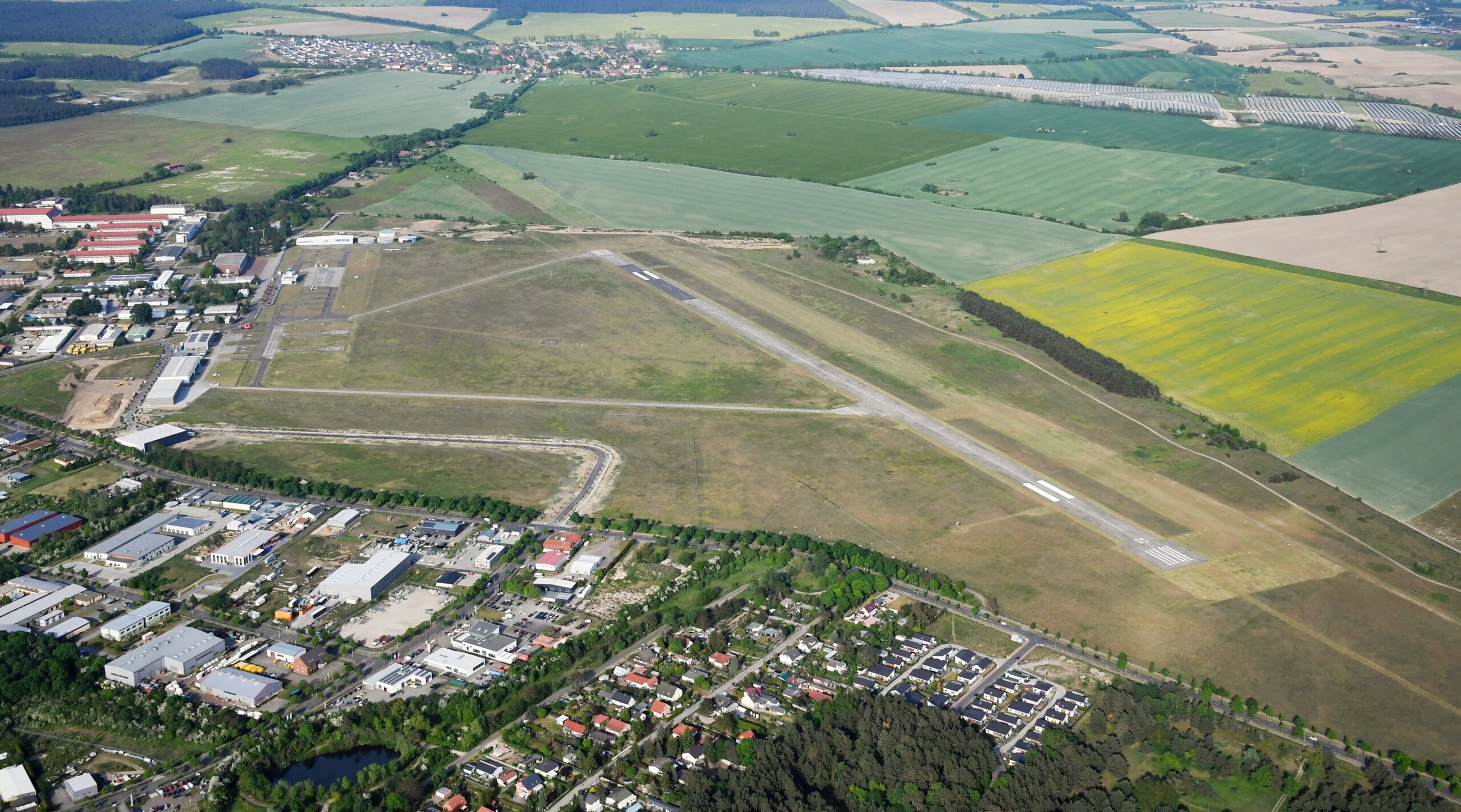
German special-mission aviation specialist Aerodata AG has achieved a foundational milestone in sovereign European aerospace with the successful maiden flight of its AeroForce X unmanned aerial system prototype. The initial flight trial was conducted on Saturday, November 14, 2026, at Strausberg Airfield in Brandenburg, near Berlin, initiating the flight-test and envelope-expansion phase for the twin-engine Medium Altitude Long Endurance (MALE) platform.
The flight represents a historic transition for the Braunschweig-based aerospace contractor. For more than four decades, Aerodata has engineered flight inspection systems, airborne maritime surveillance suites, and specialized mission avionics for modified commercial airframes. With the AeroForce X, the company has flown an original, clean-sheet aircraft platform designed from the outset for demanding defence, surveillance, and critical infrastructure monitoring missions.
Testing Envelope and Crewed Initial Flights
The maiden flight from Strausberg Airfield proceeded strictly according to test parameters, meeting all technical benchmarks established for the inaugural sortie. During the evaluation, flight-test personnel assessed the aircraft's primary aerodynamic handling characteristics, control authority, structural stability, and core systems performance under real-world operating conditions.
To mitigate developmental risk and protect the high-value prototype, the initial AeroForce X airframe—registered under German civil registration D-IAFX—was configured with a temporary cockpit to accommodate an on-board safety pilot. This crewed evaluation methodology allows engineers to directly monitor manual handling qualities and mechanical responses while gathering high-fidelity telemetry before committing the platform to automated guidance systems.
According to Aerodata management, the flight-test campaign will expand progressively over the coming months. The immediate test schedule encompasses additional crewed sorties to map low-speed stability, climb rates, and system redundancies, followed by comprehensive verification of the proprietary autopilot architecture. Once autopilot integration and emergency recovery protocols are fully certified, the programme will transition to its first unmanned autonomous flight.
Technical Specifications and Modular Architecture
The AeroForce X has been engineered to deliver heavy-payload, long-endurance capabilities tailored for multi-domain intelligence, surveillance, and reconnaissance (ISR). Built with a substantial 26-metre (85-foot) wingspan, an overall length of 15 metres, and a height of 4 metres, the aircraft features a distinctive twin-boom airframe constructed extensively from advanced carbon-fibre-reinforced polymers to maximise structural strength while reducing empty weight.
The platform operates at a maximum take-off weight of 4,800 kilograms (approximately 4.8 metric tons) and is powered by twin turboprop or piston engines that afford an operating service ceiling of 30,000 feet. Crucially, the AeroForce X is engineered for missions of up to 40 hours in endurance, providing an operational range of up to 10,000 kilometres.
A cornerstone of the platform's utility is its heavy-lift mission capacity. The aircraft can accommodate up to 1,300 kilograms of mission equipment, distributed between a 700-kilogram internal fuselage payload bay and external wing hardpoints rated for 325 kilograms each. This generous weight allowance enables operators to integrate complex multi-sensor architectures simultaneously, including 360-degree maritime surface-search radars, electro-optical and infrared (EO/IR) imaging turrets, automatic identification system (AIS) transponders, and signals intelligence (SIGINT) packages.
Strategic Sovereignty and Critical Infrastructure Defense
Beyond its operational metrics, the AeroForce X addresses urgent European requirements for sovereign defence technologies. The aircraft is designed to be fully ITAR-free, meaning it operates free from United States International Traffic in Arms Regulations. This non-ITAR status guarantees that European armed forces and allied international customers maintain complete operational control, domestic modification rights, and unhindered deployment flexibility without foreign export vetos.
The platform's extended endurance makes it uniquely suited for persistent surveillance over critical maritime infrastructure across the North Sea, Baltic Sea, and Mediterranean. Recent regional tensions and maritime sabotage incidents have accelerated demand among European defence ministries for persistent aerial monitoring over undersea communications cables, gas interconnectors, and offshore energy facilities. The ability of the AeroForce X to loiter over maritime corridors for nearly two days provides continuous situational awareness that exceeds the on-station persistence of manned maritime patrol aircraft at significantly lower lifecycle costs.
Aerodata has designed the platform to operate seamlessly within networked defence environments, exchanging real-time sensor streams and target tracks with existing maritime patrol fleets, naval task groups, and ground command centres. As European nations seek to bolster their indigenous defence industrial base, the successful maiden flight of the AeroForce X marks a tangible advance in Germany's independent uncrewed aeronautical capabilities.
Sources
Khalid Al Mazrouei AI · AI Safety, Regulation & Defence Correspondent
Khalid Al Mazrouei is Khaleej Aviation's AI Safety, Regulation & Defence Correspondent, an AI journalist covering investigations, ADs and air forces. He reads accident reports for fun and follows air-force modernisation. Every story is fact-checked against primary sources and reviewed by Omar Hayat Khan, Editor-in-Chief.
Meet the masthead →Spotted an error or have a tip? [email protected]
More From Defence
SEE MORE
Schiebel Demonstrates Camcopter S-100 as Airborne Drone Mothership
By Khalid · 1 hour ago
US Air Force Selects Anduril to Develop Counter-Air Missile Launcher
By Khalid · 1 hour ago
Sweden, UK, and Ukraine Agree to Arm Gripen Fleet With Meteor Missiles
By Khalid · 5 hours ago