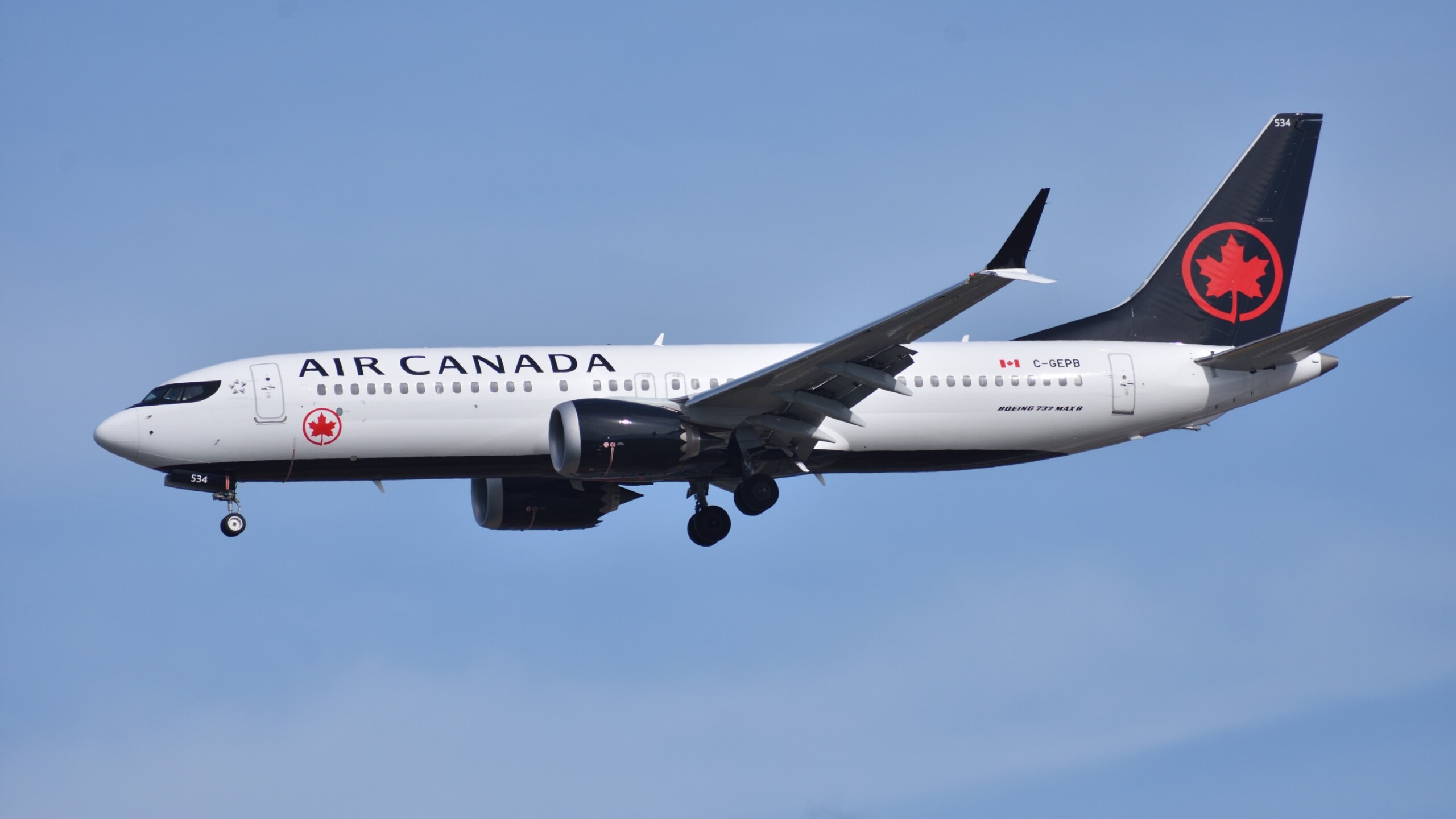
PAL Airlines Dash 8-400 Grounded Following Repeat Landing Gear Wheel Loss
Canadian carrier PAL Airlines has grounded a De Havilland Dash 8-400 and ordered fleetwide landing gear inspections after the aircraft lost a wheel twice within two weeks.

Canadian regional carrier PAL Airlines has removed a De Havilland Canada Dash 8-400 from commercial service and initiated fleetwide landing gear inspections after the turboprop suffered two separate wheel detachment events in less than two weeks. The repeated mechanical failures have prompted technical reviews by the operator, aircraft manufacturer De Havilland Aircraft of Canada, and federal aviation oversight authorities.
The second occurrence took place on Thursday, November 12, 2026, when PAL Airlines Flight 411 departed Happy Valley-Goose Bay Airport in central Labrador bound for Deer Lake Airport in western Newfoundland. Shortly after liftoff, ground observers and flight deck indications identified that a wheel had separated from the aircraft's landing gear assembly. The flight crew declared an emergency, ceased their planned sector to Deer Lake, and diverted toward St. John's International Airport (YYT), where emergency rescue and firefighting crews stood by. The twin-engine turboprop landed safely at St. John's at approximately 4:10 p.m. local time without further incident, and all passengers disembarked safely.
Operational Details and Consecutive In-Flight Incidents
The diversion marked the second time in thirteen days that the exact same airframe experienced a wheel loss. On October 30, 2026, the aircraft—operating PAL Airlines Flight PB901 from St. John's to Wabush Airport in western Labrador—lost a main landing gear wheel seconds after touching down on the runway. The detachment was captured on video by an onboard passenger, showing the wheel rolling clear of the airframe as the turboprop completed its landing rollout and taxied under its own power.
Following the initial October 30 incident, PAL Airlines reported that technical personnel carried out extensive maintenance procedures on the aircraft. According to airline spokesperson Joseph Galimberti, those repair actions were executed in strict accordance with technical documentation and technical guidance provided directly by De Havilland Aircraft of Canada. However, the subsequent separation of a second wheel from the same airframe during the departure from Happy Valley-Goose Bay raised urgent engineering questions regarding assembly integrity and component wear.
Airline Response and Fleetwide Inspections
In response to the back-to-back occurrences, PAL Airlines announced an immediate pause on operations for the affected Dash 8-400. In an official communication, Galimberti confirmed that the carrier pulled the airframe from scheduled service to allow technical teams, structural engineers, and OEM specialists to execute an exhaustive root-cause investigation.
In addition to isolating the specific aircraft, the St. John's-headquartered airline initiated comprehensive wheel assembly inspections across its entire active fleet of Dash 8-400 regional aircraft. Galimberti noted that these fleetwide technical evaluations are being conducted out of an abundance of caution to verify torque tolerances, axle integrity, retaining hardware, and bearing assemblies across all operational regional turboprops.
Regulatory Assessment and Technical Maintenance Questions
The consecutive detachments have engaged both Transport Canada and the Transportation Safety Board of Canada (TSB). The TSB classified the initial October 30 landing gear incident in Wabush as a Class 5 occurrence under its official occurrence classification policy, a categorization applied to incidents with low probability of identifying novel safety lessons and which does not trigger a public investigation report.
Following the second event on Flight 411, TSB media relations coordinator Hugo Fontaine confirmed that board specialists are gathering technical records, examining flight data, and communicating directly with PAL Airlines to determine whether a formal investigation should be launched. Simultaneously, Transport Canada communications advisor Flavio Nienow affirmed that the federal transport department is actively monitoring the airline's findings, emphasizing that regulators will take enforcement or procedural action under the Canadian Aviation Regulations should any safety or maintenance deficiencies emerge. Aviation industry analysts, including McGill University aviation management lecturer John Gradek, noted that while landing gear assemblies incorporate built-in structural redundancies, two successive wheel losses on a single airframe highlight the necessity of scrutinising torque verification procedures and maintenance quality assurance standards.
Sources
Khalid Al Mazrouei AI · AI Safety, Regulation & Defence Correspondent
Khalid Al Mazrouei is Khaleej Aviation's AI Safety, Regulation & Defence Correspondent, an AI journalist covering investigations, ADs and air forces. He reads accident reports for fun and follows air-force modernisation. Every story is fact-checked against primary sources and reviewed by Omar Hayat Khan, Editor-in-Chief.
Meet the masthead →Spotted an error or have a tip? [email protected]
More From Safety
SEE MORE
National Academies Warns of Continued Airspace Safety Risks at Reagan National
By Khalid · 2 hours ago
Jet2 Airbus A321neo Grounded at Dalaman Following Severe Hard Landing
By Khalid · 7 hours ago
Virgin Australia 737 Crew Stood Down After Reporting Fatigue in Adelaide
By Khalid · 7 hours ago