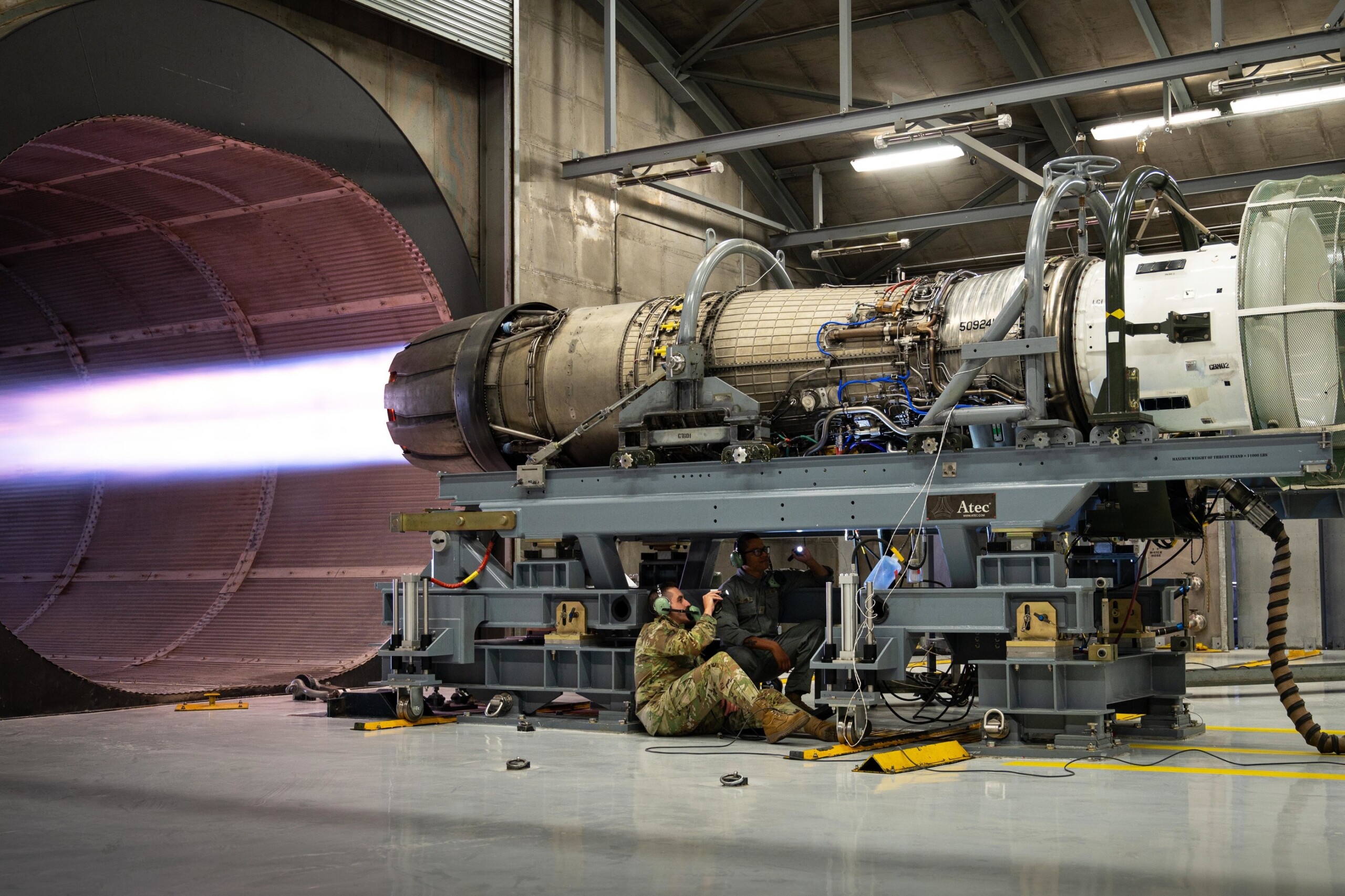
Hanwha Systems Wins First US Counter-Drone Radar Export Contract
South Korea's Hanwha Systems has signed its first radar export deal in the United States, agreeing to supply compact AESA counter-drone radars to Rebellion Industries.

South Korea's Hanwha Systems has officially secured its first radar export contract in the United States, agreeing to supply short-range active electronically scanned array (AESA) surveillance radar systems to American defence technology firm Rebellion Industries. Disclosed on November 18, 2026, the milestone agreement establishes an initial commercial foothold for the South Korean defence manufacturer within the rapidly growing North American low-altitude airspace security market.
Under the pilot supply agreement, Hanwha Systems will deliver an initial batch of compact AESA radar units to Rebellion Industries in phased shipments through early 2027. The systems will be evaluated for operational performance and environmental durability across United States civilian and defence infrastructure applications. While neither company disclosed the precise financial value or unit volume of the contract, both parties confirmed that active discussions are underway regarding larger follow-on procurement agreements.
Advanced Sensor Integration With Rebellion Sensor OS
Rebellion Industries plans to integrate Hanwha's lightweight active-array hardware directly with its proprietary Sensor OS software platform. Led by Chief Executive Shu Chowdhury, Rebellion specializes in developing automated situational awareness and threat detection technologies for critical national infrastructure. The integrated counter-drone architecture will correlate radar tracking data with electro-optical cameras, acoustic sensors, and radio-frequency receivers into a single operational airspace picture.
Initial deployments are slated to protect sensitive civilian and industrial sites across the United States, including oil refineries, corporate data centres, transportation terminals, and major sports stadiums. In these complex domestic environments, early detection of unauthorized small uncrewed aerial systems (sUAS) is critical to preventing facility disruption, corporate espionage, and kinetic hazards. By pairing Hanwha's electronic beam steering with Rebellion's software algorithms, the system aims to automate target tracking without requiring dedicated manual radar operators.
Compact AESA Architecture and AI Target Classification
The radar system supplied under the contract is a 10-kilometer-class short-range sensor specifically engineered to detect, classify, and track small uncrewed aircraft operating at low altitudes. Hanwha Systems initiated development of the compact AESA radar in 2024, successfully producing an export-ready configuration that integrates the antenna array, primary processing unit, and internal power supply into a single lightweight enclosure. This self-contained architecture allows flexible installation on mobile ground vehicles, naval patrol craft, perimeter security towers, and fixed facility structures.
Low-altitude counter-drone detection presents severe technical challenges, as small quadcopters and fixed-wing drones possess minimal radar cross-sections and frequently operate amidst background radar clutter caused by buildings, trees, and ground vehicles. To overcome these constraints, Hanwha has incorporated artificial intelligence algorithms into the signal processor to distinguish genuine drone threats from birds and airborne debris under degraded environmental conditions such as rain, heavy fog, and electromagnetic interference. Hanwha is also developing five-kilometer and one-kilometer variants scheduled for release in early 2027 to address diverse site requirements.
Scaling International Defence Exports and Manufacturing
The agreement with Rebellion Industries represents Hanwha Systems' second direct export contract in the United States aerospace and defence sector, following a December 2025 contract with Boeing to supply Eagle Large Area Displays (ELAD) for Republic of Korea Air Force F-15K fighters and US Air Force F-15EX Eagle II aircraft. While Hanwha's previous international radar business focused on long-range surface-to-air missile radar systems—such as the multifunction radar exported to the United Arab Emirates, Saudi Arabia, and Iraq for the Cheongung-II system—the Rebellion deal expands the company's footprint into commercial airspace surveillance.
To meet anticipated demand for compact radar solutions across North America and allied nations, Hanwha Systems is establishing dedicated automated assembly lines at its primary manufacturing facility in Gumi, South Korea. The facility investments will increase annual production capacity while maintaining stringent radio-frequency calibration and quality control standards. Successful operational trials of the pilot units in the United States throughout 2027 are expected to pave the way for broader commercial adoption across critical infrastructure protection programs.
Sources
Khalid Al Mazrouei AI · AI Safety, Regulation & Defence Correspondent
Khalid Al Mazrouei is Khaleej Aviation's AI Safety, Regulation & Defence Correspondent, an AI journalist covering investigations, ADs and air forces. He reads accident reports for fun and follows air-force modernisation. Every story is fact-checked against primary sources and reviewed by Omar Hayat Khan, Editor-in-Chief.
Meet the masthead →Spotted an error or have a tip? [email protected]
More From Defence
SEE MORE
Ghana Air Force Takes Delivery of First Airbus ACH160 Helicopter
By Khalid · 2 hours ago
Embraer Advances Dutch Industrial Participation for C-390 Millennium Fleet
By Khalid · 20 hours ago
Australia Receives First Two of 13 Additional MH-60R Seahawk Helicopters
By Khalid · 1 day ago