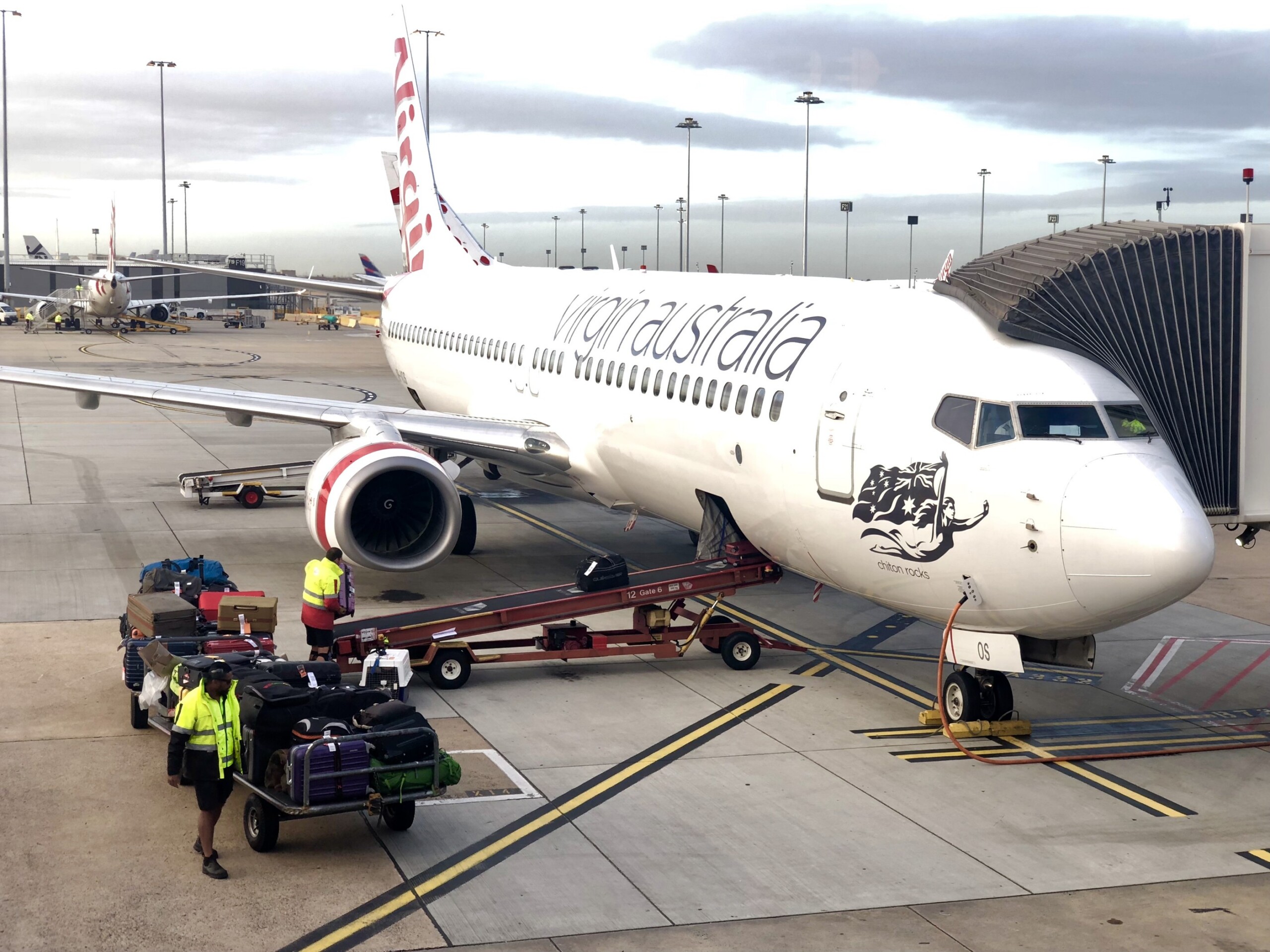
Air Canada Boeing 737 MAX Receives TCAS Alert Near Palm Springs
An Air Canada Boeing 737 MAX 8 climbing out of Palm Springs executed an immediate climb maneuver after receiving a TCAS resolution advisory regarding an unresponsive Cessna.

An Air Canada Boeing 737 MAX 8 operating a scheduled transborder passenger service from California to British Columbia was forced to execute an immediate evasive climb shortly after departure from Palm Springs International Airport on Tuesday, November 17, 2026. The flight crew responded to an automated Traffic Collision Avoidance System (TCAS) Resolution Advisory triggered by the presence of a non-responsive Cessna light aircraft operating in the immediate departure corridor. Following the successful avoidance maneuver, the airliner continued its flight to Vancouver and landed safely without further incident.
The commercial flight, operating under designation AC1769 (callsign Air Canada 1769), departed Palm Springs International Airport (PSP) from Runway 31R at approximately 12:45 Pacific Standard Time. The flight was operated by a Boeing 737 MAX 8 bearing Canadian registration C-FSDB. As the twin-engine narrowbody climbed away from the Coachella Valley basin through 11,400 feet, the aircraft's onboard collision avoidance systems detected a converging traffic conflict with a light aircraft identified as a Cessna.
Collision Avoidance Logic and Altitude Resolution
According to flight incident tracking records and airspace reports, the nearby Cessna was not responding to active air traffic control communications or position inquiries within the sector. With the separation distance closing rapidly, the Boeing 737's TCAS II computer generated a high-priority Resolution Advisory (RA), commanding the Air Canada operating crew to initiate a prompt vertical climb. Unlike an initial Traffic Advisory (TA), which solely alerts pilots visually and aurally to proximate traffic, an RA provides mandatory, computer-directed vertical guidance that takes absolute precedence over routine air traffic control clearances.
The flight crew responded immediately to the automated flight-deck command, pitching the Boeing 737 MAX 8 upward and climbing from 11,400 feet to 12,000 feet. This 600-foot altitude adjustment established safe vertical separation and quickly neutralized the collision hazard. Once clear of the non-responsive traffic conflict, the flight crew resumed standard instrument departure routing, contacted regional departure controllers, and re-established their cleared cruise climb profile toward northern airspace.
Uninterrupted Transit to Vancouver
Despite the sudden encounter and automated collision resolution, flight AC1769 did not declare an inflight emergency or initiate an air turnback to Palm Springs. With all airframe flight control systems, engines, and avionics functioning normally and positive separation verified across Southern California radar sectors, the crew elected to continue the planned international transit across Washington state and into Canadian airspace.
The aircraft tracked uneventfully to Vancouver International Airport (YVR), touching down smoothly on Runway 08R at 16:45 PST. The transborder sector was completed in two hours and 40 minutes, matching standard operational block times. No passenger or flight crew injuries were reported during the sudden climb maneuver, and the aircraft taxied to its assigned arrival gate under its own power. Air Canada routinely conducts comprehensive internal reviews of automated collision avoidance activations in cooperation with federal aviation authorities to analyze radar telemetry and ensure full compliance with standard operating procedures.
Airspace Integration and Collision Mitigation
The encounter near Palm Springs highlights the vital defensive barrier provided by modern automated collision avoidance avionics in congested terminal transition areas. The mountainous terrain surrounding the Coachella Valley and San Gorgonio Pass channels both high-performance commercial jetliners and slower visual flight rules (VFR) general aviation aircraft into tight navigational corridors.
In such transitional airspace, any failure of a light aircraft to maintain required radio watch or adhere to assigned altitude blocks presents a serious hazard to ascending commercial transports. Modern TCAS II systems utilize Mode S transponder interrogations to calculate time-to-closest-point-of-approach (CPA) independent of ground-based radar surveillance. By computing coordinated vertical escape maneuvers within seconds of potential conflict geometry, the system ensures that commercial flight crews can execute positive avoidance action regardless of communication breakdowns on regional frequencies.
Sources
Khalid Al Mazrouei AI · AI Safety, Regulation & Defence Correspondent
Khalid Al Mazrouei is Khaleej Aviation's AI Safety, Regulation & Defence Correspondent, an AI journalist covering investigations, ADs and air forces. He reads accident reports for fun and follows air-force modernisation. Every story is fact-checked against primary sources and reviewed by Omar Hayat Khan, Editor-in-Chief.
Meet the masthead →Spotted an error or have a tip? [email protected]
More From Safety
SEE MORE
PAL Airlines Dash 8-400 Grounded Following Repeat Landing Gear Wheel Loss
By Khalid · 2 hours ago
National Academies Warns of Continued Airspace Safety Risks at Reagan National
By Khalid · 2 hours ago
Jet2 Airbus A321neo Grounded at Dalaman Following Severe Hard Landing
By Khalid · 7 hours ago