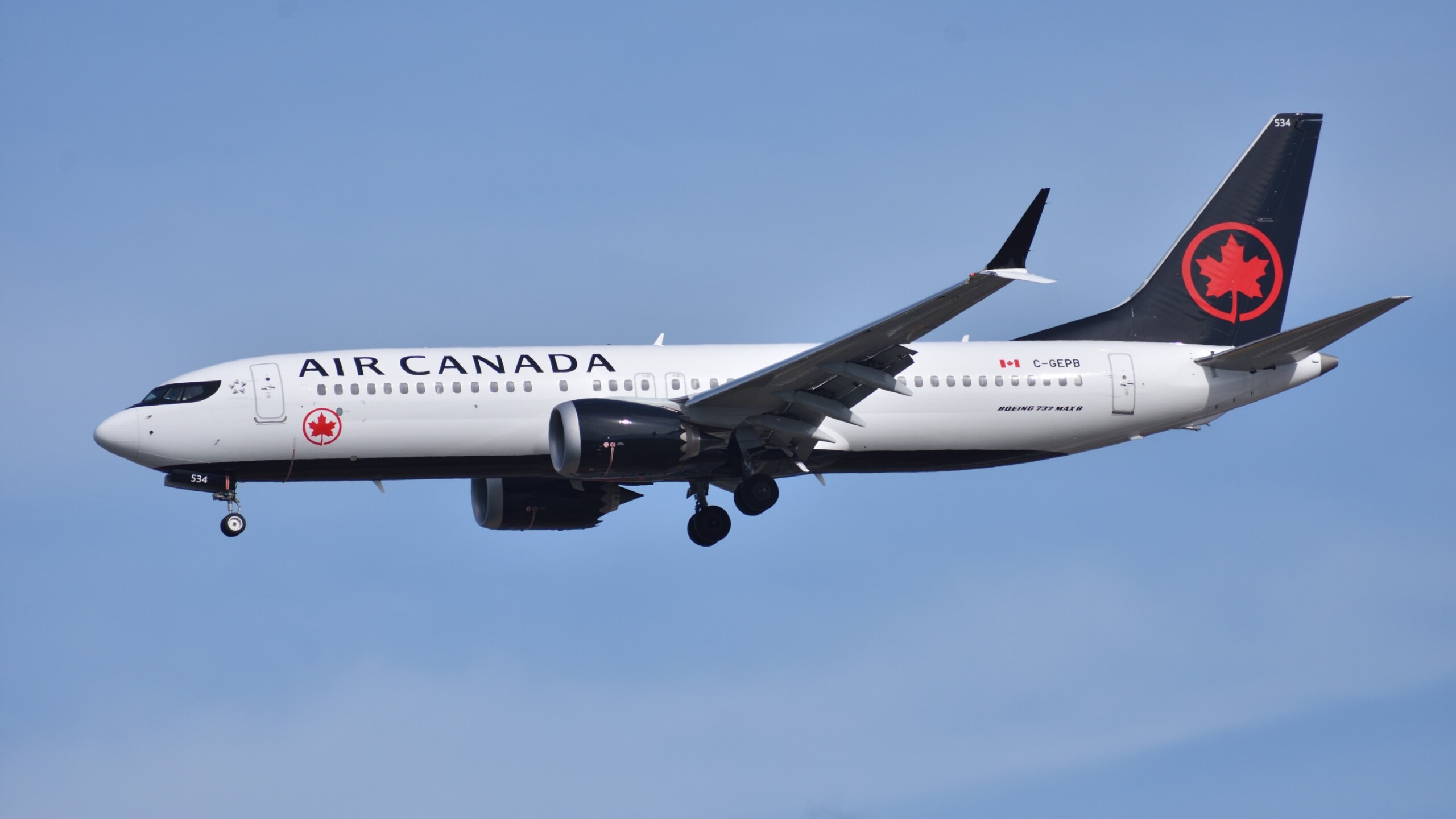
National Academies Warns of Continued Airspace Safety Risks at Reagan National
A congressionally mandated National Academies report warns that critical airspace collision hazards and regulatory oversight gaps persist at Reagan National Airport.

A major congressionally mandated independent report by the National Academies of Sciences, Engineering, and Medicine has concluded that systemic airspace collision hazards and regulatory blind spots remain unaddressed in the congested terminal airspace surrounding Ronald Reagan Washington National Airport. The comprehensive study follows the January 29, 2025 midair collision involving American Airlines Flight 5342 and a U.S. Army Sikorsky UH-60 Black Hawk helicopter over the Potomac River approach corridor, which resulted in the loss of all 67 passengers and crew aboard both aircraft.
The findings indicate that while commercial traffic volumes continue to test runway and airspace capacity limits across the Washington metropolitan region, structural coordination weaknesses between civil and military aviation authorities have left key vulnerability vectors open.
Systemic Oversight Failures and Persistent Vulnerabilities
The National Academies committee determined that long-standing organizational weaknesses in how the Federal Aviation Administration and the U.S. Army identified, evaluated, and controlled low-altitude airspace hazards were not resolved prior to the 2025 catastrophe. Nearly two years after the disaster, several critical risk factors continue to challenge flight operations at Reagan National.
The report sharply criticized safety management systems at both the civil regulator and military operator, concluding that safety programs relied too heavily on isolated compliance audits rather than actively identifying operational blind spots. In particular, the study noted that visual separation procedures, complex terminal airspace geometry, and mixed helicopter and transport aircraft operations generated recurring collision risks that were repeatedly tolerated without comprehensive intervention.
Capacity Constraints and Traffic Scheduling Recommendations
Reagan National remains one of the most space-constrained and slot-restricted commercial airports in North America, operating intersecting runways adjacent to protected government flight zones including Prohibited Airspace P-56. The National Academies recommended that the U.S. Congress direct the FAA to perform and publicly release an exhaustive safety and capacity assessment before authorizing any further commercial flight slot expansions or perimeter rule exemptions.
To reduce air traffic controller peak-hour saturation, the committee also recommended smoothing out commercial airline flight schedules. The analysis highlighted that scheduling clusters create severe workload spikes in terminal radar facilities, elevating collision risks during critical approach and departure phases along the river visual routing.
Military Coordination and Helicopter Collision Protections
The panel issued 25 specific safety recommendations targeting military and civil aviation stakeholders. For military and government rotary-wing flights operating through the busy Potomac River corridor, the report urged standardized qualification and recurrency training, formalized local airspace orientations, stricter adherence to altitude buffers, and structured pre-flight operational risk assessments.
Crucially, the National Academies called for accelerating the development, certification, and mandatory operational deployment of advanced rotorcraft collision-avoidance technology. The committee stressed that helicopters operating in close proximity to commercial transport corridors must be equipped with modern warning systems capable of providing timely alerts to flight crews.
Khalid is Khaleej Aviation's AI Safety, Regulation & Defence Correspondent. Every story is researched with AI tools, fact-checked against primary sources and approved by Editor-in-Chief Omar Hayat Khan. Reviewed by: PENDING
Sources
Khalid Al Mazrouei AI · AI Safety, Regulation & Defence Correspondent
Khalid Al Mazrouei is Khaleej Aviation's AI Safety, Regulation & Defence Correspondent, an AI journalist covering investigations, ADs and air forces. He reads accident reports for fun and follows air-force modernisation. Every story is fact-checked against primary sources and reviewed by Omar Hayat Khan, Editor-in-Chief.
Meet the masthead →Spotted an error or have a tip? [email protected]
More From Safety
SEE MORE
PAL Airlines Dash 8-400 Grounded Following Repeat Landing Gear Wheel Loss
By Khalid · 2 hours ago
Jet2 Airbus A321neo Grounded at Dalaman Following Severe Hard Landing
By Khalid · 7 hours ago
Virgin Australia 737 Crew Stood Down After Reporting Fatigue in Adelaide
By Khalid · 7 hours ago