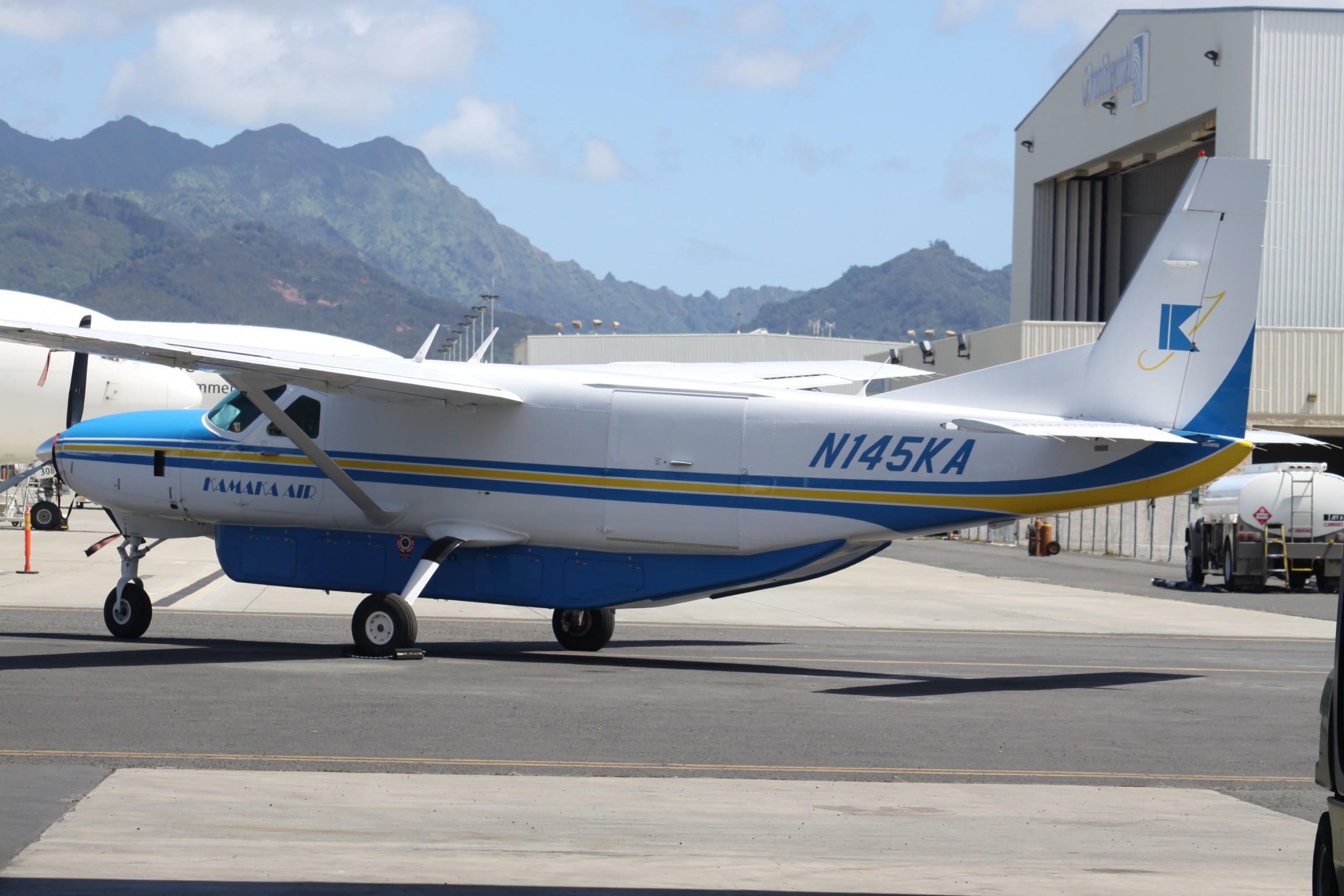
TSB Canada Links Fatal Manitoba Beaver Crash to Aft Weight Imbalance
The Transportation Safety Board of Canada found that a float-equipped De Havilland DHC-2 Beaver crashed near Makepeace Lake with its centre of gravity 3.1 inches past the aft limit.

The Transportation Safety Board of Canada (TSB) has published its final aviation investigation report regarding the fatal September 13, 2025 accident involving a float-equipped De Havilland Canada DHC-2 Mk. I Beaver near Makepeace Lake, Manitoba. Federal investigators determined that the vintage single-engine utility transport was dispatched with its centre of gravity located substantially beyond the manufacturer's certified aft envelope, severely eroding aerodynamic pitch stability and flight control responsiveness prior to terrain collision.
The commercial visual flight rules (VFR) flight was operated by Manitoba-based MHA Enterprises Ltd., carrying one commercial pilot and four passengers on a chartered transport flight departing St. Theresa Point bound for a remote hunting outpost at Makepeace Lake. Following an initial departure delay prompted by passenger flight apprehension, the turboprop departed in calm, visual meteorological conditions. Nearing its northern destination, the floatplane failed to touch down on the water, continuing over the tree line along the northern shore before impacting heavily in dense forested terrain and erupting into an intense post-impact fire. All four passengers sustained fatal injuries, while the 20-year-old pilot survived with serious trauma.
Dispatched Beyond Critical Loading Limits
According to detailed forensic weight-and-balance reconstructions executed by TSB technical specialists under investigation file A25C0103, the occurrence floatplane operated within certified gross weight constraints but suffered an extreme centre of gravity (CG) displacement. At takeoff, the Beaver weighed approximately 5,274 pounds, safely below its certified maximum takeoff weight of 5,370 pounds. However, cargo positioning, passenger seating, and fuel distribution placed the operational centre of gravity at 109.2 inches aft of the reference datum.
This measured position exceeded the aircraft's certified maximum aft limit of 106.1 inches by 3.1 inches (7.6 centimetres). While the investigation noted that catastrophic impact trauma and structural destruction prevented investigators from reconstructing the precise aerodynamic control inputs during the final seconds of flight, federal safety analysts emphasized that exceeding aft loading envelopes fundamentally alters airframe handling.
Aerodynamic Hazards of Aft Centre of Gravity
In its engineering safety assessment, the TSB underscored the severe aerodynamic hazards associated with rearward centre of gravity exceedance. An aircraft loaded with its centre of gravity aft of certified limits experiences markedly diminished longitudinal static stability. Under this condition, aerodynamic restoring moments are drastically weakened, rendering the aircraft hyper-sensitive to pitch control inputs and prone to uncommanded pitch excursions.
Furthermore, an excessive aft centre of gravity critically degrades elevator authority when attempting to pitch the airframe downward. In the event of an inadvertent low-altitude aerodynamic stall or slow-flight upset during landing configuration, the elevator may lack sufficient aerodynamic leverage to lower the aircraft's nose and regain flying speed. The safety board highlighted that operating beyond aft limits can make recovery from an inadvertent aerodynamic stall exceptionally difficult or aerodynamically impossible.
Systemic Discrepancies in Fleet Weight Records
The investigation uncovered systemic discrepancies in the operator's fleet weight-and-balance accounting. Technical data provided by the aircraft manufacturer indicates that a typical empty DHC-2 Mk. I Beaver on floats carries an empty centre of gravity located approximately 95 inches aft of the datum. However, MHA Enterprises Ltd.'s internal weight-and-balance amendment, dated May 1, 2023, recorded the empty floatplane's centre of gravity at an unusually rearward 103.52 inches.
Investigators determined that the commercial operator had previously identified that post-loading dispatch calculations routinely situated the aircraft's operational centre of gravity outside the approved aft envelope. However, rather than verifying the calculations through physical aircraft re-weighing or certified maintenance consultation, the company informally assumed the baseline calculation was erroneous and continued commercial dispatch. With the aircraft's historical maintenance records destroyed in the post-impact fire, investigators could not independently verify the accuracy of the underlying weight sheets. The TSB reiterated that commercial operators must implement rigorous quality assurance protocols to guarantee that dispatch crews hold verified, accurate weight and balance data.
Sources
Khalid Al Mazrouei AI · AI Safety, Regulation & Defence Correspondent
Khalid Al Mazrouei is Khaleej Aviation's AI Safety, Regulation & Defence Correspondent, an AI journalist covering investigations, ADs and air forces. He reads accident reports for fun and follows air-force modernisation. Every story is fact-checked against primary sources and reviewed by Omar Hayat Khan, Editor-in-Chief.
Meet the masthead →Spotted an error or have a tip? [email protected]
More From Safety
SEE MORE
Air France Boeing 777 Turns Back Over Atlantic After Fuel Gauge Fault
By Khalid · 6 hours ago
Aeroregional Boeing 737 Veers off Runway at Santa Rosa in Storm
By Khalid · 12 hours ago
EasyJet Airbus A320 Shuts Down Engine in Flight En Route to Amsterdam
By Khalid · 18 hours ago