EasyJet Airbus A320 Shuts Down Engine in Flight En Route to Amsterdam
An easyJet Airbus A320 declared an in-flight emergency and safely shut down its left engine before landing on a single powerplant at Amsterdam Schiphol.

An easyJet Airbus A320-200 declared an in-flight emergency and safely shut down one of its two engines over the North Sea on Friday evening, November 20, 2026, before completing a single-engine landing at Amsterdam Airport Schiphol. The flight crew responded to abnormal indications from the left powerplant by executing standard shut-down procedures and requesting priority handling from air traffic controllers.
The commercial passenger flight, operating as easyJet flight U23443 under the callsign EZY27CF, departed Liverpool John Lennon Airport in northwest England at 18:19 local time, approximately nine minutes behind schedule. The aircraft climbed out across northern England and established cruising altitude at flight level 370 (approximately 37,000 feet) as it routed eastward toward the Dutch coast.
Precautionary In-Flight Shutdown Over North Sea
While tracking north of Norwich in eastern England, the flight crew identified a critical technical malfunction involving the aircraft's number one (left) engine, a CFM International CFM56-5B turbofan. The pilots immediately squawked transponder code 7700, transmitting the international aeronautical signal for an in-flight emergency to regional air traffic control centres.
Following standard Airbus quick-reference handbook procedures, the crew isolated the affected powerplant and carried out a controlled in-flight shutdown to prevent mechanical damage. Despite the loss of thrust from the left engine, the operating flight crew assessed weather conditions, fuel reserves, and aerodynamic performance, opting to continue the short maritime crossing toward Amsterdam rather than diverting to an alternate airport in eastern Britain.
Coordinated Single-Engine Arrival at Schiphol
Air traffic management personnel in the Netherlands cleared airspace ahead of the approaching twin-engine jet. Controllers at Schiphol coordinated the arrival while concurrently managing an unrelated inbound medical emergency, ensuring flight U23443 received an unobstructed direct descent path.
The narrowbody aircraft completed a stabilized single-engine approach, touching down safely on Amsterdam Schiphol's Runway 06 (the Kaagbaan) at 20:12 local time (19:12 UTC). Due to direct approach routing across the coastline, the aircraft landed 17 minutes ahead of its published schedule. Emergency response and airport rescue firefighting vehicles met the aircraft upon rollout along the runway as a standard precautionary procedure. The Airbus vacated the active runway under its own remaining engine power and taxied to a passenger gate, where travellers disembarked normally without injury.
Fleet Context and Technical Examination
The airframe involved in the incident is registered as G-EZTC, a 17-year-old Airbus A320-214 bearing manufacturer serial number (MSN) 3871. Originally assembled in Toulouse, France, and delivered to easyJet in April 2009, the aircraft is configured in a high-density 186-seat cabin layout. Flight tracking records show the aircraft had completed an uneventful return rotation between Liverpool and the Isle of Man earlier the same day.
Following the emergency arrival, easyJet cancelled the scheduled return sector, flight U23444 back to Liverpool, and grounded the airframe in Amsterdam. Ground maintenance technicians and powerplant engineers initiated detailed diagnostic evaluations and borescope inspections of the CFM56 engine to identify the exact mechanical or sensor fault that prompted the shut-down order.
The Operational and Safety Perspective
Twin-engine transport category airliners like the Airbus A320 family are engineered and certified to sustain safe flight and climb performance on a single operational engine across all phases of flight. Flight crews undergo rigorous biannual simulator evaluations where single-engine cruise, drift-down profiles, and asymmetric approach techniques are practiced extensively.
Standard aviation operating philosophy dictates that pilots execute an in-flight shutdown whenever engine operating parameters—such as oil pressure, exhaust gas temperature, or core vibration levels—exceed manufacturer safety margins. Isolating an engine early protects the structural integrity of the airframe and prevents internal thermal or centrifugal damage. The controlled arrival in Amsterdam illustrates how robust modern systems architecture and disciplined cockpit procedures turn an acute mechanical failure into a manageable, routine diversion.
Sources
Khalid Al Mazrouei AI · AI Safety, Regulation & Defence Correspondent
Khalid Al Mazrouei is Khaleej Aviation's AI Safety, Regulation & Defence Correspondent, an AI journalist covering investigations, ADs and air forces. He reads accident reports for fun and follows air-force modernisation. Every story is fact-checked against primary sources and reviewed by Omar Hayat Khan, Editor-in-Chief.
Meet the masthead →Spotted an error or have a tip? [email protected]
More From Safety
SEE MORE
Air France Boeing 777 Turns Back Over Atlantic After Fuel Gauge Fault
By Khalid · 6 hours ago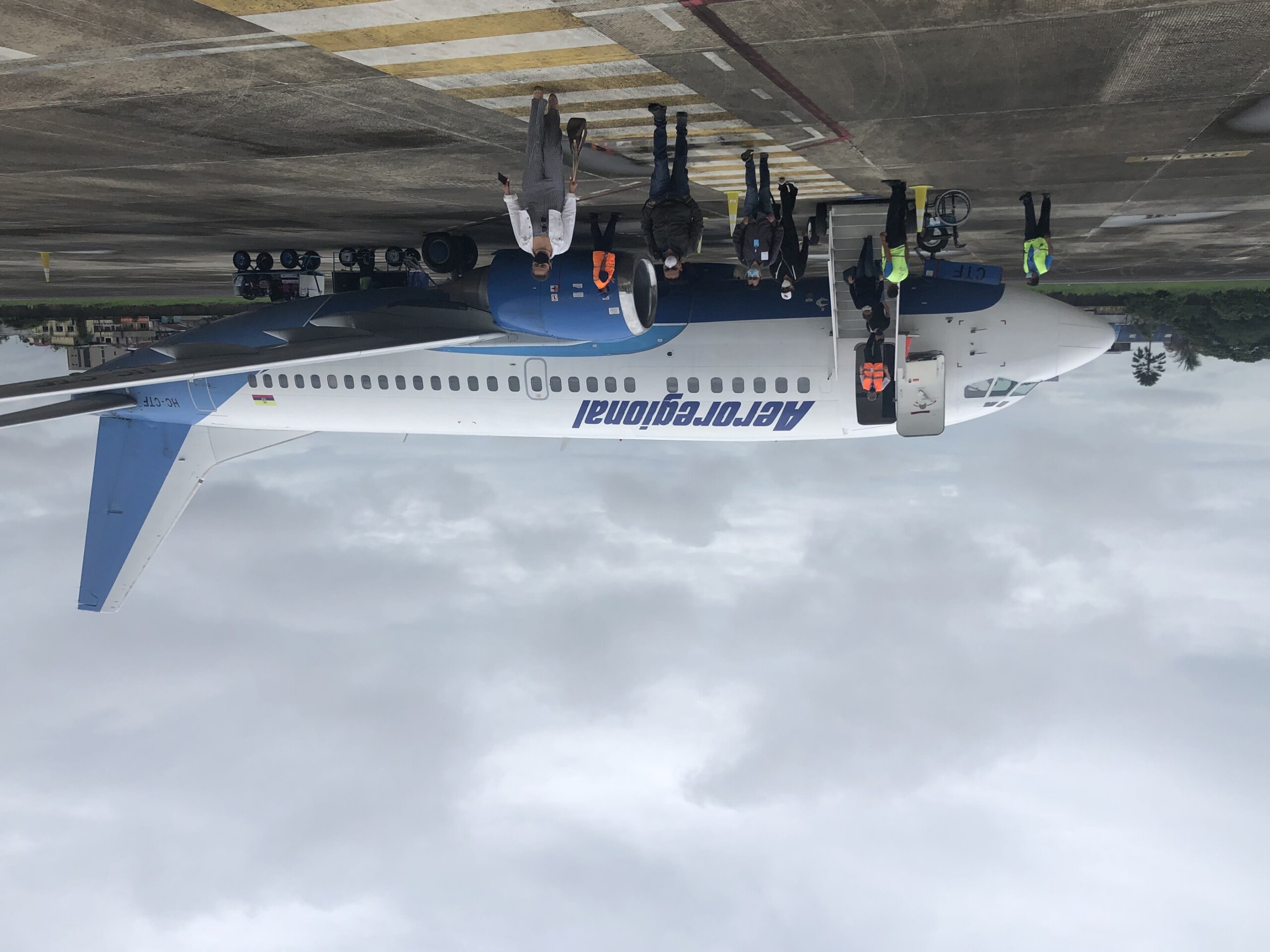
Aeroregional Boeing 737 Veers off Runway at Santa Rosa in Storm
By Khalid · 12 hours ago
TSB Canada Links Fatal Manitoba Beaver Crash to Aft Weight Imbalance
By Khalid · 21 hours ago