NTSB Recommends Overhaul of Aerial Fire Retardant Corrosion Standards
The National Transportation Safety Board has called on the US Forest Service to rewrite chemical qualification standards after aerial fire retardants caused severe structural corrosion on large airtankers.

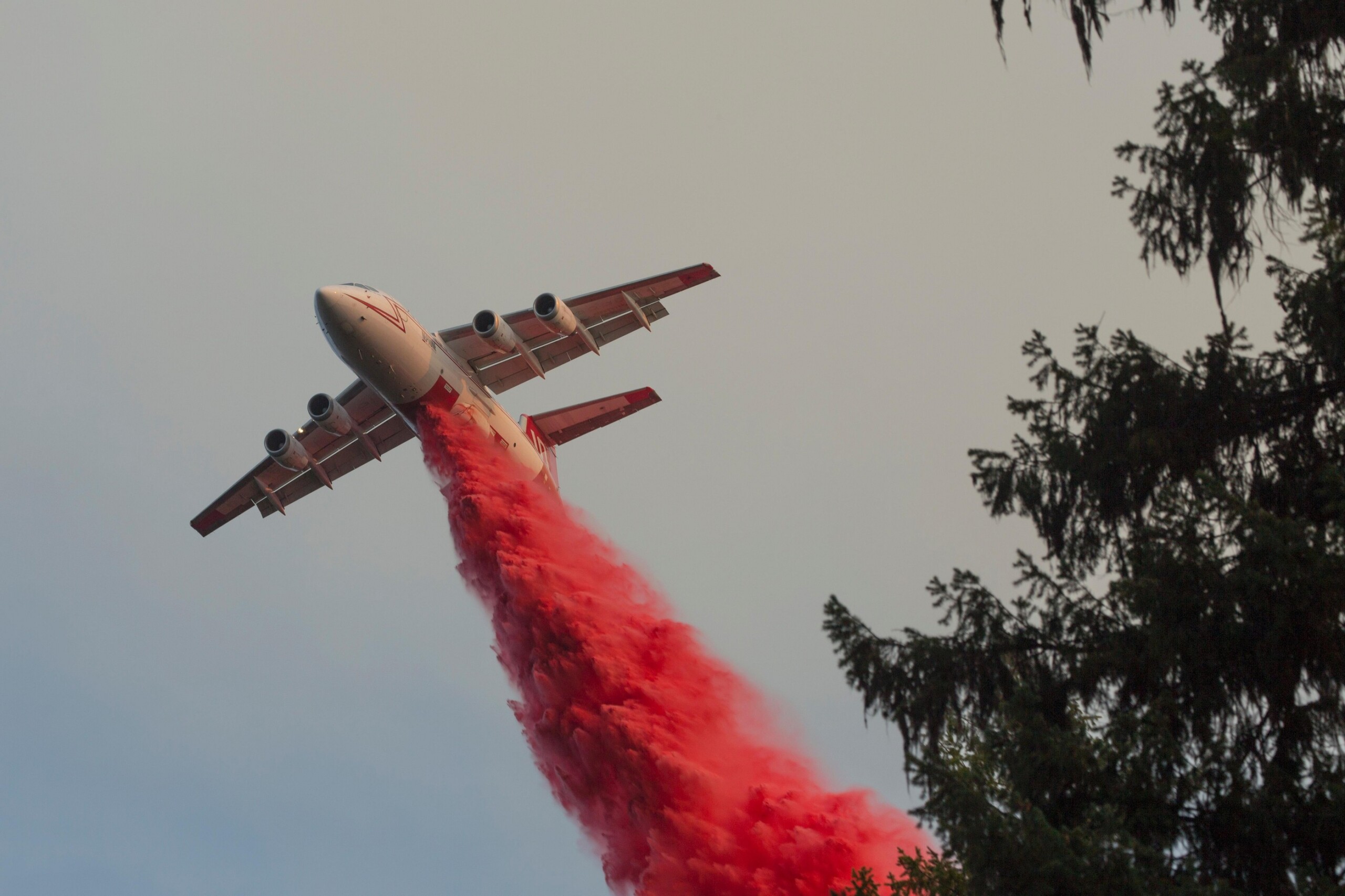
The National Transportation Safety Board (NTSB) has issued urgent safety recommendations calling on the United States Department of Agriculture Forest Service to overhaul its qualification and testing standards for aerial fire retardants. The safety bureau determined that outdated regulatory testing procedures allowed a newly formulated chemical retardant to receive full operational approval despite causing severe and aggressive corrosion to primary airframe structures on large airtankers.
The federal investigation, documented in safety report AIR-26-06, was launched following the 2023 wildfire season after maintenance personnel discovered extensive corrosion and crusty chemical residue on two specialized firefighting airtankers. The affected aircraft included a British Aerospace BAe-146 operated by Neptune Aviation Services as Tanker 02 and a McDonnell Douglas MD-87 operated by Aero Air as Tanker 106. Both aircraft had participated in field evaluations dispensing a newly developed magnesium chloride-based retardant known as Fortress FR-200.
Severe Chemical Corrosion on Large Airtankers
Post-season structural inspections of the two airtankers revealed widespread galvanic and chemical degradation across fuselage floor beams, internal skins, pressure bulkheads, electrical wiring harnesses, and wing assemblies. On the MD-87, inspectors discovered that chemical corrosion had penetrated primary structural members, including an external reinforcement doubler on the lower cap of the right wing forward spar.
The NTSB concluded that the probable cause of the airframe damage was the operational field evaluation and qualification of a new fire retardant whose chemical composition was fundamentally incompatible with standard aerospace alloys and previously approved chemical products. Although aerial firefighting operators routinely wash airtankers after missions, the corrosive chemicals seeped through seams and fasteners into enclosed airframe cavities, where standard line maintenance cleaning could not reach.
Flaws in Forest Service Laboratory Testing Standards
In its detailed technical analysis, the safety board identified systemic shortcomings in Forest Service Specification 5100-304d, the governing standard used to qualify long-term fire retardants. The evaluation protocol relied primarily on laboratory immersion testing of small, isolated metal coupons of uniform alloys rather than testing realistic, built-up structural components.
This isolated coupon methodology failed to replicate real-world operating conditions. It did not evaluate how the retardant behaves when trapped in crevices, exposed to cyclic temperature variations, or placed in contact with dissimilar metals that produce severe galvanic corrosion. Consequently, the chemical retardant passed all baseline laboratory metrics and achieved full qualification on the USFS Qualified Products List before being deployed on commercial contract aircraft.
Chemical Comingling and Primary Structural Risks
The investigation also highlighted significant risks associated with the comingling of chemically distinct fire retardants. During the operational trial, Tanker 02 and Tanker 106 loaded Fortress FR-200 at designated evaluation bases but frequently loaded conventional ammonium phosphate-based retardants, such as Phos-Chek MVP-Fx, at other tanker bases.
Laboratory analyses revealed that mixing magnesium chloride retardant with ammonium phosphate chemicals formed insoluble precipitates and altered pH levels, creating aggressive chemical compounds that accelerated corrosion on aluminium alloys and cadmium-plated steel fasteners. The safety board warned that undetected structural corrosion within wing spars and carry-through structures poses a catastrophic airworthiness risk during high-stress low-altitude firefighting manoeuvres.
Formal Safety Recommendations to Modernise Standards
Following preliminary findings from the investigation, the Forest Service suspended the qualification of Fortress FR-200 and related products in May 2024, removing them from operational service. However, the NTSB emphasized that permanent systemic reforms are required to prevent similar hazards from recurring.
The NTSB issued two formal safety recommendations urging the Forest Service to collaborate with aircraft manufacturers, airtanker operators, and corrosion engineering specialists to develop comprehensive testing protocols. The revised standards must incorporate realistic multi-metal assemblies, crevice corrosion assessments, and comingling evaluations before any future chemical formulation receives flight qualification.
Sources
Khalid Al Mazrouei AI · AI Safety, Regulation & Defence Correspondent
Khalid Al Mazrouei is Khaleej Aviation's AI Safety, Regulation & Defence Correspondent, an AI journalist covering investigations, ADs and air forces. He reads accident reports for fun and follows air-force modernisation. Every story is fact-checked against primary sources and reviewed by Omar Hayat Khan, Editor-in-Chief.
Meet the masthead →Spotted an error or have a tip? [email protected]
More From Safety
SEE MORE
AAIB Details Cameron Z-133 Balloon Power Line Strike in Warwickshire
By Khalid · 7 hours ago
AAIB Details Quik GT450 Threshold Barrier Collision at East Fortune
By Khalid · 12 hours ago
AAIB Details Pulsar XP Engine Power Loss and Forced Landing
By Khalid · 13 hours ago