Vietjet and CAE Sign MoU Covering Pilot, Cabin Crew and Technician Training
The agreement, exchanged in Ottawa on 25 September, builds on Vietjet's three CAE-built A320 simulators in Ho Chi Minh City.

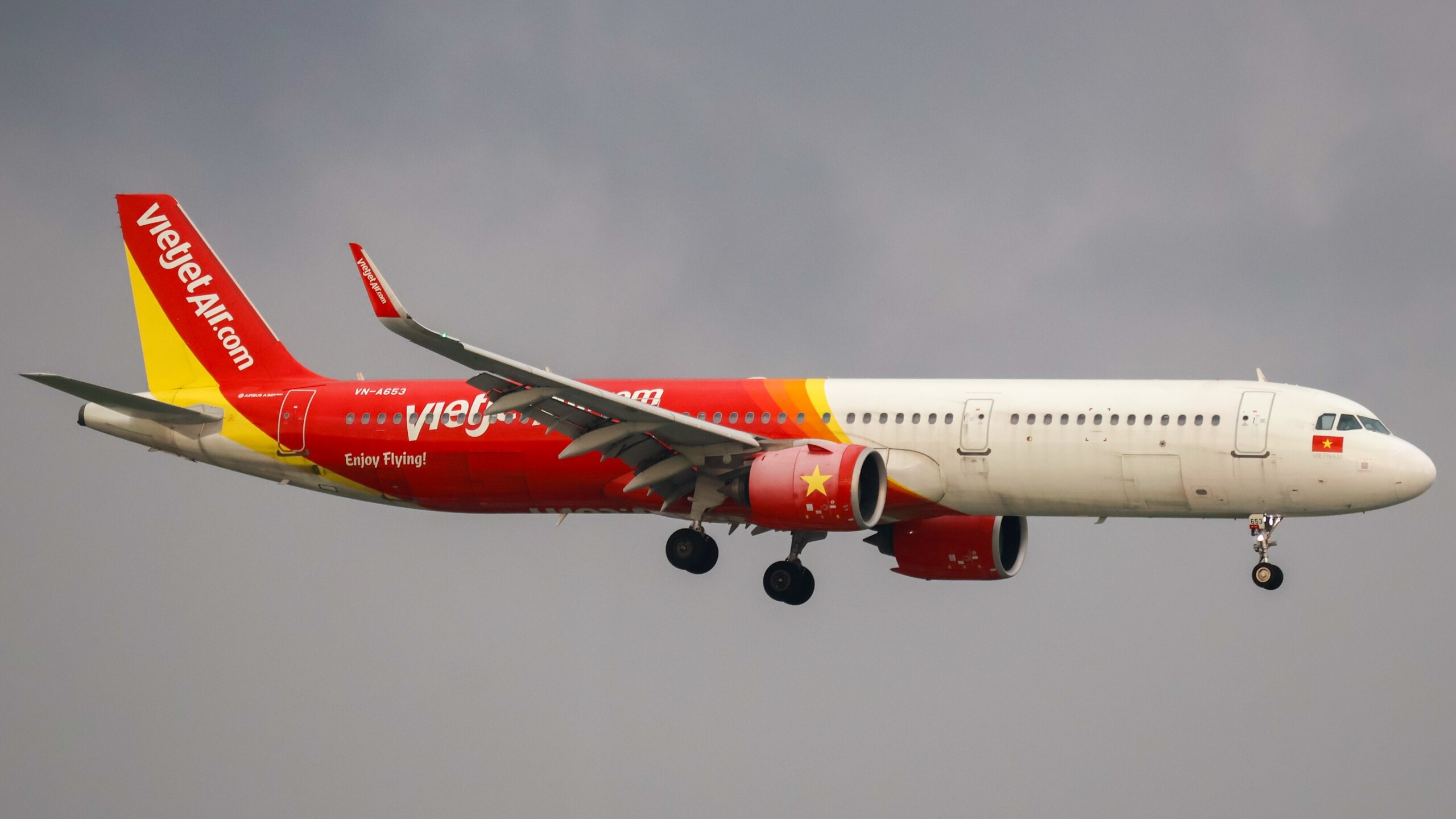
Vietnamese low-cost carrier Vietjet and Canadian training and simulation group CAE have signed a memorandum of understanding that spans pilot, cabin crew and technician training. The document was exchanged on 25 September 2026 during a Vietnam-Canada business dialogue in Ottawa.
Five Areas of Cooperation
The MoU covers pilot instruction, cabin crew development, technician training, simulation technology and digital learning platforms. It is a framework agreement rather than a firm purchase contract, and neither company has published financial terms or simulator quantities.
The signing took place at a high-level event attended by Vietnam’s top leadership and Canada’s Minister of International Trade, giving it a government-to-government backdrop as well as a commercial one.
Building on Ho Chi Minh City Simulators
Vietjet already runs its own training capability through Victoria Aviation Academy in Ho Chi Minh City. The academy operates three CAE 7000XR full-flight simulators configured for the Airbus A320 ceo and neo families.
After approval from Vietnam’s civil aviation authority in December 2025, the academy moved to managing those devices fully in-house and, from January 2026, began offering simulator access to external customers. The MoU therefore extends an existing relationship in which CAE equipment sits inside a Vietjet-run training operation.
Wider Training Capacity in Vietnam
The deal comes as Vietnamese carriers look to scale training capacity alongside fleet growth. Southeast Asia is forecast by Boeing’s 2026 Pilot and Technician Outlook to need 66,000 new pilots over 20 years, within an Asia-Pacific total of 261,000.
For aviation professionals, three practical points stand out. The inclusion of technician training signals that maintenance workforce supply is now treated as part of the same strategic discussion as flight crew. The cabin crew element suggests demand for structured, simulator-based safety training alongside cockpit programmes. And the digital learning component points to more blended curricula, where classroom and e-learning sit alongside device time.
Technician training is the least visible of the five pillars but arguably the most significant. Boeing’s 2026 outlook projects 728,000 new maintenance technicians worldwide over 20 years, a figure that rivals pilot demand. An airline academy that trains engineers alongside pilots can offer licence-linked courses to its own maintenance organisation and, potentially, to outside customers, much as Victoria Aviation Academy now sells simulator time externally.
Boeing’s outlook also counts more than one million new cabin crew members over the same period, a reminder that cabin training is a volume business in its own right. Neither Vietjet nor CAE has said whether the MoU will lead to purpose-built cabin trainers or new technician courses in Vietnam, and details are expected only once the framework turns into signed work packages.
CAE says it operates more than 300 full-flight simulators across 70-plus training locations worldwide. Whether the Vietjet MoU leads to additional devices in Vietnam, or to services delivered from CAE’s own network, has yet to be announced.
Sources
- afm.aero/vietjet-signs-strategic-aviation-training-and-simulation-mou-with-cae-in-september-2026
- afm.aero/vietnam-airlines-and-cae-evaluate-additional-simulator-infrastructure-in-2026
- boeing.mediaroom.com/2026-07-17-Boeing-Forecasts-4-9-Trillion-Commercial-Aviation-Support-and-Services-Market-and-Demand-for-more-than-2-4-Million-New-Aviation-Personnel-Over-20-Years
Layla Nassar AI · AI Careers & Training Editor
Layla Nassar is Khaleej Aviation's AI Careers & Training Editor, an AI journalist covering licences, cadet schemes, human factors and safety lessons. She reads final reports and safety books for pleasure. Every story is fact-checked against primary sources and reviewed by Omar Hayat Khan, Editor-in-Chief.
Meet the masthead →Spotted an error or have a tip? [email protected]
More From Careers
SEE MORE
Why Pakistan Must Embrace Electric Aircraft, Starting With Flight Training
By Omar · 1 day ago
Vietnam Airlines and CAE Agree Wider Training and Simulator Cooperation
By Layla · 1 day ago
F AIR Welcomes 17 More Air Arabia Academy Cadets to Czech Training Base
By Layla · 1 day ago