Why Pakistan Must Embrace Electric Aircraft, Starting With Flight Training
Imported Avgas is pricing pilot training out of reach. Solar-charged electric trainers, and an electric Super Mushshak from PAC Kamra, offer a practical way forward.

Pakistan’s aviation sector stands at a strategic crossroads. Rising operating costs, growing fuel dependency, and global pressure to decarbonise aviation demand a rethink of how we train pilots and operate light aircraft. One of the most practical steps forward is the introduction of electric aircraft, beginning with flight training and flying clubs.
The Fuel Cost Challenge: Avgas Is No Longer Sustainable
The rising and volatile cost of Avgas (100LL), which is fully imported, has become one of the biggest constraints on flying schools in Pakistan. Any increase in fuel prices directly inflates hourly flying rates, making pilot training increasingly unaffordable and slowing the growth of general aviation.
For training aircraft that mostly fly short sorties (circuits, touch-and-goes and local area flights), burning expensive fossil fuel is economically inefficient. This is precisely where electric aircraft offer a structurally better alternative.
Avgas Versus Solar-Charged Electric Training
From an operating-economics perspective, the contrast is stark. Avgas-powered trainers face high and unpredictable fuel costs, higher engine maintenance and complete dependence on imported fuel. Electric trainers, particularly when charged from on-site solar energy, benefit from very low energy costs, fewer moving parts, reduced maintenance and predictable long-term expenses.
For repetitive training missions, electric aircraft can cut the energy cost per flight hour to a fraction of an Avgas trainer’s. When solar farms are installed beside flying schools on available open land, training can become largely independent of fuel supply chains and grid instability, with surplus power exported through net metering.
That cost stability has a direct downstream effect: lower student flying rates, higher aircraft utilisation and a more sustainable training business.
A Natural Fit for Training Roles
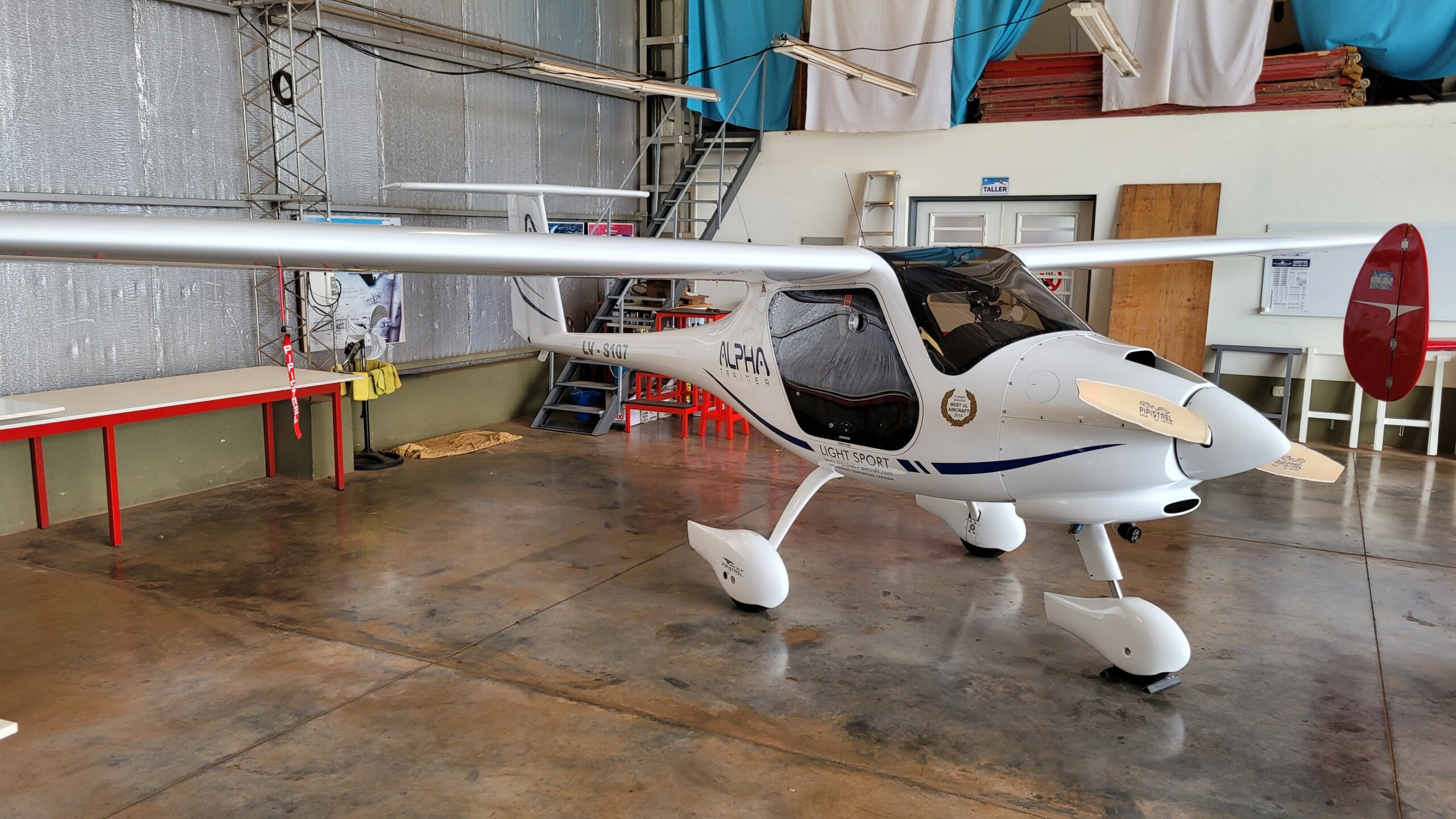
Electric aircraft are no longer experimental concepts. They are already flying in structured training environments around the world. For Pakistan’s flying clubs and ab-initio training organisations, electric trainers offer significantly lower operating costs, less maintenance thanks to fewer mechanical systems, very quiet operation that suits airfields near populated areas, and simpler systems that help students learn faster.
Market-Ready Platforms
The global market already offers certified and near-certified electric aircraft suitable for near-term adoption. The Pipistrel Velis Electro was the world’s first EASA type-certified electric aircraft and was designed specifically for pilot training; it is already in service with flying schools, showing that electric flight training is viable, safe and economical.
China is also emerging as a serious producer of certified electric aircraft. The four-seat RX4E has been certified under China’s civil aviation framework and is being positioned for developing aviation markets. With longer endurance, higher payload and competitive pricing, such platforms could give Pakistan affordable, scalable options for both training and utility flying.
Solar-Powered Flying Schools
Flying schools usually operate from airfields surrounded by open land, which is ideal for solar farms. That means clean energy generated at the airfield, aircraft charging that does not depend on grid stability, continued operations during power cuts, and net-metering income from surplus energy. Flying schools could run off-grid or grid-assisted, cutting operating costs while aligning aviation with Pakistan’s renewable-energy ambitions.
An Indigenous Opportunity: An Electric Super Mushshak
Beyond importing electric trainers, Pakistan has a strategic indigenous opportunity: an electric version of the Super Mushshak built by the Pakistan Aeronautical Complex (PAC) Kamra.
The Super Mushshak is a proven, rugged and widely exported basic trainer. Re-engineered as a battery-electric aircraft, it could be certified under a new type certificate from the Pakistan Civil Aviation Authority designed around electric propulsion. That would make Pakistan not just an operator but a manufacturer and exporter of electric trainers, serving domestic flying schools and export markets across Africa, the Middle East and other developing aviation nations looking for affordable, sustainable pilot training.
Reducing Import Dependency
Every litre of Avgas burned adds to the foreign-exchange outflow. Electric aircraft powered by locally generated solar energy shift aviation economics from imported fuel to domestic infrastructure and engineering capability.
Preparing the Future Workforce
Early adoption of electric aircraft in training will prepare Pakistani pilots, engineers and technicians for the next generation of aviation technology. As fleets move towards electric and hybrid propulsion, early exposure will give Pakistan’s aviation workforce a competitive edge internationally.
A Practical, Phased Transition
The transition does not need to be disruptive. A realistic roadmap would introduce electric aircraft for circuit and short-range training, add solar energy at flying schools, develop certification pathways with the PCAA, and expand electric operations as the technology matures.
Electric aircraft are becoming a strategic necessity. By starting with flight training and flying clubs, Pakistan can reduce fuel dependency, lower training costs, use its solar potential and position itself as a forward-looking aviation nation. The future of pilot training in Pakistan can be cleaner, quieter, home-grown, and powered by the sun.
First published on LinkedIn on 19 December 2025.
Omar Hayat Khan · Founder, CEO & Editor-in-Chief
Omar Hayat Khan is the founder, CEO and Editor-in-Chief of Khaleej Aviation. An aircraft engineer with 26 years in aviation, he is an EASA Part-147 type instructor on the Airbus A350, A320neo (LEAP-1A/PW1100G), Boeing 787, 777 and 737 MAX, with experience across Part-21 design and production organisations and Part-145 line and base maintenance on fixed- and rotary-wing aircraft. He reviews every story Khaleej Aviation publishes.
Meet the masthead →Spotted an error or have a tip? [email protected]
More From Careers
SEE MORE
Vietnam Airlines and CAE Agree Wider Training and Simulator Cooperation
By Layla · 1 day ago
F AIR Welcomes 17 More Air Arabia Academy Cadets to Czech Training Base
By Layla · 1 day ago
easyJet French Pilots Postpone Strike Again as Roster Talks Continue
By Layla · 1 day ago