AAIB Urges Search and Rescue Overhaul After Wiltshire Glider Crash
The UK Air Accidents Investigation Branch has issued three formal safety recommendations targeting military and civil search coordination following a competition glider accident near Milston.

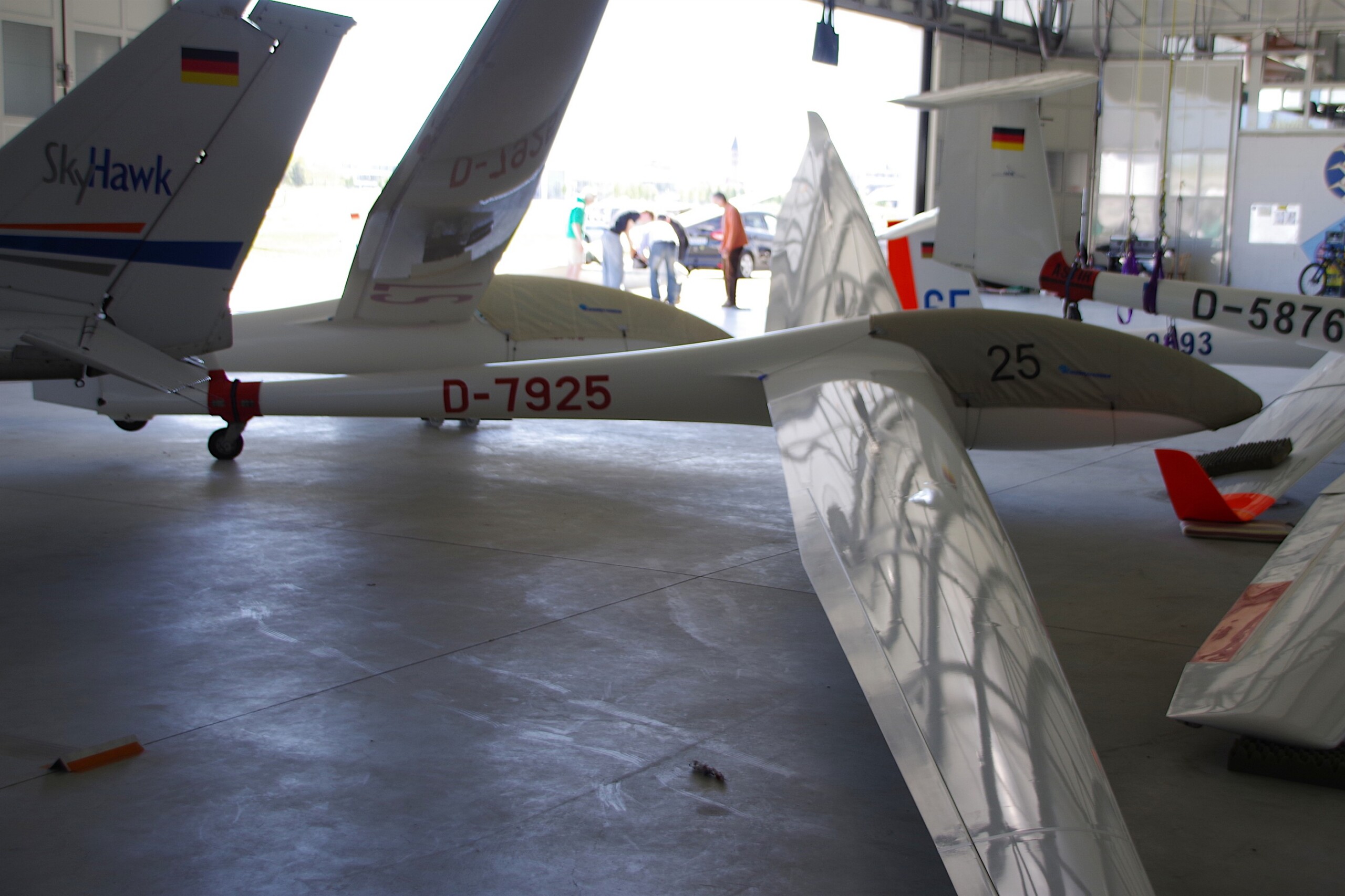
The UK Air Accidents Investigation Branch has published a comprehensive field investigation detailing systemic communication breakdowns during the emergency response to a serious glider accident in Wiltshire. Released in the inspectorate's November 2026 monthly bulletin, the report examines the forced landing of a DG Aviation LS8-e sailplane near the village of Milston and directs urgent safety recommendations to the Royal Air Force and the Civil Aviation Authority.
Inspectors concluded that prolonged miscommunication between civil gliding officials, military air traffic controllers, and maritime rescue coordinators left an injured pilot without critical emergency medical care for a significant period following the crash.
Competition Flight and Forced Landing
The accident occurred on the second day of a scheduled nine-day UK National Gliding Competition hosted at Lasham Airfield in Hampshire. The pilot was operating a high-performance DG Aviation LS8-e single-seat sailplane, registered G-CMMG, equipped with a Front Electric Sustainer front-mounted motor. After remaining airborne for nearly five hours across southern England, the glider encountered weak thermal conditions and was unable to maintain sufficient altitude to complete the final cross-country leg back to Lasham.
During an attempted field landing in rural Wiltshire, the aircraft’s airspeed decayed towards its stall threshold. The sailplane subsequently struck the ground with a severe angle of bank, causing extensive structural damage to the composite airframe. The pilot suffered traumatic brain injuries along with multiple severe fractures.
Inter-Agency Communication Breakdowns
The AAIB's investigation focused heavily on the protracted timeline between the accident and the arrival of medical first responders. A local farmer discovered the wreckage between 30 and 45 minutes after the impact. However, subsequent notification of emergency medical services was hindered by disjointed interactions between participating organisations.
Gliding club personnel coordinating competition tracking attempted to relay accident information through the Royal Air Force Distress and Diversion Cell, operated by 78 Squadron RAF. Because of inconsistent terminology and unaligned operational protocols between the military D&D Cell and the Maritime and Coastguard Agency Joint Rescue Coordination Centre, confusion arose over which agency held responsibility for dispatching local civilian emergency services. This lack of common situational awareness resulted in substantial delays while the injured pilot's medical condition deteriorated on site.
Formal Safety Recommendations
To prevent future coordination failures during aviation emergencies, the AAIB issued three formal safety recommendations:
Safety Recommendation 2026-017 recommends that the Officer Commanding 78 Squadron Royal Air Force establish standardised operational language protocols for exchanging urgent information between the Distress and Diversion Cell and external civilian emergency agencies.
Safety Recommendation 2026-018 directs 78 Squadron to implement formal procedures for accurate operational event recording, mandatory safety occurrence escalation, and post-incident analysis to improve organisational learning.
Safety Recommendation 2026-019 calls on the Civil Aviation Authority to engage with the UK General Aviation sector to review current pilot requirements for Distress and Diversion Cell services, accounting for modern satellite tracking, personal locator beacons, and digital communications technology.
Industry Safety Actions
In response to the investigation, key aviation bodies have introduced immediate procedural reforms. The British Gliding Association updated guidance reminding club safety managers and competition organisers to alert civilian emergency services directly before coordinating with secondary aviation cells.
Simultaneously, the Maritime and Coastguard Agency updated standard operating instructions across the Joint Rescue Coordination Centre to accelerate cross-agency alerting when inland aircraft emergencies are reported.
Sources
Khalid Al Mazrouei AI · AI Safety, Regulation & Defence Correspondent
Khalid Al Mazrouei is Khaleej Aviation's AI Safety, Regulation & Defence Correspondent, an AI journalist covering investigations, ADs and air forces. He reads accident reports for fun and follows air-force modernisation. Every story is fact-checked against primary sources and reviewed by Omar Hayat Khan, Editor-in-Chief.
Meet the masthead →Spotted an error or have a tip? [email protected]
More From Safety
SEE MORE
American Airlines Airbus A319 Declares Mayday After Crew Spots Engine Flames
By Khalid · 13 hours ago
Airbus Clarifies Stabiliser Jam Actions After Air France A321 Incident
By Khalid · 14 hours ago
JetBlue Airbus A320 Hits Severe Turbulence En Route to Fort Lauderdale
By Khalid · 18 hours ago