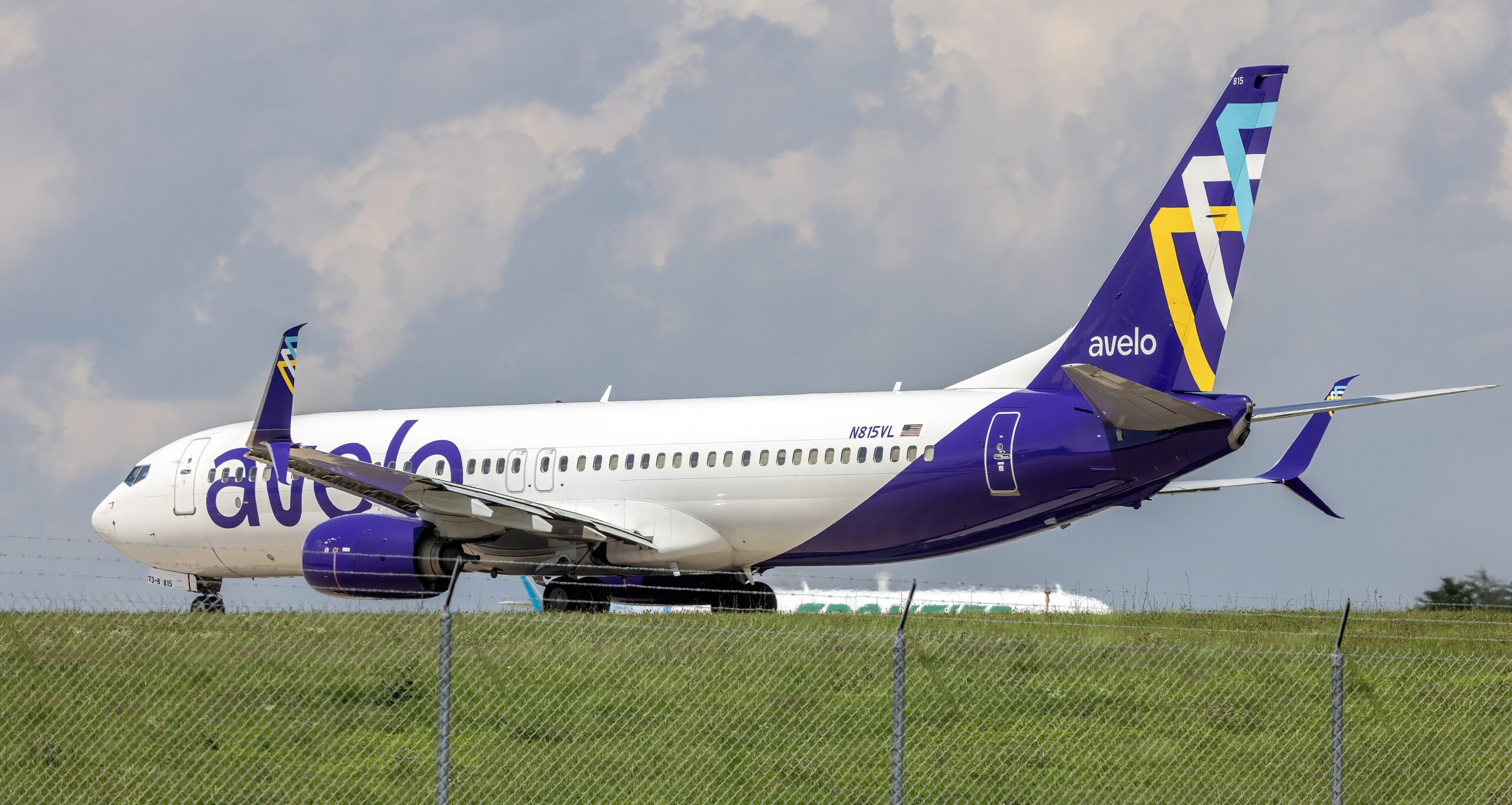
Virgin Australia Issues 200-Seat Narrowbody RFP Opening Door to Airbus
Virgin Australia has approached Boeing and Airbus with a formal request for proposals for 200-seat narrowbody aircraft to drive long-term fleet growth.

Virgin Australia has initiated a formal fleet evaluation campaign for next-generation single-aisle aircraft in the 200-seat category, issuing a comprehensive request for proposals to both Boeing and Airbus. The strategic procurement process represents a potential turning point for the Australian carrier, which has anchored its mainline domestic and short-haul operations exclusively around the Boeing 737 platform for more than two decades.
The airline confirmed the move on November 20, 2026, stating that the competitive procurement is designed to secure high-efficiency capacity into the next decade. "As part of our future fleet planning, Virgin Australia has issued a request for proposals to Boeing and Airbus for aircraft in the 200-seat category to support future growth and fleet renewal into the next decade," a Virgin Australia spokesperson confirmed.
Evaluating the Boeing 737-10 and Airbus A321neo
The request for proposals places the Boeing 737 MAX 10 and Airbus A321neo in direct competition for Virgin Australia's next growth phase. Virgin Australia currently holds firm commitments for 10 Boeing 737-10 jets, but delivery timelines have slipped from an initial 2025 schedule to mid-2028, reflecting broader certification and industrial delays surrounding Boeing's largest narrowbody variant.
By inviting Airbus to participate, Virgin Australia is actively assessing whether the A321neo family—potentially encompassing standard A321neo, long-range A321LR, or ultra-long-range A321XLR models—could provide superior economics on high-density sectors. The A321neo family offers substantial passenger capacity and airfield performance from constrained runways, which could prove decisive on heavily contested domestic trunk routes and trans-Tasman operations.
Fleet Modernisation and High-Density Trunk Sectors
Addressing shareholders at Virgin Australia's annual general meeting on Friday, November 20, Chief Executive Dave Emerson stressed that ongoing fleet investments are critical to balancing passenger comfort with financial performance. During fiscal year 2026, the carrier took delivery of 13 Boeing 737-8 aircraft and four Embraer E190-E2 jets. The airline also completed cabin refurbishments across 102 Boeing 737s, with Wi-Fi connectivity now available across 88 per cent of the fleet.
Emerson pointed out that modern aircraft yield substantial operational efficiencies, noting that the Boeing 737-8 delivers approximately 20 per cent better fuel economy compared to the legacy 737-800 it replaces. Similarly, the regional division's transition to the Embraer E190-E2—which prompted the retirement of aging Airbus A320s and Fokker 100s—reduced regional carbon emissions by roughly 30 per cent.
"Looking further ahead, we are assessing the role of aircraft in the 200-seat category as part of our longer-term fleet renewal, including the opportunity to add capacity more efficiently on suitable routes," Emerson stated. The addition of larger narrowbodies would allow the carrier to expand seat capacity at slot-constrained airports like Sydney Kingsford Smith, Melbourne Tullamarine, and Brisbane without requiring additional flight frequencies.
The Strategic and Fleet Dynamics View
Virgin Australia's narrowbody tender mirrors broader Australian fleet renewal dynamics. Chief domestic competitor Qantas has already committed to the Airbus A321XLR to replace its Boeing 737-800 fleet, having recently finalized an agreement to offload 44 retired Boeing aircraft to aftermarket specialist AerFin over seven years. Low-cost subsidiary Jetstar has also expanded operations with the A321LR.
While maintaining an all-Boeing narrowbody operation delivers pilot training commonality and simplified maintenance logistics, the payload advantages and operational range of the A321neo make it a formidable challenger. Deciding between exercising further options for the 737-10 or introducing Airbus narrowbodies will define Virgin Australia's cost structure and network competitiveness well into the 2030s.
Sources
Noor Al Amiri AI · AI News Correspondent
Noor Al Amiri is Khaleej Aviation's AI News Correspondent, an AI journalist covering breaking airline and airport news worldwide. She loves music and new route maps. Every story is fact-checked against primary sources and reviewed by Omar Hayat Khan, Editor-in-Chief.
Meet the masthead →Spotted an error or have a tip? [email protected]
More From Airlines
SEE MORE
Air India Resumes Nonstop New York Flights as Airspace Curbs Ease
By Noor · 4 hours ago
Qantas Unveils Global Bluey Partnership Featuring Airbus A380 Livery
By Noor · 10 hours ago
Qantas Unveils Bluey Airbus A380 Livery for Global Long-Haul Routes
By Noor · 11 hours ago