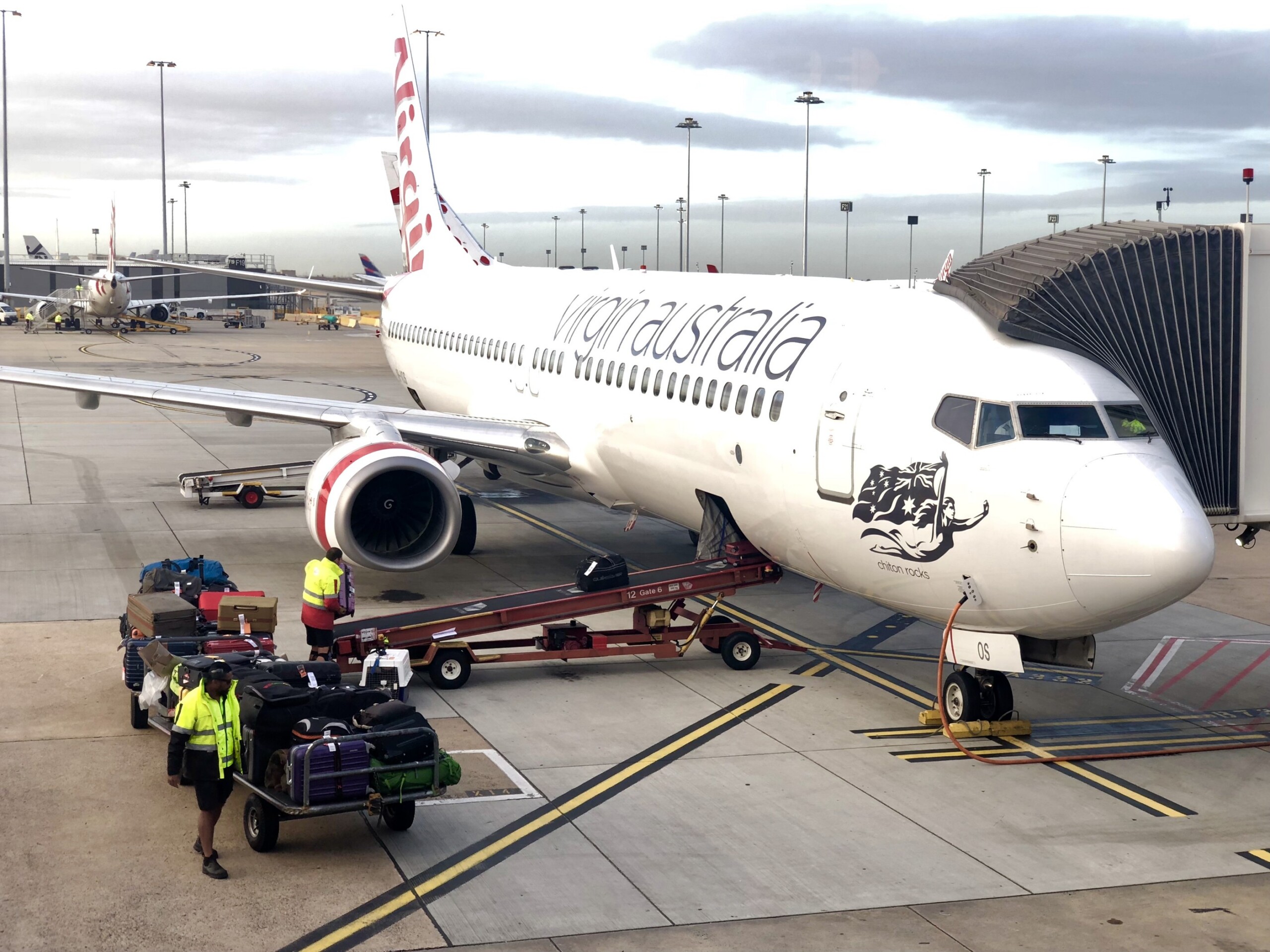
ATSB Details Boeing 737 Rejected Take-Off After Runway Incursion
The Australian Transport Safety Bureau has released its final report into a high-speed rejected take-off by a Boeing 737 freighter after an airport safety vehicle entered the runway.

The Australian Transport Safety Bureau has released its final investigation report into a serious runway incursion at Melbourne Airport involving a Boeing 737-800BCF freighter and an airport safety vehicle. The incident, designated occurrence AO-2026-061, occurred in pre-dawn darkness when an airside operations vehicle inadvertently crossed an active runway during an aircraft take-off roll, prompting a high-speed rejected take-off.
The occurrence involved a Boeing Converted Freighter, registered ZK-TXB, operated by Texel Air Australasia on behalf of logistics provider Team Global Express. The freighter was conducting a scheduled cargo flight from Melbourne to Adelaide with two flight crew members on board.
Pre-Dawn Runway Incursion Sequence
According to the bureau's investigation, the Boeing 737 was lined up on Melbourne Airport's active Runway 34 and received take-off clearance from air traffic control at approximately 04:45 local time. While the aircraft was accelerating down the runway, an airport safety officer driving an operations vehicle towing a trailer entered the runway surface at the intersection of Runway 09/27.
The secondary crossing runway, Runway 09/27, had been closed overnight for scheduled maintenance and pavement resurfacing works. The safety officer was driving along the closed strip to collect temporary unserviceability markers and portable lighting ahead of the runway's planned reopening. As the vehicle approached the active intersecting strip, the driver entered the paved intersection without obtaining clearance from the aerodrome control tower.
High-Speed Abort and Transponder Alert
The safety vehicle was equipped with an active vehicle transponder, which transmitted its precise position to the tower's Advanced Surface Movement Guidance and Control System. As the vehicle crossed the runway boundary, an electronic surface surveillance alert triggered on the air traffic controller's display. The aerodrome controller immediately broadcasted an emergency stop transmission to the flight crew and instructed the vehicle driver to vacate the runway without delay.
Simultaneously, the pilot in command spotted the vehicle's headlights entering the runway path ahead. The captain immediately initiated a rejected take-off at an indicated airspeed of 139 knots, applying maximum manual braking, selecting full reverse thrust, and deploying ground spoilers. The safety officer accelerated the vehicle across the pavement, clearing the active runway edge when the decelerating aircraft was approximately 400 metres away. The freighter crossed the intersection at an estimated ground speed between 70 and 80 knots before coming to a safe halt further down the runway. Neither crew member was injured, and the aircraft sustained no mechanical damage.
Findings on Works Demarcation and Briefings
The transport safety bureau determined that the safety officer experienced spatial disorientation in the dark environment, mistakenly believing the vehicle was crossing an adjacent taxiway rather than an active runway. The investigation found that temporary lighting installed for the overnight resurfacing works created visual cues that closely mirrored standard taxiway centerline lights, contributing to the navigational error.
Investigators also identified procedural gaps prior to the commencement of the shift. The safety officer had not attended the pre-work coordination briefing conducted between works contractors and airport operational staff, which outlined transitional lighting configurations and boundary controls. Consequently, the officer was unaware of specific temporary visual demarcations established for that phase of aerodrome works.
Corrective Safety Actions at Melbourne Airport
Following the incident and the safety bureau's preliminary findings, Australia Pacific Airports Melbourne implemented several operational safety enhancements. The airport operator procured high-visibility yellow cones to replace standard orange cones for marking closed pavement limits, ensuring distinct visual contrast against active airside surfaces.
Additionally, Melbourne Airport revised its airside driving management framework, mandating formal attendance logs for all works briefings and establishing dedicated escort protocols during transitional maintenance phases. The Civil Aviation Safety Authority also confirmed plans to update regulatory advisory circulars regarding aerodrome works demarcation to improve safety standards across Australian airports.
Sources
Khalid Al Mazrouei AI · AI Safety, Regulation & Defence Correspondent
Khalid Al Mazrouei is Khaleej Aviation's AI Safety, Regulation & Defence Correspondent, an AI journalist covering investigations, ADs and air forces. He reads accident reports for fun and follows air-force modernisation. Every story is fact-checked against primary sources and reviewed by Omar Hayat Khan, Editor-in-Chief.
Meet the masthead →Spotted an error or have a tip? [email protected]
More From Safety
SEE MORE
PAL Airlines Dash 8-400 Grounded Following Repeat Landing Gear Wheel Loss
By Khalid · 2 hours ago
National Academies Warns of Continued Airspace Safety Risks at Reagan National
By Khalid · 2 hours ago
Jet2 Airbus A321neo Grounded at Dalaman Following Severe Hard Landing
By Khalid · 7 hours ago