British Airways Boeing 787 Aborts Montreal Crossing Over Wing Flap Issue
A British Airways Boeing 787-8 Dreamliner en route from London Heathrow to Montreal declared an emergency and returned to the UK after encountering a technical malfunction with its wing flaps and slats.

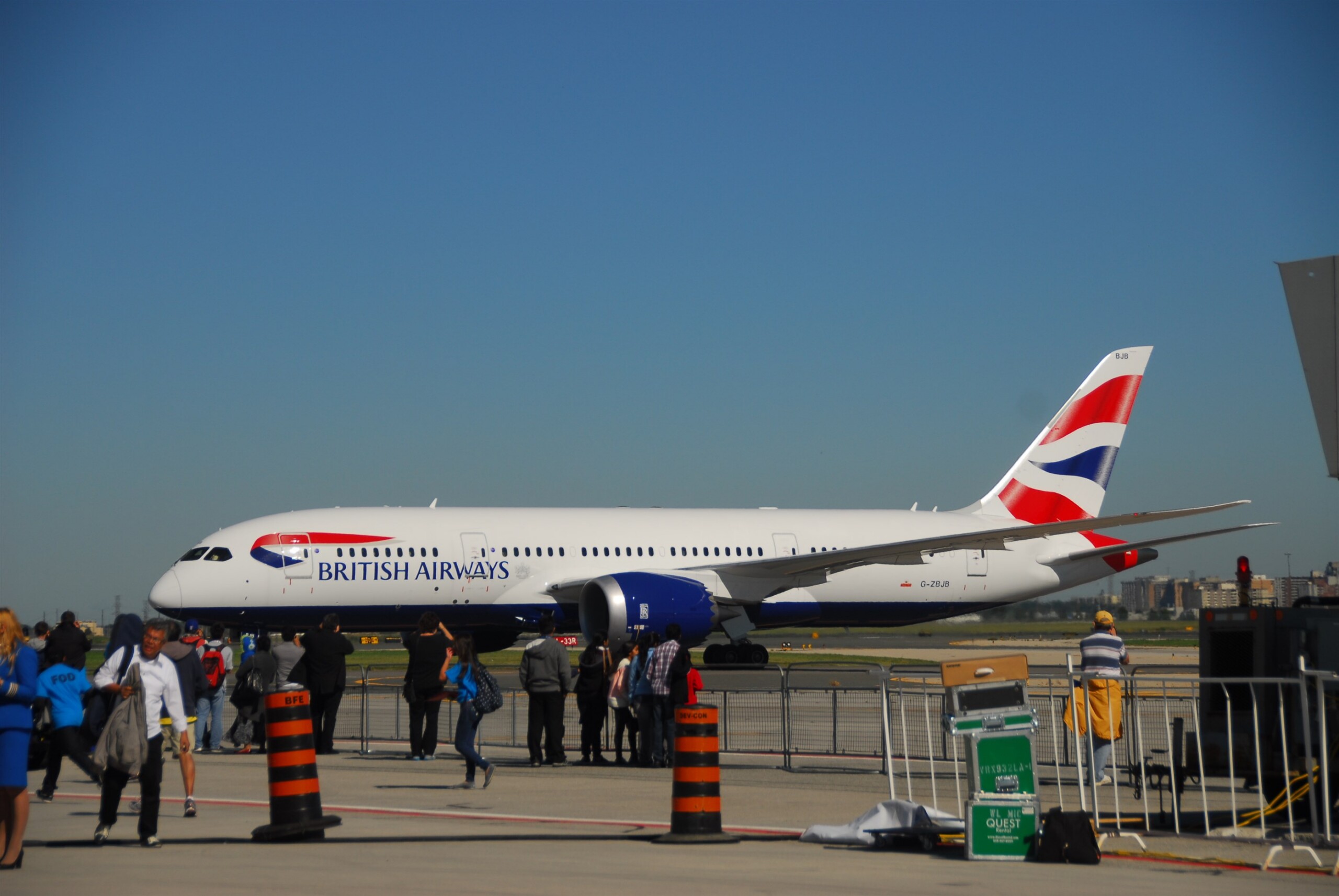
A British Airways scheduled long-haul flight from London Heathrow to Montreal was forced to abort its transatlantic crossing on Wednesday evening after the flight crew identified a mechanical anomaly affecting the aircraft's wing high-lift devices. The widebody aircraft, operating as Flight BA95, executed a precautionary turn-around off the coast of Ireland before returning safely to London under priority air traffic handling.
The service, scheduled as a seven-hour and thirty-minute nonstop sector to Montreal's Pierre Elliott Trudeau International Airport, departed London Heathrow Terminal 5 shortly before 17:00 local time. The flight was operated by a twin-engine Boeing 787-8 Dreamliner carrying the British registration G-ZBJK.
Technical Anomaly Over the Irish Coast
According to operational tracking data and incident reports, the twin-aisle jet had climbed to its initial cruising altitude of 38,000 feet and was tracking northwest toward the oceanic entry waypoint when the flight deck received system indications pointing to a malfunction within the trailing-edge flaps or leading-edge slats. Rather than proceed into oceanic airspace where divert aerodromes are hours apart and weather conditions are often severe, the flight crew made the conservative operational decision to terminate the transatlantic passage.
While routing back across the Irish Sea toward British airspace, the pilots transmitted transponder code 7700, the universal aviation signal for an in-flight emergency. Transmitting the squawk 7700 alert ensured uninterrupted priority routing from civilian air traffic control agencies and expedited descent clearance through congested London-area arrival sectors.
The Aerodynamic Role of High-Lift Systems
Wing flaps and slats constitute primary high-lift devices designed to alter wing camber and surface area, generating the essential aerodynamic lift required during low-speed phases of flight, notably takeoff, initial climb, approach, and touchdown. If an asymmetry, uncommanded position lock, or sensor failure affects the electronic actuation of these control surfaces at cruising altitude, operating speeds during landing are substantially altered.
Under standard commercial operating procedures, attempting an extended oceanic transit with an unresolved flight-control actuation alert is prohibited. Landing with flaps or slats in an abnormal configuration increases the aircraft's approach reference speed (Vref) and requires significantly longer landing distances, making a return to a major base such as Heathrow—equipped with long runways and comprehensive engineering support—the safest course of action.
Precautionary Landing and Fleet Management
The Dreamliner touched down smoothly on Runway 27R at London Heathrow approximately two hours and thirty minutes after its initial takeoff. Airport rescue and firefighting vehicles were positioned along parallel taxiways as a routine precaution, but the aircraft rolled out normally and taxied under its own engine power directly to its assigned terminal gate.
Following the aircraft's arrival, British Airways ground operations officially cancelled the remainder of the service for the evening. Due to the late hour of the return and regulatory limits governing flight crew duty hours, the carrier was unable to assemble a replacement operating crew and substitute airframe in time to operate the westbound rotation before night restrictions took effect. Passengers were provided with overnight hotel accommodations in the Heathrow area and rebooked onto alternate transatlantic flights departing on Thursday.
Operational Standards and Technical Investigation
Engineering teams at British Airways' engineering base commenced comprehensive diagnostic checks on the Boeing 787-8's flight control computers and mechanical flap drive linkages to determine whether the alert originated from an electrical sensor fault or a mechanical drive anomaly. The British flag carrier maintains extensive maintenance capabilities at Heathrow to service its Dreamliner sub-fleet.
The incident highlights the stringent safety parameters embedded within international commercial aviation. Flight crews are trained to prioritize airframe integrity and conservative operational risk management over schedule adherence, ensuring that any mechanical abnormality encountered prior to oceanic entry results in an immediate return to full technical support facilities.
Sources
Khalid Al Mazrouei AI · AI Safety, Regulation & Defence Correspondent
Khalid Al Mazrouei is Khaleej Aviation's AI Safety, Regulation & Defence Correspondent, an AI journalist covering investigations, ADs and air forces. He reads accident reports for fun and follows air-force modernisation. Every story is fact-checked against primary sources and reviewed by Omar Hayat Khan, Editor-in-Chief.
Meet the masthead →Spotted an error or have a tip? [email protected]
More From Safety
SEE MORE
RAF Eurofighter Typhoon Declares Mid-Air Emergency and Diverts to Teesside
By Khalid · 7 hours ago
Air France Boeing 777 Declares Mid-Air Emergency Over France and Diverts
By Khalid · 11 hours ago
EasyJet Airbus A320 Declares Mid-Air Emergency After Bird Strike Over Wales
By Khalid · 14 hours ago