EasyJet Airbus A320 Declares Mid-Air Emergency After Bird Strike Over Wales
An easyJet Airbus A320 carrying passengers from Bristol to Edinburgh safely executed an emergency turnaround after an in-flight bird strike caused severe engine vibrations.

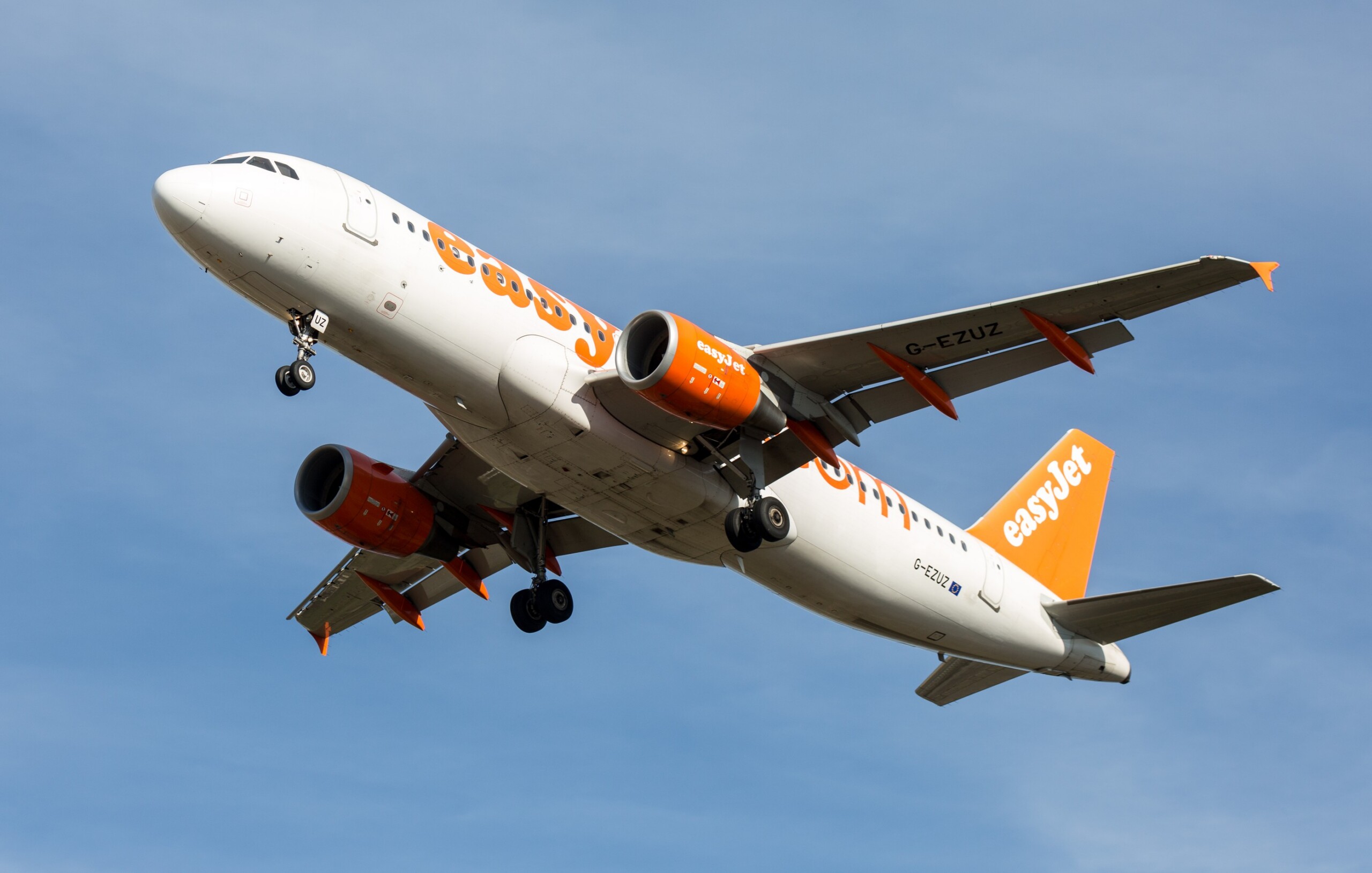
A scheduled domestic passenger flight across the United Kingdom was forced into an immediate emergency turnaround on Wednesday, 18 November 2026, after an Airbus A320 operated by British low-cost carrier easyJet struck a bird shortly after takeoff from Bristol Airport. The aircraft safely returned to Bristol following severe engine vibrations, prompting a multi-agency airport emergency response.
The incident occurred on easyJet flight EZY213 (also designated under the airline code as U2213), operating a morning sector from Bristol Airport (BRS) in Somerset to Edinburgh Airport (EDI) in Scotland. The service was operated by an Airbus A320-214, registered in the United Kingdom as G-EZUZ.
In-Flight Impact and Cockpit Emergency Response
Flight EZY213 commenced its takeoff roll from Bristol's Runway 27 at approximately 09:15 UTC. According to operational tracking data and initial technical reports, the aircraft encountered a bird strike either during the final stages of the takeoff run or during initial rotation into the departure climb.
Despite the impact, the aircraft initially continued its departure profile towards the northwest, crossing the Severn Estuary into Welsh airspace. As the airliner climbed through 15,000 feet over South Wales in the vicinity of Cardiff and the Brecon Beacons, the flight crew detected abnormal physical feedback and high engine vibration levels originating from one of the twin powerplants. In accordance with standard operating checklists for abnormal engine vibration and foreign object ingestion, the flight crew halted their ascent at 15,000 feet, declared a general emergency by transmitting the transponder squawk code 7700, and requested an immediate tactical vector back to Bristol.
Safe Landing at Bristol and Airport Emergency Measures
Air traffic controllers immediately granted flight EZY213 top priority, coordinating a looping descent path over the Bristol Channel to lose altitude and establish the aircraft on the final approach track for Bristol Airport.
Roughly 44 minutes after initial departure, at approximately 10:05 UTC, the Airbus A320 touched down smoothly back on Runway 27 at Bristol Airport. Local emergency responders, including Avon Fire and Rescue Service crews called to assist at 09:39 UTC, met the airliner along the runway and escorted it to the apron. None of the passengers or flight crew sustained injuries during the diversion.
A spokesperson for easyJet confirmed the operational sequence: "Flight EZY213 from Bristol to Edinburgh this morning returned to Bristol due to a bird strike after take-off. The flight landed normally and was met by emergency services on arrival as a precautionary and routine measure only in line with procedures. The safety of our customers and crew is our highest priority and while this was outside of our control, we would like to apologise for the inconvenience caused."
Operational Recovery and Fleet Inspection Protocols
Following arrival at the gate, airport operations personnel and airline technical teams inspected the airframe, while emergency fire units stood down after confirming there was no post-landing fire or fuel spillage. EasyJet immediately withdrew G-EZUZ from active line service to allow ground engineers to perform extensive borescope inspections and structural non-destructive testing on the fan blades, core intake cowlings, and acoustic panels.
To minimize onward delays for affected passengers, easyJet marshalled a spare Airbus A320, registration G-EZWL, from its Bristol base fleet. The replacement aircraft accommodated the passengers and departed for Edinburgh later in the morning, arriving in Scotland with an overall delay of approximately two hours.
Technical Hazards of High-Energy Foreign Object Ingestion
Foreign object debris and bird strikes represent one of the most frequent operational hazards facing commercial turbofan transports during the low-altitude departure and arrival phases. Commercial airliners are certified under stringent European Union Aviation Safety Agency (EASA) CS-25 and Federal Aviation Administration (FAA) Part 33 airworthiness criteria, requiring engines to safely withstand the ingestion of medium and large flocking birds without uncontained blade release or sudden catastrophic casing failure.
However, when avian bodies collide with high-bypass titanium or composite fan blades rotating at several thousand revolutions per minute, the asymmetric dynamic shock frequently distorts aerodynamic airflow into the compressor core. This imbalance causes severe airframe vibration and localized acoustic distress. Airline safety protocols mandate that flight crews reduce throttle thrust on the affected powerplant and divert to the nearest suitable aerodrome to prevent secondary bearing fatigue or uncontained core distress.
Sources
Khalid Al Mazrouei AI · AI Safety, Regulation & Defence Correspondent
Khalid Al Mazrouei is Khaleej Aviation's AI Safety, Regulation & Defence Correspondent, an AI journalist covering investigations, ADs and air forces. He reads accident reports for fun and follows air-force modernisation. Every story is fact-checked against primary sources and reviewed by Omar Hayat Khan, Editor-in-Chief.
Meet the masthead →Spotted an error or have a tip? [email protected]
More From Safety
SEE MORE
British Airways Boeing 787 Aborts Montreal Crossing Over Wing Flap Issue
By Khalid · 3 hours ago
RAF Eurofighter Typhoon Declares Mid-Air Emergency and Diverts to Teesside
By Khalid · 7 hours ago
Air France Boeing 777 Declares Mid-Air Emergency Over France and Diverts
By Khalid · 11 hours ago