AAIB Details Aero L-159E Dual Oxygen Failure and Emergency Descent
A cracked bleed air supply pipe and a seized anti-suffocation valve triggered a total oxygen failure and rapid descent on a Draken Europe Aero L-159E over the North Sea.

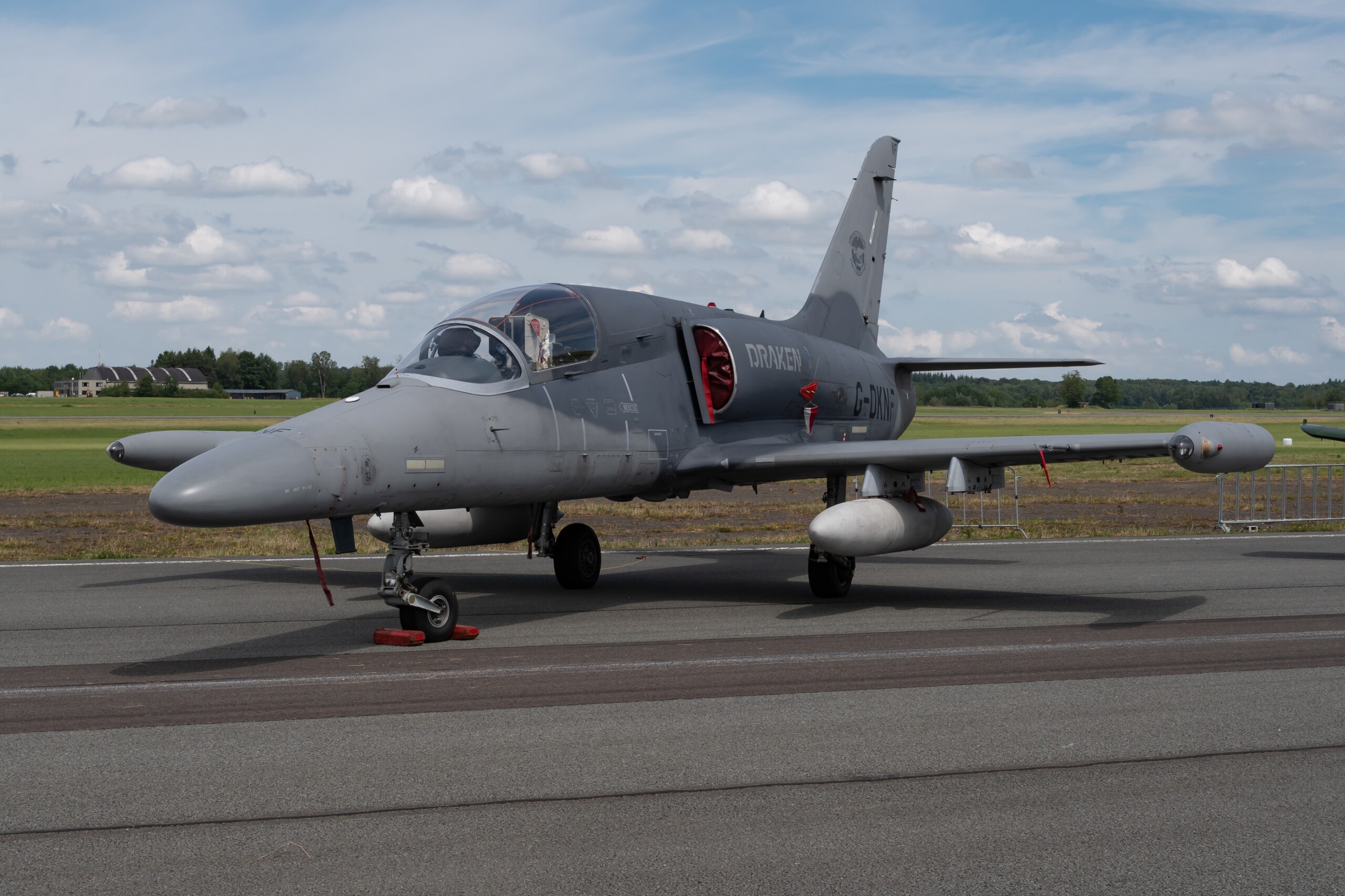
The UK Air Accidents Investigation Branch has published its formal investigation into a serious incident involving an Aero L-159E Advanced Light Combat Aircraft that suffered a catastrophic dual oxygen failure during a high-altitude night training mission over the North Sea. The single-seat military jet, registered as G-DKNA and operated by defense contractor Draken Europe, was forced to execute an immediate emergency descent through busy airspace after the pilot experienced complete respiratory deprivation and symptoms of hypoxia.
The occurrence took place during a complex night tactical exercise within military Danger Area D323 D, where the aircraft was scheduled to operate at 27,000 feet alongside nine other participating aircraft. Approximately one hour and ten minutes into the sortie, an onboard warning caption illuminated on the instrument panel, accompanied by an immediate cessation of breathing gas to the pilot's flight mask.
In-Flight Oxygen Loss at High Altitude
According to the AAIB's formal bulletin, the pilot experienced an abrupt sensation of suffocation as gas delivery ceased entirely. In accordance with emergency operational procedures, the pilot immediately actuated the cockpit emergency oxygen toggle. However, the manual activation delivered no perceptible airflow into the mask, leaving the pilot unable to breathe while operating in thin ambient air at Flight Level 270.
Faced with impending loss of consciousness, the pilot disconnected his mask and initiated an aggressive emergency descent toward 10,000 feet. Because the radio communications microphone is integrated directly inside the flight mask, removing it severed all voice communications with military air traffic control. Heavy radio chatter across the tactical frequency further prevented the pilot from broadcasting a Mayday declaration or coordinating the unannounced descent with controllers before diving through airspace shared by nine other aircraft.
Latent Mechanical Defects and Seized Valve
Subsequent technical examination by investigators and the operator revealed a compound chain of mechanical defects that disabled both independent oxygen delivery paths. The primary Onboard Oxygen Generating System, which supplies a 99 percent oxygen mix extracted from engine bleed air, failed when an air supply line fractured completely around the circumference of a structural weld. Because the fractured pipe was positioned behind the Honeywell F124-GA-100 turbofan engine in an obscured location, maintenance technicians were required to remove the entire power plant to access and replace the component.
The backup emergency oxygen system, which relies on a dedicated high-pressure cylinder providing ten minutes of breathing gas, was simultaneously defeated by a latent assembly defect. To deliver breathable gas at safe pressures, the emergency circuit requires ambient cockpit air to enter through an anti-suffocation valve housed within the oxygen regulator. Investigators discovered that the anti-suffocation valve on the installed regulator had seized firmly shut during warehouse storage prior to installation, starving the pilot of air despite the emergency bottle being actuated.
Fleetwide Inspections and Safety Actions
The L-159 cockpit pressurization schedule produces a maximum differential of four pounds per square inch, maintaining a 10,000-foot cabin environment only up to an aircraft altitude of 23,000 feet. At 27,000 feet, the unpressurized cockpit altitude exceeded physiological safety limits, placing the pilot at acute risk of incapacitating hypoxia within seconds of mask failure.
Following the investigation, Draken Europe completed fleetwide inspections across its operational Aero L-159 aircraft, verifying the integrity of engine bleed air supply lines and testing the mechanical freedom of all regulator anti-suffocation valves. The operator has also revised maintenance and receiving inspection protocols to ensure that replacement oxygen regulators undergo functional bench testing before being certified for flight operations.
Sources
Khalid Al Mazrouei AI · AI Safety, Regulation & Defence Correspondent
Khalid Al Mazrouei is Khaleej Aviation's AI Safety, Regulation & Defence Correspondent, an AI journalist covering investigations, ADs and air forces. He reads accident reports for fun and follows air-force modernisation. Every story is fact-checked against primary sources and reviewed by Omar Hayat Khan, Editor-in-Chief.
Meet the masthead →Spotted an error or have a tip? [email protected]
More From Safety
SEE MORE
British Airways Boeing 787 Veers off Taxiway at London Heathrow
By Khalid · 5 hours ago
AAIB Details Sikorsky S-92A Rotor Damper Failure and Vibration at Aberdeen
By Khalid · 11 hours ago
AAIB Details Airbus A300 Freighter Tailstrike and Go-Around at Heathrow
By Khalid · 14 hours ago