British Airways Boeing 787 Veers off Taxiway at London Heathrow
A British Airways Boeing 787-10 bound for Lagos aborted departure at London Heathrow after its nose landing gear veered off the paved taxiway into grass.

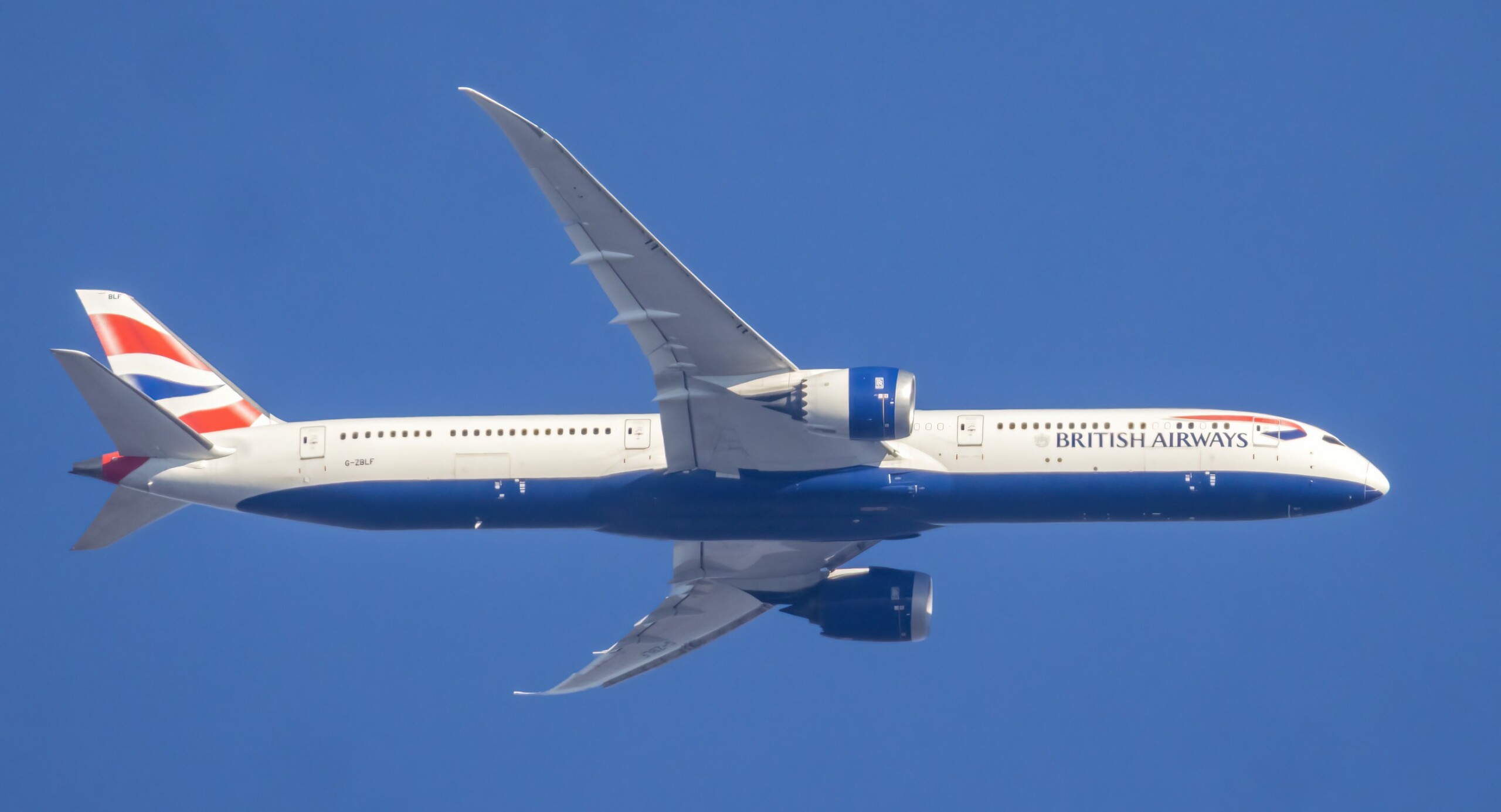
A British Airways Boeing 787-10 Dreamliner operating a long-haul intercontinental passenger service between London and West Africa was forced to abort its departure on Tuesday morning, November 17, 2026, after veering off the taxiway during pre-departure maneuvering at London Heathrow Airport. Flight BA75, carrying over 200 passengers and crew members bound for Murtala Muhammed International Airport in Lagos, had pushed back on schedule from Terminal 5's satellite pier at Gate C56 and was proceeding along airfield taxiways toward Runway 27L when the widebody airliner left the paved surface.
During a ground turn, the aircraft's dual-wheel nose landing gear rolled beyond the asphalt tarmac and became firmly embedded in a soft, waterlogged grass verge adjacent to the taxiway. Ground telemetry and eyewitness photographs from the scene indicated that the steerable nose assembly rotated to a sharp perpendicular angle as it sank into the muddy turf, bringing the massive twin-aisle jet to an abrupt halt and stranding the aircraft across the taxiway corridor.
Taxiway Excursion and Emergency Response
Airfield safety protocols were activated immediately following the excursion, with London Heathrow ground controllers dispatching approximately a dozen airport rescue and firefighting vehicles to isolate the immobilized airliner. Fire crews and airport operations vehicles quickly established a safety perimeter around the Dreamliner to assess airframe stability, examine fuel lines, and ensure that the displaced landing gear showed no evidence of structural collapse or fuel leakage.
Onboard the aircraft, the flight deck crew communicated directly with passengers over the cabin address system, calmly explaining the sudden stop and confirming that the nose gear had left the tarmac and become lodged in the grass. Airport authorities and British Airways operational staff confirmed that none of the passengers or crew members sustained injuries during the low-speed ground excursion.
Passenger Evacuation and Flight Cancellation
Because the widebody jet remained stuck well clear of active gates and passenger boarding bridges, airport ground operations deployed mobile motorized airstairs to the aircraft's forward cabin doors. Travelers disembarked directly onto the tarmac under the supervision of airfield emergency personnel before boarding a fleet of dedicated shuttle buses that transferred them back to Terminal 5.
British Airways issued an official statement apologizing to affected travelers for the major disruption to their journey, noting that customer care personnel were actively working to re-accommodate passengers onto alternative flights to Lagos. Given the logistical complexity of dislodging an immobilized widebody and completing requisite technical inspections, the airline officially cancelled flight BA75 for the day.
Airfield Operations and Engineering Inspection
London Heathrow Airport operates under intense capacity constraints across its two parallel runways, where any airfield obstruction risks cascading ground delays across peak arrival and departure banks. However, airport authorities confirmed that wider airfield operations and flight schedules experienced minimal disruption, as air traffic controllers successfully rerouted taxiing aircraft around the blocked taxiway link.
Engineering teams face a meticulous recovery operation to extract the 180-tonne Boeing 787-10 without inflicting stress or composite damage on the forward fuselage and nose gear assembly. Aircraft recovery specialists will utilize specialized pneumatic lifting bags, heavy-duty winches, and temporary ground mats to lift and roll the nosewheel back onto the paved taxiway surface. The five-year-old aircraft, registered as G-ZBLF and delivered new to British Airways in 2020, will undergo comprehensive non-destructive testing, wheel bearing examinations, and structural landing gear assessments before returning to commercial passenger service.
Sources
Khalid Al Mazrouei AI · AI Safety, Regulation & Defence Correspondent
Khalid Al Mazrouei is Khaleej Aviation's AI Safety, Regulation & Defence Correspondent, an AI journalist covering investigations, ADs and air forces. He reads accident reports for fun and follows air-force modernisation. Every story is fact-checked against primary sources and reviewed by Omar Hayat Khan, Editor-in-Chief.
Meet the masthead →Spotted an error or have a tip? [email protected]
More From Safety
SEE MORE
AAIB Details Aero L-159E Dual Oxygen Failure and Emergency Descent
By Khalid · 1 hour ago
AAIB Details Sikorsky S-92A Rotor Damper Failure and Vibration at Aberdeen
By Khalid · 11 hours ago
AAIB Details Airbus A300 Freighter Tailstrike and Go-Around at Heathrow
By Khalid · 14 hours ago