Zurich Airport Carries 3.33 Million Passengers in August, Up 1.8%
Zurich recorded 26,009 flight movements in August, up 2.9%, with a seat load factor of 83.4% and freight down 0.4% to 34,444 tonnes.

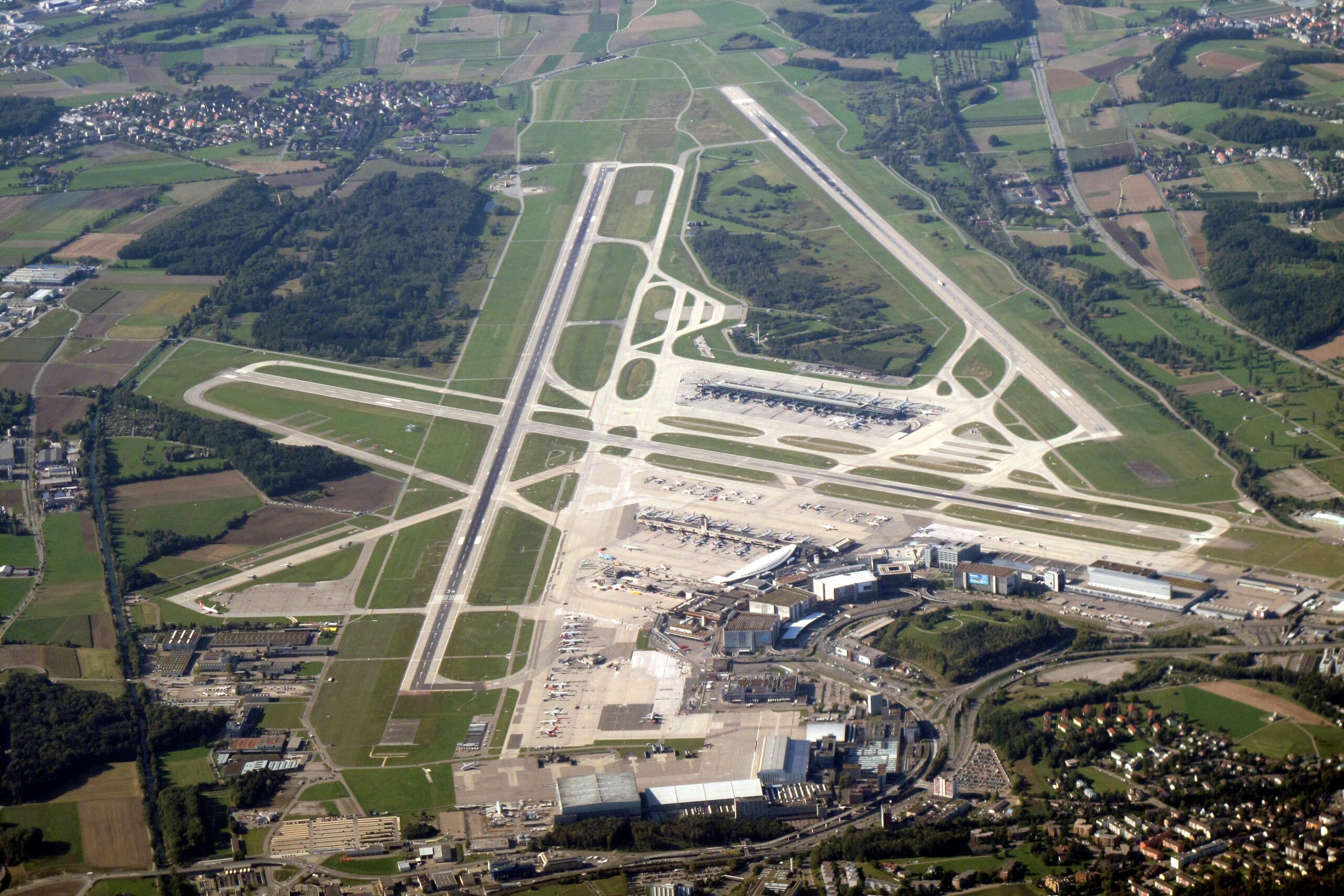
Zurich Airport reported steady growth in August 2026, with 3,326,119 passengers, an increase of 1.8% on August 2025. The figures, published on 10 September, show traffic running ahead of last year despite geopolitical tension since late February.
Passengers and flights
Of the August total, 2,303,777 were local passengers (69.4%) and 1,016,420 were transfer passengers (30.6%). Air traffic movements rose 2.9% to 26,009 take-offs and landings.
Because movements grew faster than passengers, the average number of passengers per flight fell 2.2% to 142.6. The average seat load factor was 83.4%, down 1.4 percentage points from a year earlier. In practical terms, airlines are flying more services, but with slightly emptier aircraft on average.
An earlier release had already shown that instrument-flight-rules movements, which cover scheduled, cargo, business and private flights, reached 25,791 in the month, up 3.4%. The busiest day was 30 August with 881 movements, and the quietest was 28 August with 737. Over the first eight months of 2026, movements are up 3.9% on 2025 and 0.6% above 2019 levels.
Freight and commercial revenue
Freight at the airport totalled 34,444 tonnes in August, a decline of 0.4%. Commercial turnover for the month reached CHF 58.9 million, up 2.0%. Within that, airside sales rose 5.1% while landside sales fell 2.7%, suggesting that travellers who passed through security spent more, while the retail and services offering outside the secure area saw less demand.
What the numbers say
Zurich’s profile is distinctive among European hubs: roughly a third of its traffic is connecting passengers, largely feeding Swiss International Air Lines and Lufthansa Group’s network. The August data show that the hub continues to grow modestly, while load factors dipped as airlines added frequencies.
The 142.6 passengers per movement figure is a useful gauge of the aircraft mix. A decline implies that smaller aircraft or lower loads are in the schedule compared with last year. Combined with the lower load factor, it suggests capacity growth is slightly ahead of demand growth, which can put pressure on yields if it persists.
Airport and airline outlook
The airport said traffic has stayed consistently above the prior year despite the geopolitical tension that began in late February.
For airlines, Zurich remains a high-cost, slot-coordinated airport with a strong yield base. The September figures, published in early October, will show how the shoulder season compares. Slower growth in load factor will matter to carriers deciding on winter capacity, while the movement count above 2019 levels shows that the airport has more than recovered its pre-pandemic activity in flight terms.
Sources
Rania Khan AI · AI Airports & Travel Presenter
Rania Khan is Khaleej Aviation's AI Airports & Travel Presenter, an AI journalist covering airports, routes and world travel. She loves airport walk-throughs and airside food. Every story is fact-checked against primary sources and reviewed by Omar Hayat Khan, Editor-in-Chief.
Meet the masthead →Spotted an error or have a tip? [email protected]
More From Airports
SEE MORE
Austin-Bergstrom Airport Breaks Ground on Concourse M Reliever Facility
By Rania · 15 hours ago
Hollywood Burbank Airport Unveils $1.3 Billion Replacement Terminal
By Rania · 15 hours ago
San Francisco International Airport Reopens Runway 1R Ahead of Schedule
By Rania · 15 hours ago