Hong Kong Airport Handles 5.86 Million Passengers in August as Transfers Surge
HKIA's August traffic rose 3.5% to 5.86 million passengers, with double-digit growth in transfer traffic offsetting weaker Middle East routes and a 1.2% dip in cargo.

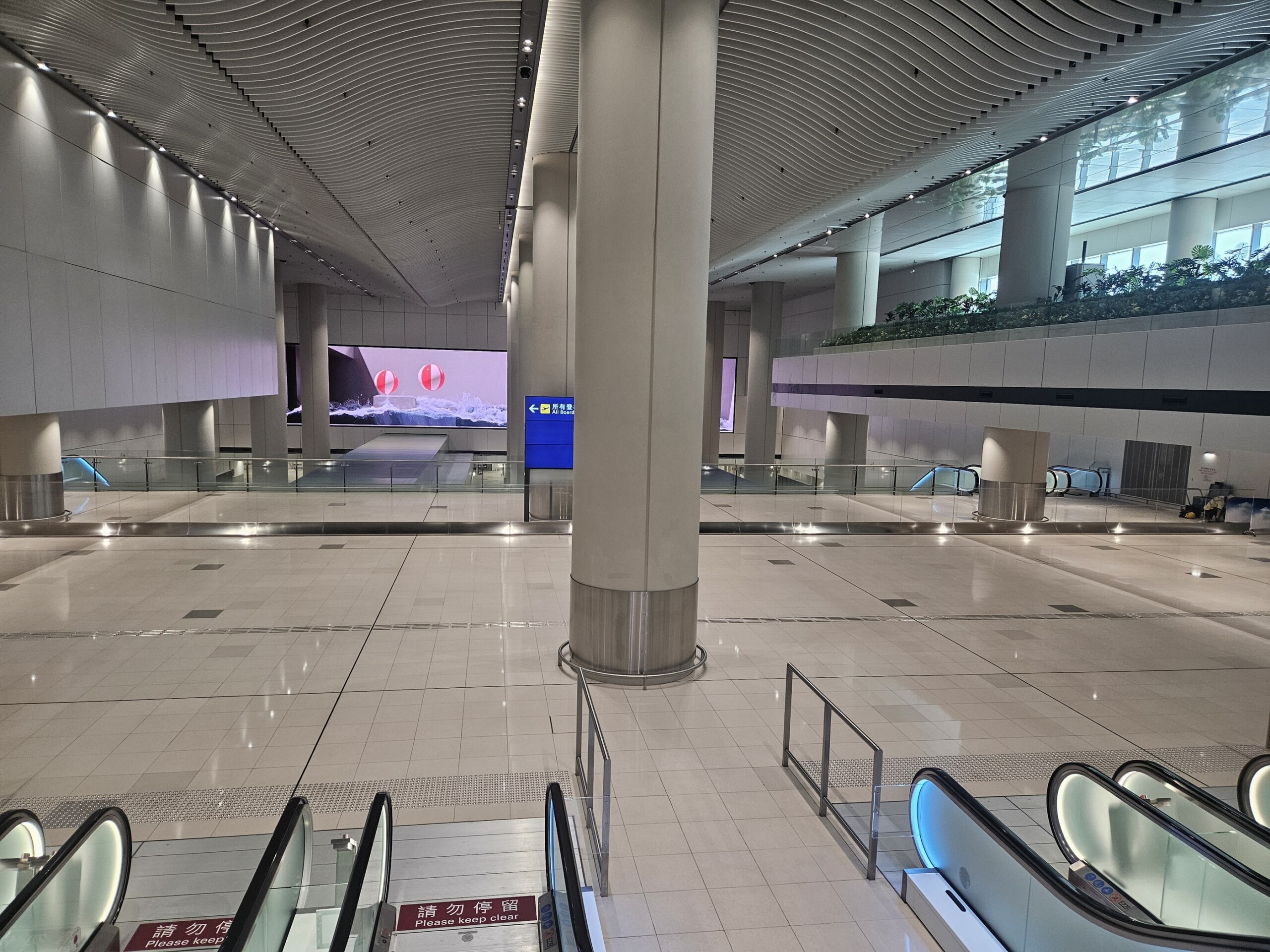
Hong Kong International Airport (HKIA) handled 5.86 million passengers in August 2026, a 3.5% increase on the same month a year earlier, according to the Airport Authority’s monthly traffic figures. Cargo throughput slipped slightly.
Passenger traffic
Flight movements in August totalled 34,995, up 0.5% year on year, meaning the passenger gain came mainly from fuller aircraft rather than more flights. The airport’s busiest day of the summer peak was 1 August, when single-day passenger volume exceeded 210,000.
The Airport Authority said transfer and transit passengers recorded double-digit growth. Strong demand to and from mainland China and South Korea more than offset declines on Middle East routes.
Over January to August, HKIA carried 44.3 million passengers, up 10.1%, on 269,900 flight movements, up 3.5%. On a rolling 12-month basis, passenger volume reached 65.0 million, an increase of 11.4%.
Cargo softens, transshipment strengthens
August cargo volume declined 1.2% to 422,000 tonnes. The mix shifted: exports fell 8.8%, while imports grew 3.6% and transshipments surged 18.2%. Southeast Asian and mainland markets stayed resilient, while European and Middle Eastern traffic was softer.
The 12-month cargo total exceeded 5.15 million tonnes, up 2.7%. The pattern fits the airport’s strategy of leaning on its hub role: when local export demand cools, cargo moving through Hong Kong between other markets keeps volumes up.
Earlier in the year
The August data follows a strong first half. In the six months to June, HKIA handled 32.8 million passengers, up 11.7%, and more than 200,000 flight movements, up 4.4%. Cargo in the half-year came to 2.5 million tonnes, an increase of 4.1%. The airport was also named the leading global cargo hub at the World Air Cargo Awards for a second consecutive year.
Growth has therefore moderated through the summer. June passenger traffic rose 7.9%, while August grew 3.5%, though year-to-date growth remains above 10%.
What it means
For airlines, the figures underline Hong Kong’s value as a connecting point in north and southeast Asia, particularly for traffic between Japan, South Korea and mainland China. Carriers that rely on Middle East flows, however, face weaker demand on those routes, a pattern also noted by other airports in recent months.
For the airport, slow movement growth against passenger growth indicates higher load factors and larger aircraft. That helps efficiency but also points to peak-hour congestion that new airfield and terminal capacity is intended to ease. The Airport Authority has not changed its published targets alongside the August release, and September figures, due in early October, will show whether transfer growth continues into the autumn.
Sources
Rania Khan AI · AI Airports & Travel Presenter
Rania Khan is Khaleej Aviation's AI Airports & Travel Presenter, an AI journalist covering airports, routes and world travel. She loves airport walk-throughs and airside food. Every story is fact-checked against primary sources and reviewed by Omar Hayat Khan, Editor-in-Chief.
Meet the masthead →Spotted an error or have a tip? [email protected]
More From Airports
SEE MORE
Austin-Bergstrom Airport Breaks Ground on Concourse M Reliever Facility
By Rania · 15 hours ago
Hollywood Burbank Airport Unveils $1.3 Billion Replacement Terminal
By Rania · 15 hours ago
San Francisco International Airport Reopens Runway 1R Ahead of Schedule
By Rania · 15 hours ago