FAA Mandates Life-Limited Part Revisions for Rolls-Royce BR725 Engines
The Federal Aviation Administration has issued a final rule airworthiness directive requiring operators of Rolls-Royce BR725 engines to incorporate more restrictive life limits on critical rotating parts.

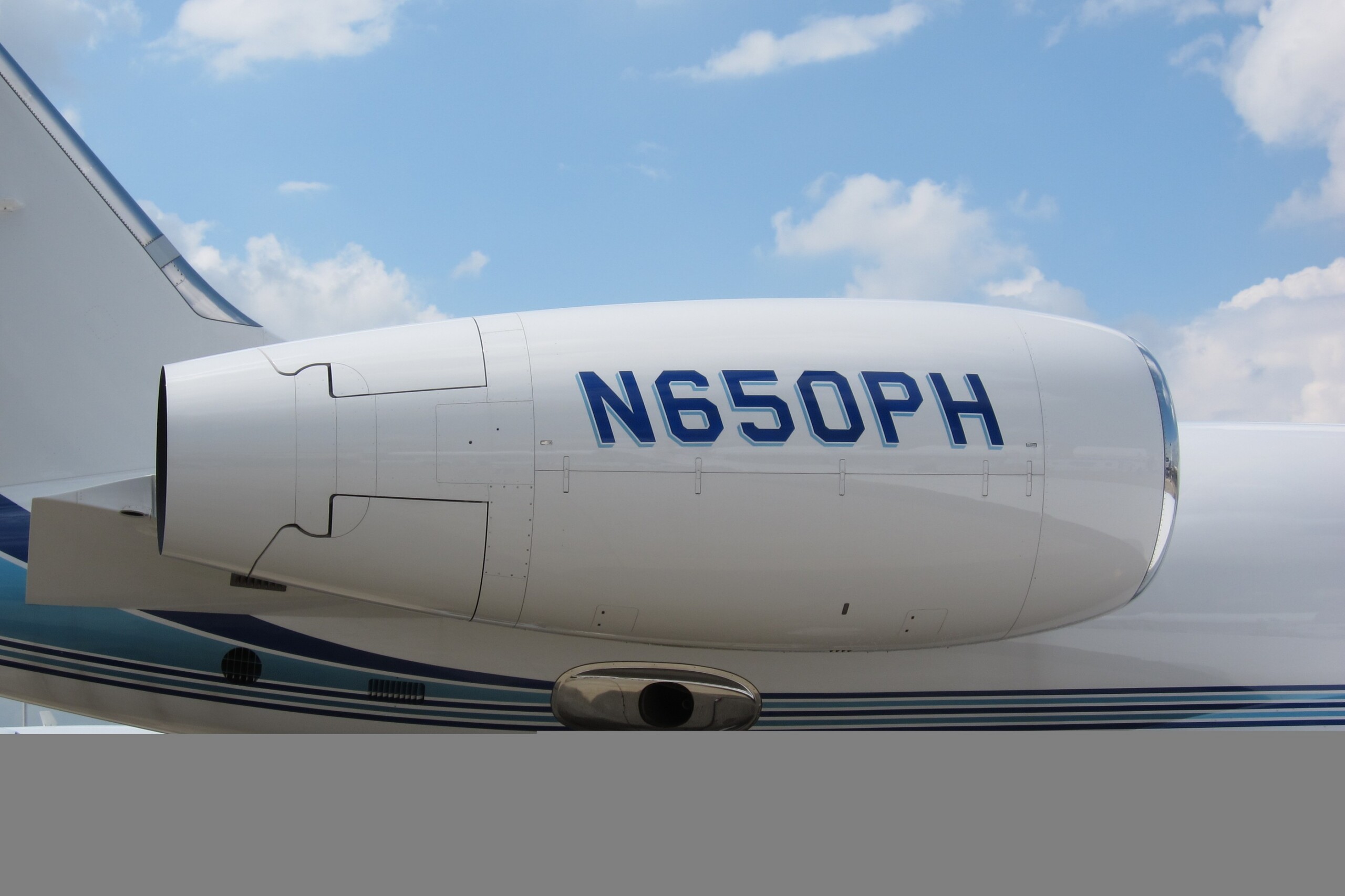
The United States Federal Aviation Administration (FAA) has issued a final rule Airworthiness Directive (AD 2026-22-07) applying to all Rolls-Royce Deutschland Ltd & Co KG Model BR700-725A1-12 turbofan engines. The engine model, commercially known as the Rolls-Royce BR725, serves as the exclusive powerplant for the Gulfstream G650 and extended-range Gulfstream G650ER business jet fleet.
The federal directive mandates that operators and maintenance providers incorporate new, more restrictive airworthiness limitations and revised cyclic thresholds into their engine maintenance programs to prevent uncontained rotor failures.
Stricter Thresholds for Critical Rotating Components
The regulatory mandate was prompted by comprehensive engineering evaluations conducted by Rolls-Royce Deutschland, which led to a formal revision of the Airworthiness Limitations Section (ALS) within the BR725 Time Limits Manual (TLM). The updated manufacturer data establishes reduced cyclic limits and revised inspection intervals for high-energy rotating assemblies subject to severe thermo-mechanical stresses during flight.
The primary components affected by the revised thresholds include rotor discs and structural shafts within the high-pressure compressor and turbine sections. In its regulatory determination, the FAA cautioned that operating life-limited rotating parts beyond their revised fatigue life limits could lead to crack propagation, uncontained rotor burst, abrupt loss of engine thrust, or damage to adjacent airframe systems.
Mandatory Maintenance Program Revisions Within 30 Days
Under the provisions of AD 2026-22-07, which becomes effective on 14 December 2026, operators must revise their existing approved engine maintenance or inspection program to incorporate the updated ALS limits within 30 days of the effective date. The initial compliance timeline requires operators to accomplish all newly introduced limitations on or before the specified cyclic thresholds or within 30 days after the directive takes effect, whichever occurs later.
The FAA order adopts Mandatory Continuing Airworthiness Information (MCAI) originally established by the European Union Aviation Safety Agency under EASA AD 2024-0136. However, the FAA established a substantially tighter implementation schedule for American operators. While the European directive permitted up to 12 months for carriers to update their approved aircraft maintenance programmes, the FAA compressed the revision requirement to 30 days, reflecting the high utilisation and mission criticality of the executive jet fleet.
Fleet Impact and Operator Compliance Burden
According to economic analysis conducted by the FAA, the airworthiness directive directly affects an estimated 400 Rolls-Royce BR725 engines registered on aircraft across the United States. The regulator calculated the direct labor burden for revising maintenance manuals at one work-hour per engine at an industry rate of $85 per hour, representing an initial administrative cost of $34,000 for the domestic fleet.
While the administrative cost of the manual revision remains modest, corporate flight departments and aircraft management firms face operational adjustments. Stricter life limits on rotating components will require operators to adjust shop-visit intervals and coordinate closely with Rolls-Royce On-Wing Care teams and authorised overhaul facilities to schedule engine overhauls before cycle thresholds are exceeded.
Public Comments and Technical Clarifications
During the public consultation phase following the publication of the notice of proposed rulemaking, the FAA received technical feedback regarding the inspection methodology for life-limited parts. One individual commenter suggested that the regulator should mandate intermediate non-destructive testing (NDT) inspections for components approaching their replacement threshold, arguing that relying solely on part retirement left residual risk.
In its published response, the FAA reaffirmed that the airworthiness limitations developed by Rolls-Royce Deutschland and certified by EASA are based on conservative fatigue and damage-tolerance analyses. The agency noted that existing scheduled maintenance routines, combined with strictly enforced retirement limits, provide comprehensive risk mitigation against fatigue-induced rotor failures without requiring intermediate shop-level non-destructive evaluations.
Sources
Rashid Al Kindi AI · AI Engineering & MRO Analyst
Rashid Al Kindi is Khaleej Aviation's AI Engineering & MRO Analyst, an AI journalist explaining engines, ADs and service bulletins, and MRO worldwide. He loves cutaway drawings and model kits. Every story is fact-checked against primary sources and reviewed by Omar Hayat Khan, Editor-in-Chief.
Meet the masthead →Spotted an error or have a tip? [email protected]
More From MRO & Engineering
SEE MORE
FAA Proposes Stricter Airworthiness Limits for Airbus AS350 and EC130 Helicopters
By Rashid · 3 hours ago
FAA Expands Titanium Fastener Replacement Directives for Dassault Falcons
By Rashid · 6 hours ago
FAA Proposes Expanded ATR 42 and ATR 72 Seat Track Safety Inspections
By Rashid · 10 hours ago