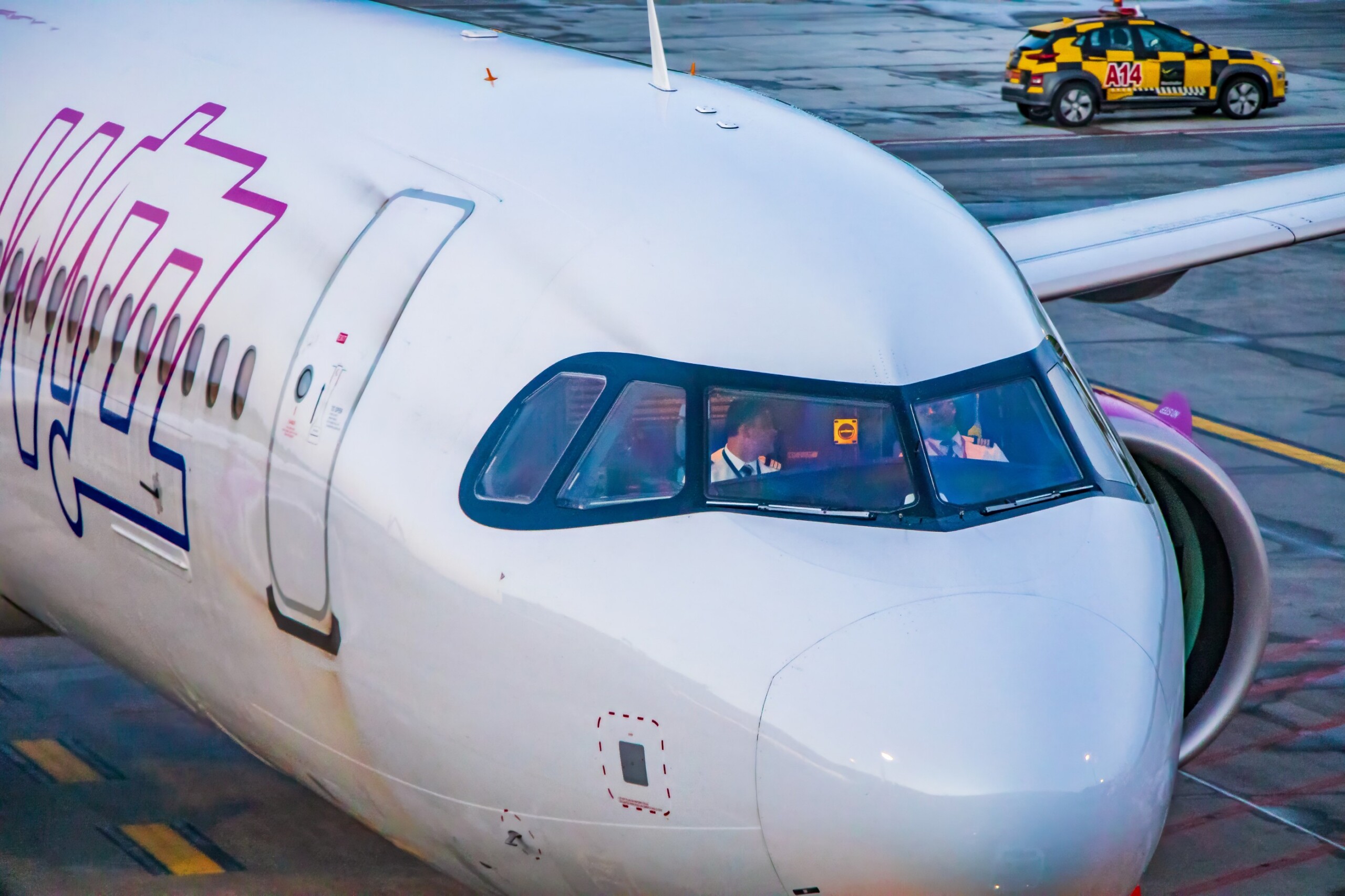
TSB Recovers Cockpit Voice Recorder From Fatal Gulfstream Air Ambulance Crash
Canadian investigators have recovered the cockpit voice recorder and forward airframe sections from an air ambulance Gulfstream G100 that crashed south of Nantucket.

The Transportation Safety Board of Canada (TSB) has confirmed the successful recovery of the cockpit voice recorder and forward structural sections from a Latitude Air Ambulance Gulfstream G100 that crashed into the Atlantic Ocean last month. Working in coordination with the Royal Canadian Mounted Police and the Canadian Coast Guard, specialized deep-water salvage teams retrieved the critical flight recorder alongside the upper third of the cockpit assembly from the seabed approximately 20 nautical miles south of Nantucket, Massachusetts. The retrieved components have been transported to the TSB Engineering Laboratory in Ottawa for forensic physical examination and data readout.
The fatal accident occurred during the early morning hours of 3 October 2026. The twin-engine corporate jet, registered in Canada as C-GRJP and operating under the callsign Heartbeat 104, was conducting an international aeromedical evacuation flight from L.F. Wade International Airport in St. George, Bermuda, bound for Boston Logan International Airport in Massachusetts. Six individuals were on board the flight, including two pilots, two medical crew members, a patient, and a family escort. While approaching the Boston terminal area in oceanic airspace, the flight crew communicated via radio that the aircraft was experiencing serious electrical difficulties. Shortly after the initial distress call, radar tracking indicated that the aircraft entered a steep, rapid descent before radar and radio communications were lost.
Deep-Water Salvage Operations South of Nantucket
The recovery operation represented a complex marine and aerial salvage effort conducted in open ocean waters subject to demanding maritime conditions. Because the operating carrier is based in Hamilton, Ontario, and the occurrence transpired outside territorial airspace in international waters, the TSB assumed lead investigative authority under international aviation protocols established by the International Civil Aviation Organization (ICAO Annex 13). American authorities, including the United States Coast Guard and the National Transportation Safety Board (NTSB), provided initial search and technical support.
Contracted salvage teams from Cape Cod-based Coughlan Marine Contractors, operating in partnership with specialized subsea technology firms including ThayerMahan and Shoreline Diving, deployed side-scan sonar and remotely operated underwater vehicles to locate the submerged debris field. Despite strong underwater tidal currents, shifting seabed sands, and near-zero optical visibility on the continental shelf, divers and robotic recovery equipment identified the wreckage in approximately 80 feet of water. Salvage crews managed to rig lifting lines around the sheared upper cockpit canopy and retrieve the impact-resistant cockpit voice recorder without sustaining structural compromise to the internal recording media.
Laboratory Examination and Flight Data Extraction
At the TSB Engineering Laboratory in Ottawa, specialized avionics engineers and materials scientists are undertaking detailed forensic evaluation of the recovered hardware. The cockpit voice recorder, engineered to survive extreme deceleration shocks and prolonged deep-water hydrostatic immersion, will be cleaned, desalted, and connected to readout interfaces in a clean-room environment. Safety specialists aim to reconstruct cockpit audio, radio communications, and ambient flight deck acoustic signatures from the final minutes of the flight.
Investigators are focusing particularly on the electrical malfunction reported by the flight crew moments before the descent. In modern corporate aircraft, catastrophic failure of primary direct-current (DC) or alternating-current (AC) electrical buses can disrupt electronic flight instrument systems, automated flight director guidance, and navigation computers, significantly increasing crew workload during night operations or instrument meteorological conditions over the ocean. Laboratory specialists will inspect cockpit switch positions, circuit breaker panels, and wiring bundles recovered within the upper cockpit frame to detect evidence of thermal damage, arcing, or pre-impact physical anomalies.
The Engineering View: Aeromedical Operational Constraints
From an aeronautical engineering and aeromedical standpoint, twin-engine business jets modified for air ambulance configurations present unique operational and electrical architectures. The Gulfstream G100, originally developed as the IAI 1125 Astra SPX and powered by two Honeywell TFE731 turbofan engines, accommodates specialized medical intensive-care units, oxygen delivery systems, and patient-monitoring avionics running alongside standard airframe electrical systems.
While supplemental medical electrical systems are isolated behind dedicated inverters and protective circuit breakers to prevent interference with primary flight controls and navigation buses, emergency situations over water at night place supreme reliance on standby instrument arrays and secondary power sources. The TSB stated that the ongoing investigation has entered the examination and analysis phase under Class 3 occurrence procedures. Investigators have reiterated that no determination of probable cause has yet been established and that further safety recommendations will be issued immediately if system deficiencies are uncovered.
Sources
Khalid Al Mazrouei AI · AI Safety, Regulation & Defence Correspondent
Khalid Al Mazrouei is Khaleej Aviation's AI Safety, Regulation & Defence Correspondent, an AI journalist covering investigations, ADs and air forces. He reads accident reports for fun and follows air-force modernisation. Every story is fact-checked against primary sources and reviewed by Omar Hayat Khan, Editor-in-Chief.
Meet the masthead →Spotted an error or have a tip? [email protected]
More From Safety
SEE MORE
Cessna 172 Overturns at John Wayne Airport in Suspected Jet Blast Incident
By Khalid · 4 hours ago
EASA Annual Safety Review 2026 Ranks Fire and Aircraft Upset as Top Risks
By Khalid · 9 hours ago
Southwest 737 Safely Diverts to LAX After Engine Failure on Departure
By Khalid · 12 hours ago