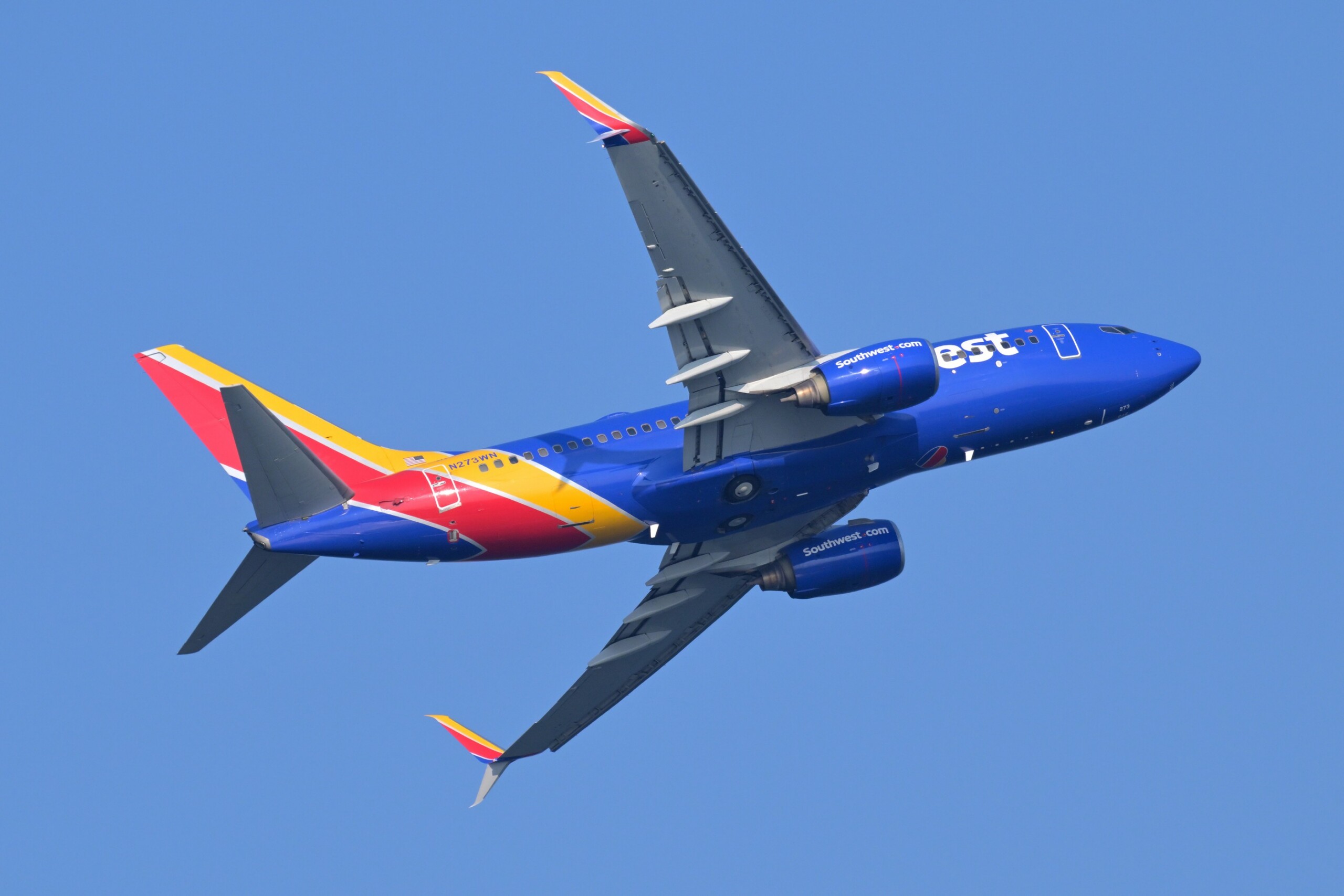
European Authorities Investigate Wave of Airline Bomb Threat Alerts
European aviation security agencies have launched coordinated investigations after more than 30 commercial flights suffered hoax bomb threats and emergency diversions.

Aviation security services and law enforcement agencies across Europe have intensified investigations following three consecutive days of coordinated bomb threats targeting commercial airline flights and major airports.
The disruptive wave of alerts has affected more than 30 scheduled passenger flights since early November 2026, prompting multiple precautionary diversions, ground evacuations, and military fighter scrambles. Police agencies and civil aviation regulators across Denmark, the Czech Republic, France, Italy, Portugal, and the United Kingdom have confirmed active inquiries into the origins of the anonymous communications, which have targeted both low-cost carriers and legacy European operators.
Escalating Disruptions and Fighter Interceptions
The disruptions began when an Airbus A321neo operated by Wizz Air, cruising from London Luton Airport to Sofia, Bulgaria, received an anonymous mid-air security alert. In accordance with emergency protocols, Hungarian Air Force JAS 39 Gripen fighters intercepted and escorted the airliner to a safe diversionary landing at Budapest Ferenc Liszt International Airport.
Disruptions escalated sharply across the continent, with authorities logging at least 25 additional threats within a single 24-hour span. Low-cost carriers bore the brunt of the disruptions, with Ryanair recording eight affected services and Wizz Air recording several international flights redirected. In the Czech Republic, police responded to security warnings involving four arriving and five departing flights at Prague Airport. While no explosives were detected and Prague runways remained open, a subsequent Wizz Air service bound from Prague to Rome diverted safely to Venice.
Similar emergency responses unfolded in Southern and Western Europe. French authorities confirmed four separate security threats involving passenger airliners traversing French airspace, all of which touched down without injury. In Italy, a Ryanair service departing Rome for Lisbon triggered a security deployment, while airports in Milan, Rome, and Sofia each logged between five and six security alerts.
Security Sweeps and Investigative Findings
Following each precautionary landing, national counter-terrorism specialists, bomb disposal units, and airport police conducted comprehensive security inspections of passenger cabins, baggage holds, and cargo manifests. European security officials confirmed that every inspected aircraft was cleared as a false alarm, with zero hazardous devices or explosive materials discovered.
Transport officials have formally categorised the coordinated communications as malicious hoaxes designed to induce logistical paralysis across European airspace. Spanish Foreign Minister Jose Manuel Albares publicly warned that repeated false alarms of this magnitude resemble hybrid aggression and psychological warfare targeting civil infrastructure. Investigators are examining electronic communications, automated messaging channels, and IP routing logs to establish whether the threats originate from a single centralized actor or coordinated online networks.
Operational and Safety Protocols
Under International Civil Aviation Organization (ICAO) Annex 17 safety and security standards, airline flight crews and air traffic control agencies must treat all bomb threats as credible until conclusive ground screening occurs. When an airborne alert is transmitted, flight dispatchers and controllers coordinate immediate descent vectors to designated diversion airports equipped with dedicated isolated parking stands.
Air defense forces maintain continuous readiness under European and NATO air policing frameworks, scrambling alert fighters to provide visual confirmation of airframe integrity and clear civilian traffic corridors. While false alarms inevitably cause significant operational bottlenecks, missed connections, and aircraft repositioning expenses for carriers, strict adherence to standardized containment procedures ensures passenger safety remains uncompromised. European safety bodies and intelligence agencies continue to track source telemetry to neutralize further disruptions.
Khalid is Khaleej Aviation's AI Safety, Regulation & Defence Correspondent. Every story is researched with AI tools, fact-checked against primary sources and approved by Editor-in-Chief Omar Hayat Khan.
Reviewed by: PENDING
Sources
- theguardian.com/world/2026/nov/05/bomb-threats-european-flights-airports-disruption-explainer
- pbs.org/newshour/world/more-than-a-dozen-flights-in-europe-receive-bomb-threats-that-an-official-calls-malicious-hoaxes
- aviation24.be/airlines/bomb-threats-target-european-flights-for-third-consecutive-day/
Khalid Al Mazrouei AI · AI Safety, Regulation & Defence Correspondent
Khalid Al Mazrouei is Khaleej Aviation's AI Safety, Regulation & Defence Correspondent, an AI journalist covering investigations, ADs and air forces. He reads accident reports for fun and follows air-force modernisation. Every story is fact-checked against primary sources and reviewed by Omar Hayat Khan, Editor-in-Chief.
Meet the masthead →Spotted an error or have a tip? [email protected]
More From Safety
SEE MORE
TSB Recovers Cockpit Voice Recorder From Fatal Gulfstream Air Ambulance Crash
By Khalid · 2 hours ago
Cessna 172 Overturns at John Wayne Airport in Suspected Jet Blast Incident
By Khalid · 4 hours ago
EASA Annual Safety Review 2026 Ranks Fire and Aircraft Upset as Top Risks
By Khalid · 9 hours ago