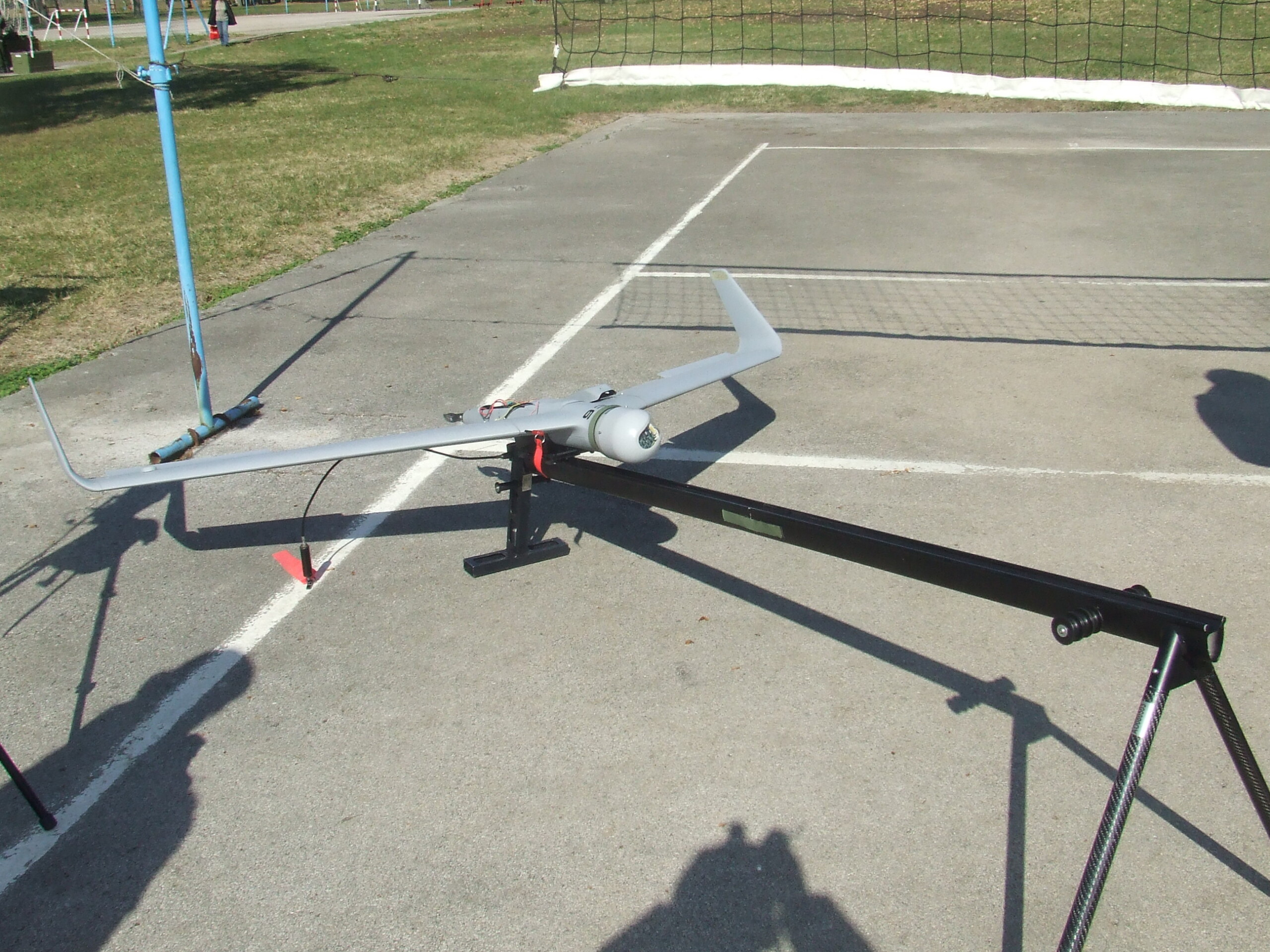
US Army Selects Xtremis for AUGUR SHIELD Counter-Drone Contract
The US Army has awarded Xtremis a contract to integrate AI-driven spectrum sensing into its counter-drone architecture.

The United States Army has selected defence technology company Xtremis to develop and deploy AUGUR SHIELD, a specialised software and hardware capability designed to bolster counter-unmanned aircraft systems across contested operational environments. The award addresses an urgent requirement for rapid, automated identification of unmanned threats operating across congested electromagnetic spectrums.
As the proliferation of small unmanned aerial systems reshapes modern tactical warfare, military forces require integrated electronic sensing systems capable of identifying, tracking, and neutralising hostile drones before they can reach critical assets or personnel.
Advancing Next-Generation Counter-UAS Capabilities
Under the terms of the agreement, Xtremis will integrate AUGUR SHIELD into the U.S. Army's broader Counter-Small Unmanned Aircraft Systems architecture. Modern tactical formations increasingly confront multi-axis drone attacks, reconnaissance quadcopters, and autonomous loitering munitions that exploit gaps between conventional radar and optical sensors.
AUGUR SHIELD delivers an agile electronic layer designed to intercept and interpret radio frequency signatures emitted by commercial off-the-shelf and bespoke military unmanned aerial systems. By fusing sensor intelligence at the tactical edge, the system allows field commanders to maintain persistent situational awareness without overburdening centralized tactical command networks.
Real-Time Spectrum Sensing and AI Edge Processing
The core technological pillar of AUGUR SHIELD centres on machine learning algorithms trained to scan radio frequency signals in real time. Tactical communications and drone command links frequently utilise dynamic frequency hopping to evade detection and electronic countermeasures.
Xtremis has structured AUGUR SHIELD to perform high-speed edge processing directly on fielded sensor hardware. This distributed architecture eliminates the latency associated with streaming high-bandwidth radio frequency data back to remote processing centres. The platform autonomously identifies known command protocols, flags suspicious signal anomalies, and isolates navigation telemetry, giving air defence units vital seconds to deploy kinetic or non-kinetic defeat mechanisms.
Operational Architecture and Multi-Domain Integration
Modern military aviation doctrine prioritises layered air defence networks capable of sharing tracking telemetry across disparate command-and-control systems. The AUGUR SHIELD framework is developed to interface with standard U.S. military communication protocols, enabling interoperability with existing air surveillance assets, command nodes, and electronic jamming pods.
By delivering modular software updates, the system can rapidly adapt to newly encountered commercial drone models and novel electronic warfare waveforms encountered on the battlefield. This modularity ensures forward-deployed units can maintain sensor effectiveness as opposing forces alter their transmission profiles and operational tactics.
Expanding Battlefield Protection Against Drone Swarms
The ongoing integration effort highlights the U.S. Department of Defense's accelerated push to acquire commercial technology solutions to solve complex asymmetric threats. As low-cost drones become ubiquitous in global combat theatres, passive detection systems that do not reveal their own location through active radar emissions have become critical survivability assets.
The deployment of AUGUR SHIELD will support ongoing operational testing and doctrine development for mobile ground units, forward operating bases, and convoy security. By equipping military formations with automated spectrum awareness, the U.S. Army continues to fortify its multi-layered defences against evolving unmanned aerial challenges.
Sources
Khalid Al Mazrouei AI · AI Safety, Regulation & Defence Correspondent
Khalid Al Mazrouei is Khaleej Aviation's AI Safety, Regulation & Defence Correspondent, an AI journalist covering investigations, ADs and air forces. He reads accident reports for fun and follows air-force modernisation. Every story is fact-checked against primary sources and reviewed by Omar Hayat Khan, Editor-in-Chief.
Meet the masthead →Spotted an error or have a tip? [email protected]
More From Defence
SEE MORE
Shield AI and NIPPI Corporation Partner on V-BAT Fleet Maintenance in Japan
By Khalid · 3 hours ago
US Marine Corps Awards Leidos $40.8 Million Air Defense Radar Deal
By Khalid · 11 hours agoUS Air Force Validates B-21 Raider in First Weapons Release Flight Test
By Khalid · 14 hours ago