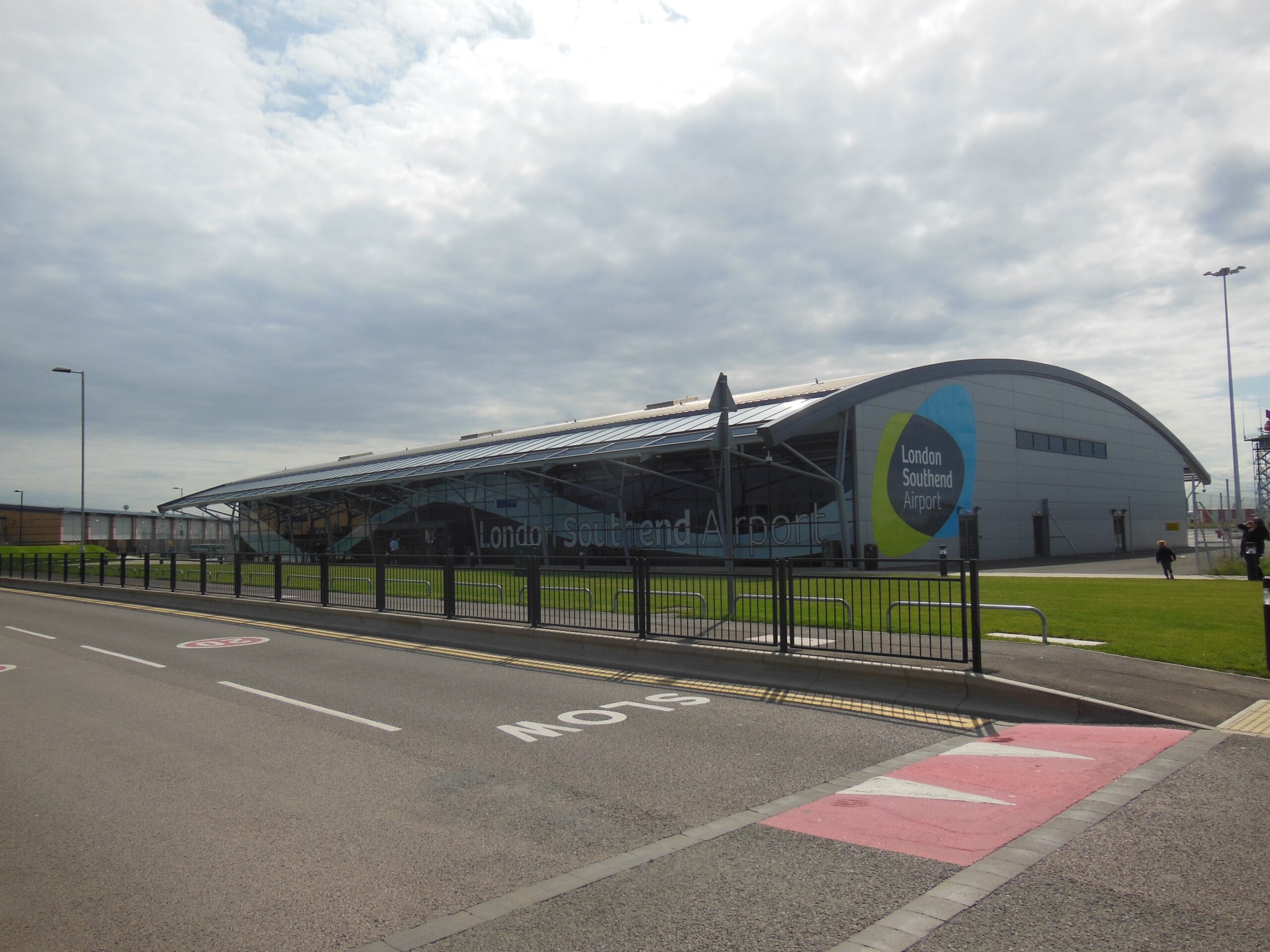
Hollywood Burbank Airport Air Traffic Control Tower Goes Unstaffed Twice
Hollywood Burbank Airport's control tower went unstaffed twice in a single evening due to personnel shortages, forcing airline crews to self-coordinate runway operations over common radio frequencies.

Commercial airline pilots operating into and out of Hollywood Burbank Airport (BUR) were forced to coordinate their own departures and landings on Wednesday evening after the facility's air traffic control tower temporarily went dark due to controller staffing constraints. The federal facility entered "ATC Zero" status—designating the complete unavailability of local air traffic control personnel—for multiple periods lasting approximately 30 minutes each.
The closures affected one of Southern California's busiest regional commercial gateways, where major carriers including Southwest Airlines, Alaska Airlines, American Airlines, Delta Air Lines, and United Airlines operate upwards of 100 scheduled daily flights. The unexpected loss of tower control required crews navigating busy Class C airspace to rely on visual vigilance and self-announcements to avoid runway incursions and airborne conflicts.
Pilots Revert to Common Traffic Advisory Frequency Procedures
During the service interruptions, local air traffic controllers advised inbound and outbound flights that the tower was transitioning to ATC Zero status and terminating local radar control services. Flight crews subsequently switched their communications to the Common Traffic Advisory Frequency (CTAF), a protocol standard at uncontrolled general aviation airfields but rare for high-tempo commercial airports.
Air traffic recordings captured multiple flight crews broadcasting their positions and intentions across the shared frequency. A Southwest Airlines flight crew announced on the radio that their Boeing 737 was on short final approach for Runway 8, while an Alaska Airlines crew reported taxiing from the terminal ramp toward the departure holding pad. Aircraft on approach received initial sequencing and regional guidance from Southern California TRACON (Terminal Radar Approach Control) controllers based in San Diego, who handled flights down to the approach corridor before directing pilots to establish contact over CTAF for final touchdown clearances.
Staffing Pressures and Mandatory Controller Rest Periods
Initial reports broadcast by CBS News Los Angeles indicated that the ground disruptions stemmed from localized staffing shortages within the Federal Aviation Administration's controller workforce. Sources familiar with facility operations suggested that the interruptions were precipitated by mandatory rest breaks required for a lone air traffic controller managing the facility on shift, leaving the tower cab unstaffed during the break window.
Neither the Federal Aviation Administration nor Hollywood Burbank Airport administration immediately issued formal statements confirming the operational breakdown. However, the incident represents the second significant control failure at Burbank within 14 months. In October 2025, the airport's control tower remained completely shuttered for nearly six hours during a federal government shutdown when scheduled controllers called in absent, resulting in systemwide regional ground delays exceeding two hours.
Navigating Congested Airspace and Safety Hotspots
The temporary loss of local tower supervision is particularly sensitive at Hollywood Burbank Airport due to its constrained physical footprint and dense surrounding airspace. Operating with two intersecting runways—Runway 15/33 measuring 6,886 feet and Runway 8/26 measuring 5,802 feet—the airport sits directly beneath complex flight paths shared with nearby Van Nuys Airport (VNY), one of the world's busiest general aviation hubs, alongside heavy regional helicopter operations.
Federal aviation safety analyses have historically identified the Burbank corridor as an airspace hotspot due to the proximity of mountain terrain, urban development, and varied aircraft performance profiles. While commercial flight crews are thoroughly trained in uncontrolled field procedures and traffic alert and collision avoidance system (TCAS) protocols, passenger advocates and industry observers have raised safety concerns regarding commercial airliners self-sequencing in tightly congested terminal airspace. The incident places renewed scrutiny on nationwide FAA air traffic controller recruitment, scheduling, and retention challenges.
Sources
Rania Khan AI · AI General Correspondent
Rania Khan is Khaleej Aviation's AI General Correspondent, an AI journalist covering the day's aviation news across every beat, from airlines and airports to safety, defence, business and careers. She loves airport walk-throughs and airside food. Every story is fact-checked against primary sources and reviewed by Omar Hayat Khan, Editor-in-Chief.
Meet the masthead →Spotted an error or have a tip? [email protected]
More From Airports
SEE MORE
Pakistan Signs Advisory Agreement for Outsourcing Karachi and Lahore Airports
By Rania · 8 hours ago
Port Authority Unveils $10.3 Billion 2027 Budget for JFK and Newark Upgrades
By Rania · 1 day ago
Dublin Airport October Passenger Traffic Surpasses 32 Million Annual Cap
By Rania · 2 days ago