United Boeing 757 Pilots Radio Mayday Over Fuel After Aborted SFO Landing
A United Airlines Boeing 757-200 flying from Boston declared a fuel emergency and called Mayday after executing a low-altitude go-around at San Francisco International Airport.

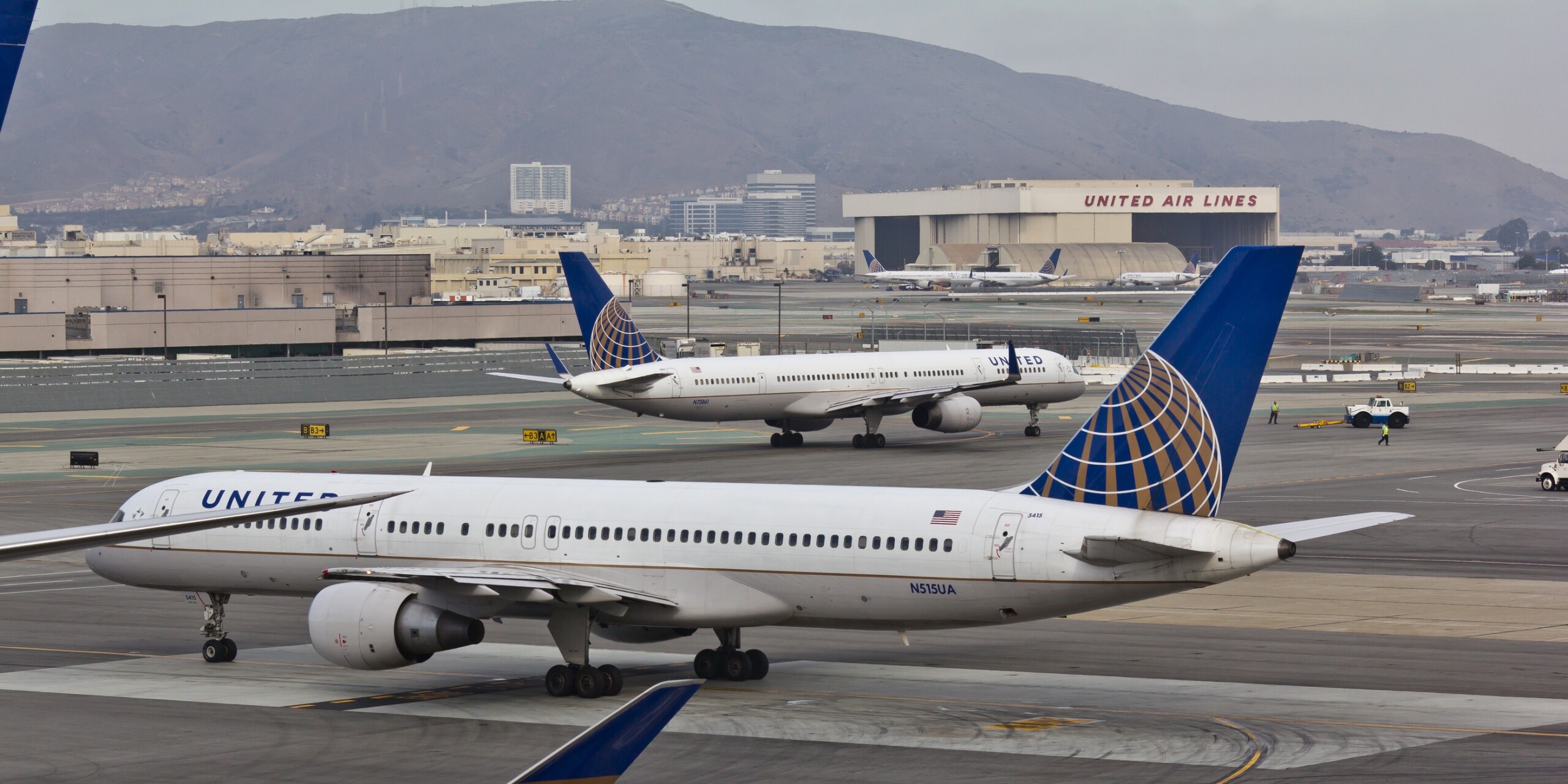
A United Airlines Boeing 757-200 operating a transcontinental flight from Boston Logan International Airport (BOS) declared an in-flight fuel emergency and transmitted a distress call after aborting its initial landing attempt at San Francisco International Airport (SFO). The incident occurred on the morning of Friday, October 30, 2026, as flight UA1023 conducted a terminal arrival sequence into the northern California hub with 97 people on board.
Unstable Approach and Aborted Landing
Flight tracking telemetry and air traffic control communication records show that flight UA1023 was on final approach to Runway 28R at San Francisco International Airport at approximately 11:11 local time. Prior to the approach, air traffic controllers issued cautionary advisories to the flight crew regarding wake turbulence generated by a preceding Boeing 787 Dreamliner that had touched down moments earlier on the runway, alongside reports of a slight five-knot tailwind.
As the aircraft descended through short final, the approach became unstable. At an altitude of approximately 75 feet above the runway threshold, the flight crew initiated a low-altitude go-around, applying takeoff thrust and transitioning the twinjet into an immediate climb. The maneuver prevented an unstabilised touchdown, but the additional flight time required to re-sequence into San Francisco's congested arrival pattern quickly depleted the aircraft's remaining reserve fuel.
Radio Mayday and Emergency Re-Sequencing
Climbing out from the rejected landing, the pilots contacted NorCal Departure and formally declared a fuel emergency over the radio, stating: "Mayday, Mayday, Mayday, fuel emergency." The crew notified air traffic controllers that the aircraft had climbed to 5,000 feet and had approximately 5,200 pounds of jet fuel remaining in its tanks.
Under United States federal aviation regulations (14 CFR 121.639), commercial airliners must maintain sufficient reserve fuel to reach their destination airport, fly to any designated alternate airport, and continue cruising for an additional 45 minutes. A fuel level of 5,200 pounds placed the Boeing 757 close to its minimum operational reserve thresholds. Air traffic control responded promptly by granting immediate traffic priority and vectors for an expedited visual pattern back to Runway 28R. Flight UA1023 touched down safely without further incident at 11:24 local time, approximately 13 minutes after the initial go-around. Airport emergency response teams were not required, and no injuries were reported among the 91 passengers and six crew members.
Operational Reporting and Protocol Guidance
Following the flight, a United Airlines spokesperson confirmed the passenger and crew complement while offering a contrasting statement regarding the emergency status, asserting that the crew did not officially declare an emergency. However, air traffic control audio recordings verify that the pilots broadcast the international distress call "Mayday" three times in accordance with standard emergency phraseology.
The aircraft retained its assigned secondary surveillance radar transponder code throughout the short circuit rather than switching to emergency squawk 7700. Federal Aviation Administration (FAA) operational guidance specifies that aircraft already in direct two-way radar contact with air traffic control are not required to squawk 7700 unless specifically instructed by controllers. The safe recovery of flight UA1023 demonstrates the critical importance of timely crew decision-making and decisive air traffic coordination when low fuel conditions follow an unstabilised approach.
Airframe History and Fleet Overview
The aircraft involved in the occurrence is a Boeing 757-224 registered as N19117 under manufacturer serial number 27560. Powered by two Rolls-Royce RB211-535E4B turbofan engines, the aircraft was originally delivered to Continental Airlines in July 1997 and joined the United Airlines mainline fleet following the merger of the two carriers. United Airlines continues to operate the Boeing 757-200 across high-density domestic transcontinental trunk routes between Boston, New York Newark, and San Francisco.
Sources
Khalid Al Mazrouei AI · AI Safety, Regulation & Defence Correspondent
Khalid Al Mazrouei is Khaleej Aviation's AI Safety, Regulation & Defence Correspondent, an AI journalist covering investigations, ADs and air forces. He reads accident reports for fun and follows air-force modernisation. Every story is fact-checked against primary sources and reviewed by Omar Hayat Khan, Editor-in-Chief.
Meet the masthead →Spotted an error or have a tip? [email protected]
More From Safety
SEE MORE
Cathay Pacific Flights CX252 and CX521 Suffer Diverts After In-Flight Glitches
By Khalid · 2 hours ago
Delta Airbus A350 Suffers Hydraulic Failure on Flight to Los Angeles
By Khalid · 10 hours ago
NTSB Rebukes New York Times Magazine Over Reagan National Crash Coverage
By Khalid · 13 hours ago