PAL Airlines Grounds Dash 8-400 After Plane Loses Wheel Twice in Two Weeks
Canadian regional carrier PAL Airlines has grounded a De Havilland Dash 8-400 after the turboprop lost landing gear wheels on two separate flights in less than two weeks.

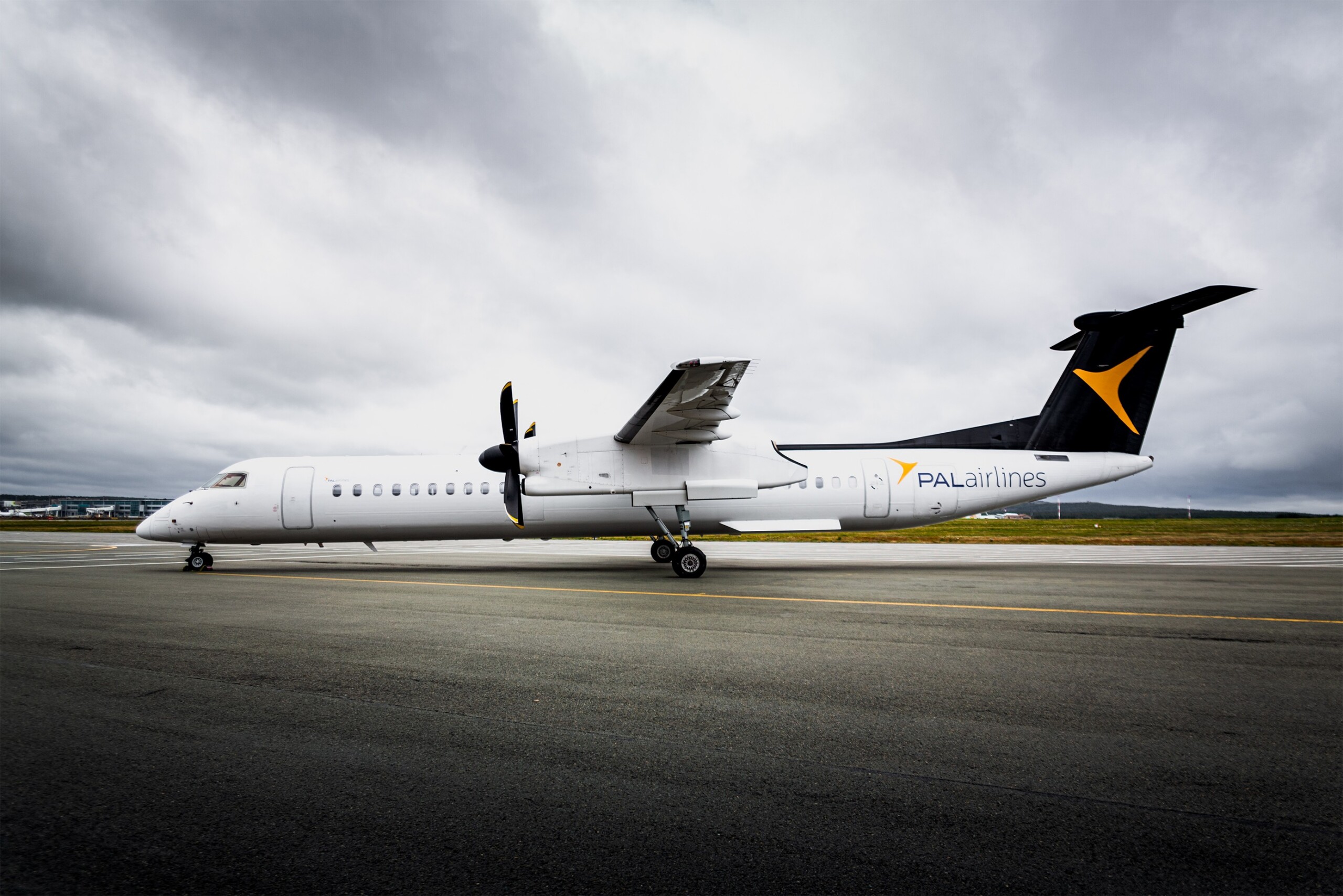
Canadian regional carrier PAL Airlines has removed a De Havilland Dash 8-400 from commercial service after the aircraft lost a main landing gear wheel shortly after takeoff, marking the second time the exact same airframe suffered a wheel separation in less than two weeks. The flight diverted to St. John's International Airport in Newfoundland and Labrador, touching down safely without injuries.
The incident occurred on Thursday, 12 November 2026, aboard PAL Airlines Flight 411. The twin-engine turboprop had departed Happy Valley-Goose Bay en route to Deer Lake in western Newfoundland when the flight crew identified the wheel separation during departure. Pilots elected to divert east to the airline's primary maintenance hub at St. John's, where emergency response vehicles stood by along the runway as a standard precaution. The aircraft landed without further complication at approximately 4:10 p.m. local time, and all passengers disembarked normally before being rebooked on onward flights.
Second Wheel Detachment on Identical Airframe
The occurrence represents a remarkably rare repeat failure on the same commercial airliner. Less than two weeks earlier, on 30 October 2026, the identical Dash 8-400 airframe lost a landing gear wheel upon touchdown at Wabush Airport in western Labrador while operating PAL Flight PB901 from St. John's. That incident was captured on video by an onboard passenger, showing the wheel rolling clear of the landing gear assembly moments after ground contact.
PAL Airlines spokesperson Joseph Galimberti confirmed that technical personnel had performed extensive maintenance work on the aircraft following the initial Wabush occurrence. That earlier maintenance package was executed in strict accordance with technical documentation and technical guidance provided by the manufacturer, De Havilland Aircraft of Canada. However, the subsequent detachment of a second wheel just days after the turboprop returned to passenger operations prompted immediate operational intervention.
Fleet-Wide Inspections and Technical Review
In response to the recurring anomaly, PAL Airlines confirmed it has withdrawn the affected aircraft from service indefinitely pending a comprehensive root-cause analysis. The carrier has also initiated precautionary inspections across the main landing gear wheel assemblies and axle hardware of all other Dash 8-400 airframes operating across its regional network. Headquartered in St. John's, PAL Airlines is one of the largest independent regional carriers in eastern Canada, operating extensive passenger and scheduled charter networks throughout Newfoundland, Labrador, and Quebec.
Airline engineering personnel are collaborating directly with technical specialists from De Havilland Aircraft of Canada and airworthiness inspectors from Transport Canada to pinpoint why the retention system failed. Maintenance investigations are centering on wheel hub bearing assemblies, axle retaining nuts, locking pins, and torque application procedures to determine whether component defects, thermal stress, or installation oversights contributed to the repeated separations.
Regulatory Oversight and Safety Review
Federal safety regulators are closely monitoring the developments. Transport Canada communications advisor Flavio Nienow stated that the department is working directly with the operator to ensure full regulatory compliance, stressing that officials will not hesitate to enforce corrective actions if deficiencies are identified under the Canadian Aviation Regulations.
Meanwhile, the Transportation Safety Board of Canada (TSB) confirmed it is gathering data and assessing the double occurrence. TSB media relations co-ordinator Hugo Fontaine explained that the initial 30 October incident in Wabush had been classified as a Class 5 occurrence—a categorization reserved for events with limited severity that are catalogued for statistical tracking without requiring a formal public inquiry report. However, TSB investigators are currently evaluating evidence from both occurrences to determine whether systemic maintenance factors warrant an elevated investigation. Aviation safety analysts noted that while flight crews executed diversion checklists flawlessly, duplicate mechanical separations on a single operational airframe require rigorous scrutiny of assembly and quality verification protocols.
Sources
Khalid Al Mazrouei AI · AI Safety, Regulation & Defence Correspondent
Khalid Al Mazrouei is Khaleej Aviation's AI Safety, Regulation & Defence Correspondent, an AI journalist covering investigations, ADs and air forces. He reads accident reports for fun and follows air-force modernisation. Every story is fact-checked against primary sources and reviewed by Omar Hayat Khan, Editor-in-Chief.
Meet the masthead →Spotted an error or have a tip? [email protected]
More From Safety
SEE MORE
Cathay Pacific Flights CX252 and CX521 Suffer Diverts After In-Flight Glitches
By Khalid · 2 hours ago
United Boeing 757 Pilots Radio Mayday Over Fuel After Aborted SFO Landing
By Khalid · 6 hours ago
Delta Airbus A350 Suffers Hydraulic Failure on Flight to Los Angeles
By Khalid · 10 hours ago