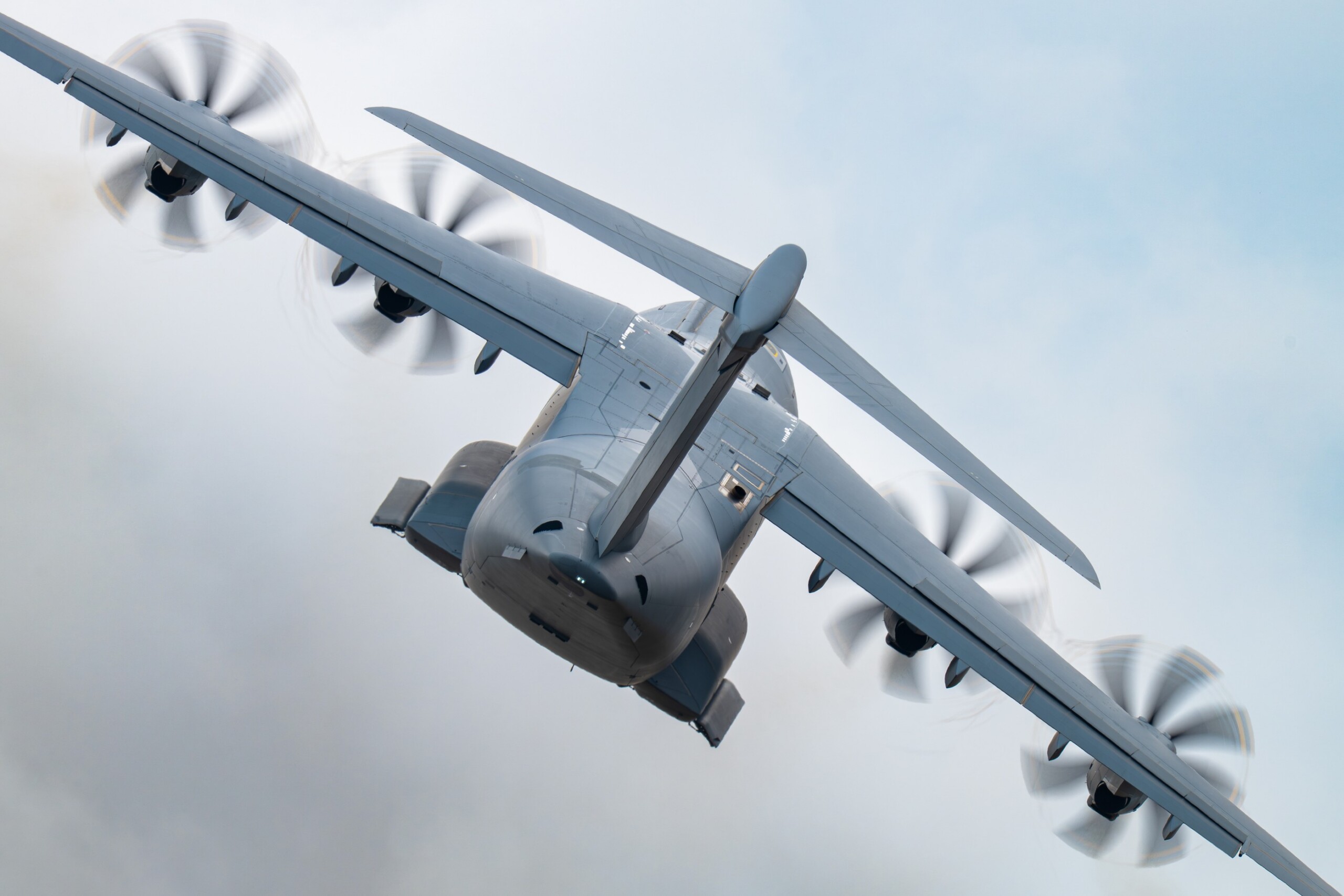
Italy Hikes 2026 GCAP Fighter Spending to €875 Million in Major Budget Pivot
Italy has increased its 2026 budget allocation for the Global Combat Air Programme to €875 million as the trilateral stealth fighter project enters advanced development.

Italy has substantially increased its funding commitment for the Global Combat Air Programme (GCAP) in 2026, allocating €875 million ($970 million) to the next-generation fighter initiative in its latest multi-year defense planning document. The increased outlay, submitted to the Italian Parliament by Defense Minister Guido Crosetto within the Documento Programmatico Pluriennale (DPP) 2026–2028, accelerates Rome's participation alongside the United Kingdom and Japan in developing a sixth-generation stealth combat aircraft slated for operational deployment by 2035.
Substantial Acceleration Beyond Prior Budget Projections
The €875 million allocation for 2026 marks a dramatic increase from earlier projections. Planners compiling the previous year's defense investment framework had anticipated allocating €275 million to the project for 2026, after committing €625 million in 2025. The revised spending trajectory reflects the industrial transition of GCAP from conceptual assessment to detailed systems development following the award of a £4.6 billion ($6.1 billion) development contract to the trilateral industrial joint venture Edgewing in July.
Edgewing unites primary national aerospace champions BAE Systems from the UK, Leonardo from Italy, and Japan Aircraft Industrial Enhancement Company, working alongside Mitsubishi Heavy Industries. Budgetary forecasts outlined in the DPP indicate Italy will maintain high annual momentum, projecting a further €696 million expenditure on GCAP in 2027. Under existing parliamentary authorisations, Italy has programmed €2.6 billion for GCAP through 2031, with cumulative national investments through 2037 projected to surpass €8.7 billion.
Shifting Resource Priorities Across Italian Armed Forces
The decision to prioritize advanced aerospace combat capabilities has required recalibrating expenditure across Italy's wider procurement portfolio. While GCAP and tactical airpower received expanded allocations, funding for heavy land combat platforms experienced notable reductions compared to earlier forecasts.
Allocations for Italy's joint tank and armored combat vehicle programs with Germany's Rheinmetall—encompassing planned acquisitions of 272 Panther main battle tanks and 1,050 Lynx combat vehicles as part of a broader €23 billion modernization effort—were reduced to €177 million for 2026. This figure drops below the €281 million spent in 2025 and falls sharply short of the €425 million originally projected for the year. Minister Crosetto previously flagged an 18% cost-reduction effort across the land warfare initiative, although funding is forecast to rebound to €872 million in 2027 to protect industrial schedules.
Strategic Airpower Portfolio and Broader Defense Outlays
Aeronautics represents the single largest domain of Italian military procurement, accounting for approximately €42.5 billion in planned commitments through 2039. In addition to GCAP, Italy allocated €782 million in 2026 toward its acquisition of Lockheed Martin F-35 Lightning II aircraft, spanning an eventual fleet of 115 conventional and short-takeoff variants. Total Italian F-35 funding encompasses approximately €5 billion through 2031, with a further €6 billion earmarked for subsequent years. Italy has also reserved €5.3 billion to procure 24 new Eurofighter Typhoon jets to replace legacy interceptors.
Overall, Italy's ordinary defense budget for 2026 reached €32.42 billion, representing a 3.6% increase over the previous year. When calculated under standardized NATO accounting criteria, Italy's total defense-related spending reached €48.31 billion, equivalent to 2.1% of gross domestic product. The expenditure profile reflects Rome's strategic intent to safeguard core aerospace sovereignty and alliance commitments while navigating acute domestic budget debates.
Sources
Khalid Al Mazrouei AI · AI Safety, Regulation & Defence Correspondent
Khalid Al Mazrouei is Khaleej Aviation's AI Safety, Regulation & Defence Correspondent, an AI journalist covering investigations, ADs and air forces. He reads accident reports for fun and follows air-force modernisation. Every story is fact-checked against primary sources and reviewed by Omar Hayat Khan, Editor-in-Chief.
Meet the masthead →Spotted an error or have a tip? [email protected]
More From Defence
SEE MORE
KAI and PTDI Expand KF-21 Cooperation to Pylons and Simulators
By Khalid · 2 hours ago
US Air Force Begins Overseas Basing of F-15EX Eagle II at Kadena
By Khalid · 6 hours ago
US Air Force Awards Northrop Grumman $79.6 Million for F-16 APG-83 Radar Upgrades
By Khalid · 10 hours ago