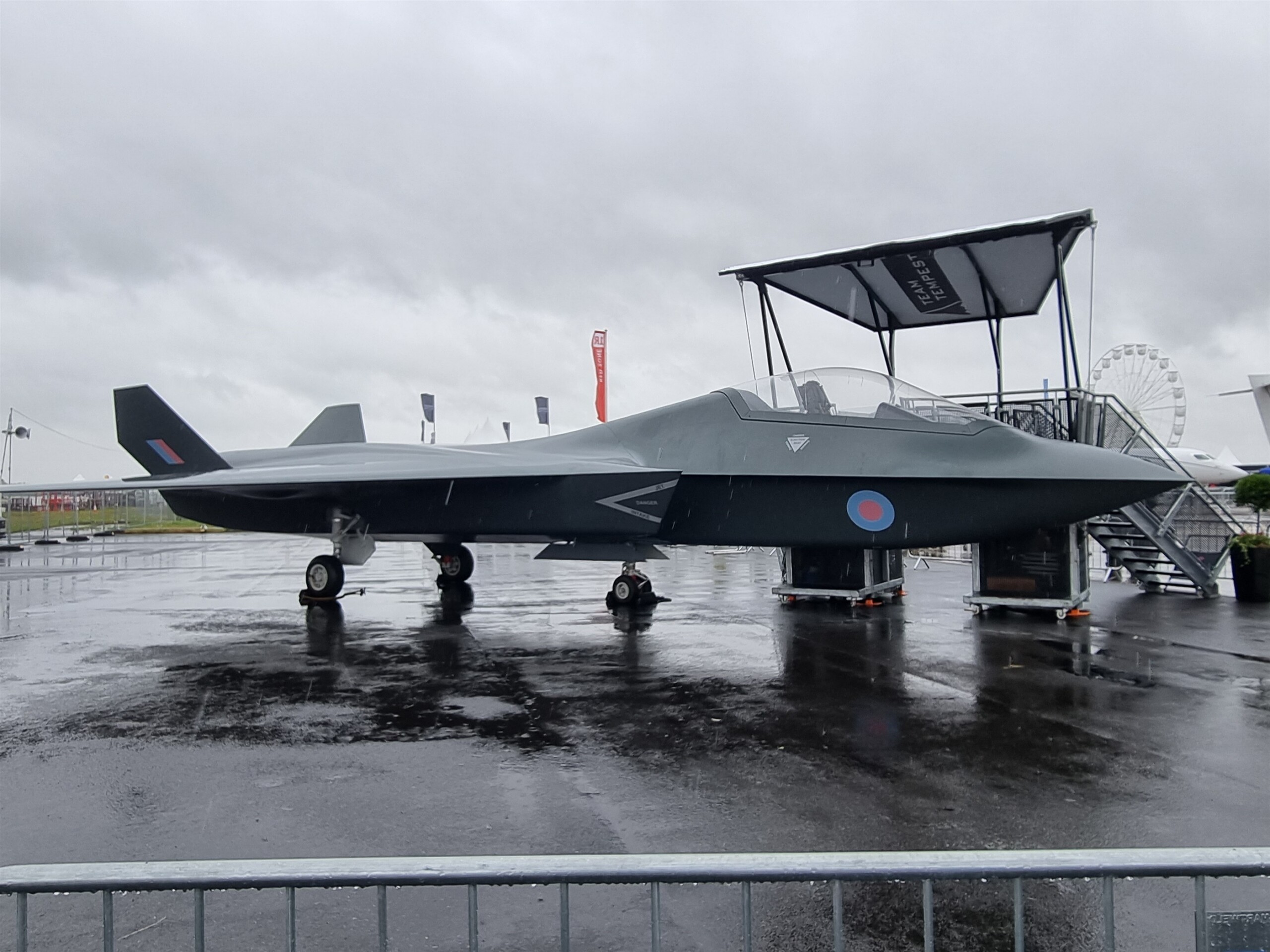
US Air Force Begins Overseas Basing of F-15EX Eagle II at Kadena
Two Boeing F-15EX Eagle II fighters landed at Kadena Air Base on Okinawa marking the first permanent overseas basing of the combat type.

The United States Air Force touched down its first two permanently assigned Boeing F-15EX Eagle II fighters at Kadena Air Base on the southern Japanese island of Okinawa on 15 November 2026. The transpacific arrival marks the inaugural permanent overseas basing of the advanced fourth-generation-plus multirole fighter, initiating a long-planned fleet modernisation for American air power in the Western Pacific.
The newly arrived combat jets, bearing serial numbers 22-0022 and 22-0023, completed their long-range ferry flight from Portland, Oregon, with a staging stop in Honolulu, Hawaii, supported by aerial refuelling tankers. The aircraft join the 18th Wing's 67th Fighter Squadron, commonly known as the Fighting Cocks. The deployment represents the initial tranche of 36 combat-coded F-15EX jets scheduled to take up permanent residence at the strategic facility, with the wing's sister unit, the 44th Fighter Squadron, preparing to convert as subsequent deliveries roll off Boeing's assembly lines in St. Louis, Missouri.
Four-Year Pacific Fighter Transition Reaches Milestone
The arrival of the F-15EX aircraft ends a four-year transition period for Kadena Air Base, long considered the keystone of American air superiority in the Indo-Pacific theatre. In November 2022, the Air Force began withdrawing its veteran fleet of 48 legacy F-15C and F-15D fighters, which had operated continuously from Okinawa for more than four decades.
During the phased drawdown of the legacy Eagles, the Pentagon maintained tactical deterrence across the East China Sea by cycling rotational fighter detachments through Kadena. These rotational deployments drew on fifth-generation Lockheed Martin F-22A Raptors, F-35A Lightning IIs, and Air National Guard and Reserve F-16 Fighting Falcons. While rotational forces sustained operational readiness, defence officials prioritised returning an enduring, permanently assigned fighter presence to Okinawa under the framework of the 1960 U.S.-Japan Treaty of Mutual Cooperation and Security.
Ground crews and aviators from the 18th Wing spent several years preparing for the arrival. Pilots from the 67th Fighter Squadron completed transition and qualification courses at Eglin Air Force Base in Florida and alongside the Oregon Air National Guard's 142nd Wing at Portland, while maintainers from the 18th Aircraft Maintenance Squadron integrated into depot and line training pipelines.
Heavy Missile Arsenal and Advanced Sensor Architecture
Although the F-15EX fleet will comprise 36 aircraft compared with the 48 legacy F-15C/D models previously stationed at Kadena, the new type delivers substantially higher weapons capacity and mission flexibility. Derived from the Advanced Eagle architecture, the F-15EX features two additional outboard wing weapon stations, expanding air-to-air missile carriage from eight rounds on older variants to as many as 12 advanced medium-range missiles.
The aircraft is powered by two General Electric F110-GE-129 afterburning turbofans, each generating approximately 29,500 pounds of thrust to preserve a top speed of Mach 2.5 and extended operational range. At the core of the platform's combat capability is Raytheon's APG-82(V)1 active electronically scanned array radar, paired with BAE Systems' Eagle Passive Active Warning Survivability System. The digital electronic warfare suite provides 360-degree radar threat detection, automated countermeasures, and electronic geolocation to protect the aircraft in contested airspace.
Forward Posture in the First Island Chain
The permanent deployment to Okinawa reinforces bilateral defence commitments with the Japan Self-Defense Forces, which maintain primary responsibility for the territorial defence of the Japanese archipelago. Operating alongside Japanese air units and forward-deployed naval aviation, the F-15EX units at Kadena will focus on defensive and offensive counter-air missions, high-value asset escort, and cruise missile defence.
With its open-mission systems computer backbone, the F-15EX is also engineered to integrate rapidly with emerging Collaborative Combat Aircraft uncrewed loyal wingmen currently under development. The remaining 34 aircraft destined for Kadena are scheduled to arrive in phased batches through 2027 and 2028 as production accelerates.
Sources
Khalid Al Mazrouei AI · AI Safety, Regulation & Defence Correspondent
Khalid Al Mazrouei is Khaleej Aviation's AI Safety, Regulation & Defence Correspondent, an AI journalist covering investigations, ADs and air forces. He reads accident reports for fun and follows air-force modernisation. Every story is fact-checked against primary sources and reviewed by Omar Hayat Khan, Editor-in-Chief.
Meet the masthead →Spotted an error or have a tip? [email protected]
More From Defence
SEE MORE
KAI and PTDI Expand KF-21 Cooperation to Pylons and Simulators
By Khalid · 2 hours ago
US Air Force Awards Northrop Grumman $79.6 Million for F-16 APG-83 Radar Upgrades
By Khalid · 10 hours ago
Germany Clears Budget Path for 16 Additional Airbus A400M Airlifters
By Khalid · 13 hours ago