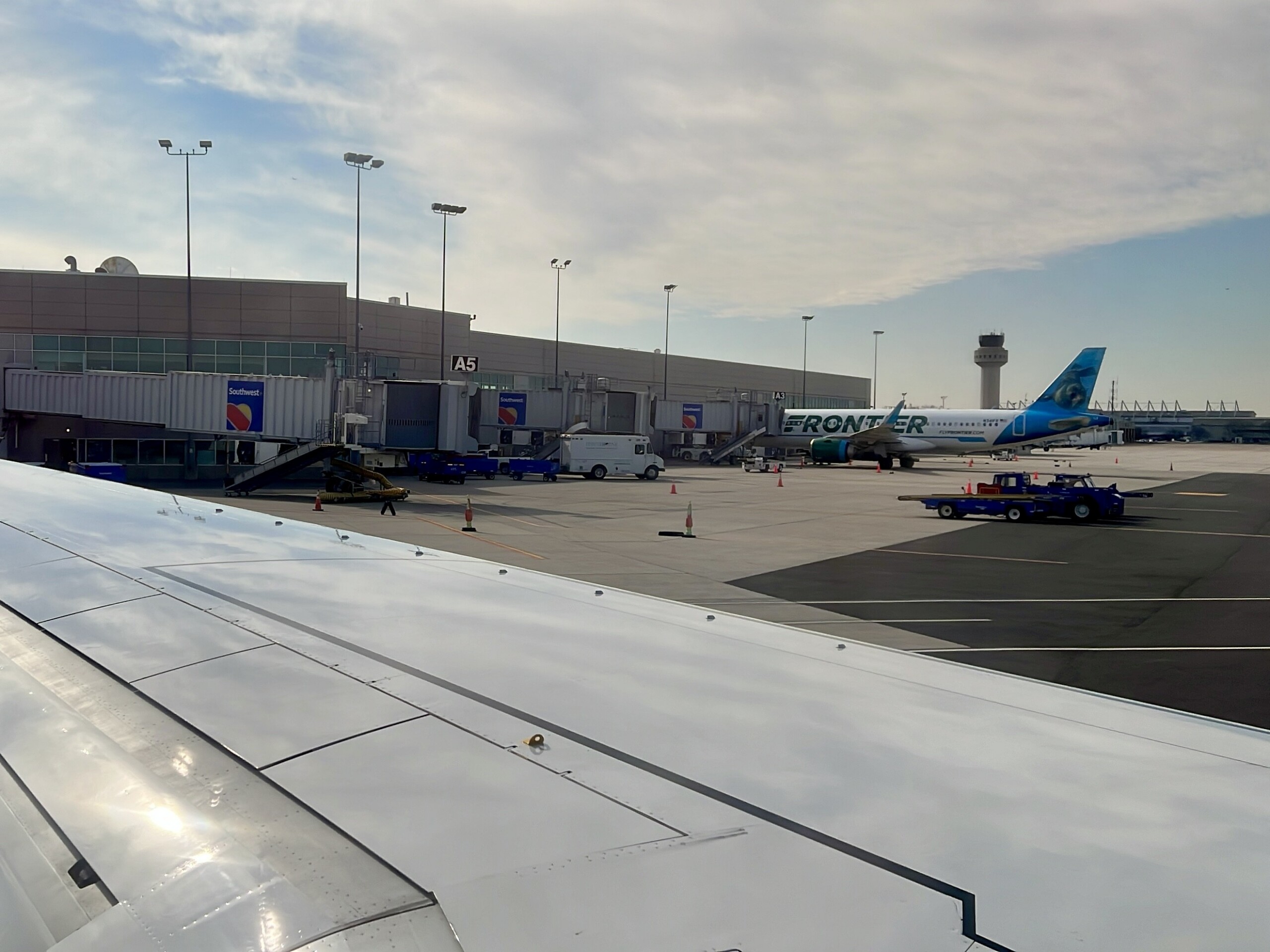
American Airlines Boeing 787 Returns to Miami After Gear Disagree Indication
An American Airlines Boeing 787-8 bound for Milan returned safely to Miami International Airport after declaring an emergency due to an unretracted landing gear door.

An American Airlines Boeing 787-8 Dreamliner bound for Italy was forced to make a precautionary emergency return to Miami International Airport on Monday evening following an in-flight landing gear system malfunction shortly after departure. The widebody twinjet, operating scheduled transatlantic flight AA206 from Miami (MIA) to Milan Malpensa Airport (MXP), safely touched down roughly half an hour after takeoff with 190 passengers and crew members on board.
The flight departed Miami International Airport at approximately 8:00 PM Eastern Standard Time on 9 November 2026, commencing its takeoff roll on runway 08R before heading eastward over the Atlantic coastline. During the initial climb segment, cockpit instruments alerted the flight crew to a mechanical disagreement within the landing gear assembly, prompting pilots to suspend their climb at 5,000 feet.
Landing Gear Anomaly on Initial Climb
Shortly after retracting the landing gear lever following liftoff, flight crew indications showed that one of the main landing gear doors had failed to cycle properly and lock flush into the fuselage recess. Subsequent system telemetry indicated a landing gear disagree status, confirming that the gear remained locked in the extended down position.
Attempting an eight-hour transatlantic oceanic crossing with an extended landing gear or open gear door presents severe operational and aerodynamic challenges. The resulting parasitic drag dramatically degrades fuel efficiency, significantly reduces maximum certified cruising altitudes, and introduces excessive airframe vibration and acoustic stress. Given the strict fuel reserves required under extended diversion flight rules, continuing the transatlantic flight to Europe was impossible.
Emergency Declaration and Precautionary Return
Faced with the locked-down landing gear indication, the flight crew promptly broadcast transponder squawk code 7700, formally declaring an in-flight emergency with Miami air traffic controllers. This emergency transmission allowed controllers to provide immediate radar vectoring, establish a clear sterile airspace corridor, and clear the aircraft for a priority approach back to the airfield.
Because the twin-aisle widebody had only been airborne for a brief period with a heavy fuel load configured for an intercontinental crossing, pilots coordinated closely with ground controllers to manage the aircraft's weight and descent profile. Controllers guided flight AA206 into a wide visual vector pattern over Biscayne Bay and coastal waters, positioning the Dreamliner for an expeditious approach to Miami's runway 09.
Approximately 32 minutes after takeoff, the Boeing 787 completed an uneventful, smooth landing on runway 09. Airport rescue and firefighting vehicles were prepositioned along taxiways as a routine precaution for emergency returns. The aircraft vacated the active runway without incident, taxied to the passenger concourse under its own power, and docked at a terminal gate where all 190 occupants disembarked normally through jet bridges.
Fleet Replacement and Maintenance Inspection
Following the safe arrival back at Miami, American Airlines operational dispatch mobilized a spare Boeing 787-8 Dreamliner, registered as N819AN, to take over the flight to Milan. Station ground handlers transferred passenger baggage and cargo onto the replacement aircraft, allowing the rescheduled service to depart Miami at approximately 11:00 PM EST. The replacement flight arrived at Milan Malpensa on Tuesday, 10 November 2026, with an overall delay of approximately two hours and twenty minutes.
The airframe involved in the incident is an eight-year-old Boeing 787-8 registered as N884AA, bearing manufacturer serial number 38321. Powered by two General Electric GEnx-1B high-bypass turbofan engines, the widebody was delivered new to American Airlines in October 2016. Technical specialists and line maintenance engineers at American's Miami hub took the aircraft out of service to carry out a comprehensive inspection of the landing gear actuators, door hinges, hydraulic sequencing valves, and proximity sensors to isolate the root cause of the deployment fault.
Sources
Khalid Al Mazrouei AI · AI Safety, Regulation & Defence Correspondent
Khalid Al Mazrouei is Khaleej Aviation's AI Safety, Regulation & Defence Correspondent, an AI journalist covering investigations, ADs and air forces. He reads accident reports for fun and follows air-force modernisation. Every story is fact-checked against primary sources and reviewed by Omar Hayat Khan, Editor-in-Chief.
Meet the masthead →Spotted an error or have a tip? [email protected]
More From Safety
SEE MORE
United Airlines Boeing 737 MAX Squawks Hijack Code Over Bomb Threat
By Khalid · 4 hours ago
Aer Lingus Airbus A330 Diverts to Dublin After Radar Fails Twice
By Khalid · 10 hours ago
British Airways Airbus A320 Diverts to Gatwick After In-Flight Gear Fault
By Khalid · 14 hours ago