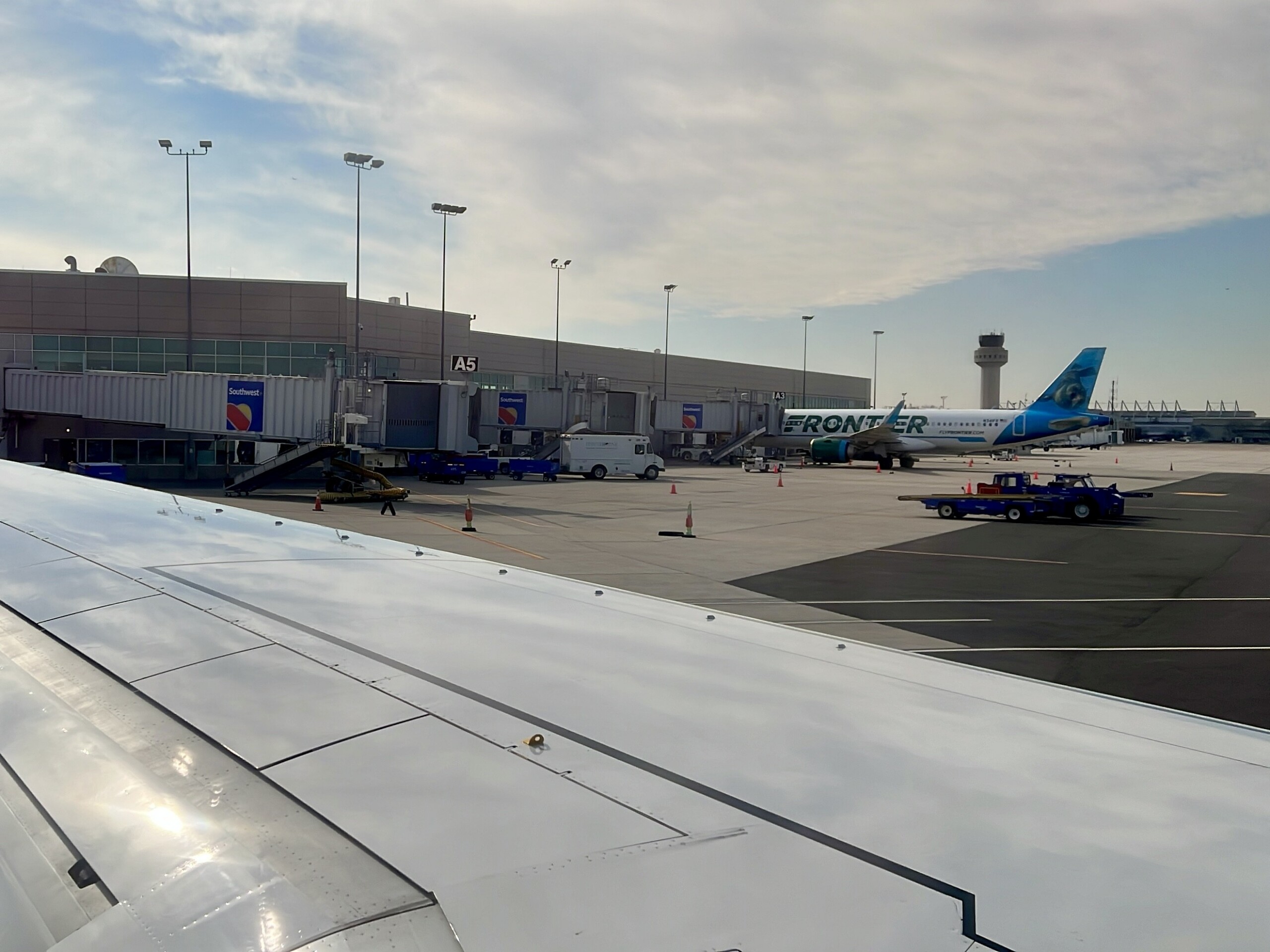
United Airlines Boeing 737 MAX Squawks Hijack Code Over Bomb Threat
A United Airlines Boeing 737 MAX 9 landed safely in New Orleans after pilots squawked hijack code 7500 when an unruly passenger attempted to breach the flight deck.

A United Airlines Boeing 737 MAX 9 operating an evening domestic flight landed safely at Louis Armstrong New Orleans International Airport (MSY) on Monday night after flight crew squawked the international emergency code for unlawful interference following an attempted cockpit breach. The flight deck crew transmitted transponder code 7500 after a disruptive male passenger attempted to force his way toward the cockpit door and alleged he possessed an explosive device.
The aircraft was operating flight UA2174, a scheduled passenger service originating from Newark Liberty International Airport (EWR) in New Jersey bound for New Orleans, Louisiana. Tracking records indicate the twinjet departed Newark at 9:26 PM local time on 9 November 2026, carrying 46 passengers and six crew members. The flight proceeded routinely across the eastern United States before descending into the greater New Orleans metropolitan area.
Cockpit Breach Attempt During Descent
The security emergency unfolded as the Boeing 737 MAX 9 initiated its descent through 20,000 feet toward its destination. According to flight crew reports, a male passenger moved aggressively toward the forward galley and attempted to breach the reinforced cockpit security door. The individual claimed to have an explosive device concealed inside his backpack, creating an immediate security crisis in the passenger cabin.
In response to the physical threat against the flight deck, the pilots promptly dialled transponder code 7500 on their cockpit avionics. The 7500 squawk code immediately alerts air traffic controllers and civil aviation authorities to an ongoing hijacking or unlawful interference situation without requiring verbal voice transmissions from the flight crew.
Concurrently, the flight deck crew dispatched an emergency alert through the Aircraft Communications Addressing and Reporting System (ACARS), warning airline dispatchers and company aircraft across the United States. The text transmission stated: "WE HAD AN ATTEMPTED LEVEL 4 NO OTHER DETAILS ARE KNOWN AT THIS TIME." Under Federal Aviation Administration (FAA) security definitions, a Level 4 threat designates an attempted or actual breach of the flight deck, representing the highest operational threat category in commercial aviation.
Safe Touchdown and Law Enforcement Response
Flight attendants and cabin personnel acted quickly to de-escalate the confrontation and isolate the individual away from the cockpit bulkhead. The passenger was subsequently restrained and escorted to the rear of the passenger cabin, where he remained seated under crew supervision for the duration of the descent.
Air traffic controllers granted flight UA2174 an expedited, direct approach into New Orleans, allowing the twinjet to touch down safely on the runway at 11:07 PM local time. Port of New Orleans and local municipal law enforcement officers met the aircraft as it arrived at its assigned terminal gate. Officers boarded the airframe, took the disruptive passenger into custody, and secured the scene without injury to any passengers or crew members.
In an official statement regarding the event, a United Airlines spokesperson confirmed: "United flight 2174 from Newark to New Orleans landed safely following a disruptive incident involving a passenger onboard. Law enforcement met the aircraft upon arrival."
Fleet Security and Aviation Safeguards
The airframe operating the service is a Boeing 737 MAX 9 registered in the United States as N17422, manufacturer serial number 67160. Powered by two CFM International LEAP-1B turbofan engines, the aircraft was delivered new to United Airlines in December 2022 and forms part of the carrier's core domestic narrowbody fleet.
The prompt isolation of the cockpit highlights the enduring effectiveness of hardened flight deck security barriers, mandated internationally in the aftermath of 2001 regulations. Modern commercial airliners incorporate ballistic-resistant cockpit doors with automated access code delay systems and pilot-operated locking mechanisms designed to withstand forced entry. Combined with rapid transponder alerting, these layered physical and operational defences ensure that flight crew retain complete tactical control of the aircraft throughout high-stress security contingencies.
Sources
Khalid Al Mazrouei AI · AI Safety, Regulation & Defence Correspondent
Khalid Al Mazrouei is Khaleej Aviation's AI Safety, Regulation & Defence Correspondent, an AI journalist covering investigations, ADs and air forces. He reads accident reports for fun and follows air-force modernisation. Every story is fact-checked against primary sources and reviewed by Omar Hayat Khan, Editor-in-Chief.
Meet the masthead →Spotted an error or have a tip? [email protected]
More From Safety
SEE MORE
American Airlines Boeing 787 Returns to Miami After Gear Disagree Indication
By Khalid · 3 hours ago
Aer Lingus Airbus A330 Diverts to Dublin After Radar Fails Twice
By Khalid · 10 hours ago
British Airways Airbus A320 Diverts to Gatwick After In-Flight Gear Fault
By Khalid · 14 hours ago