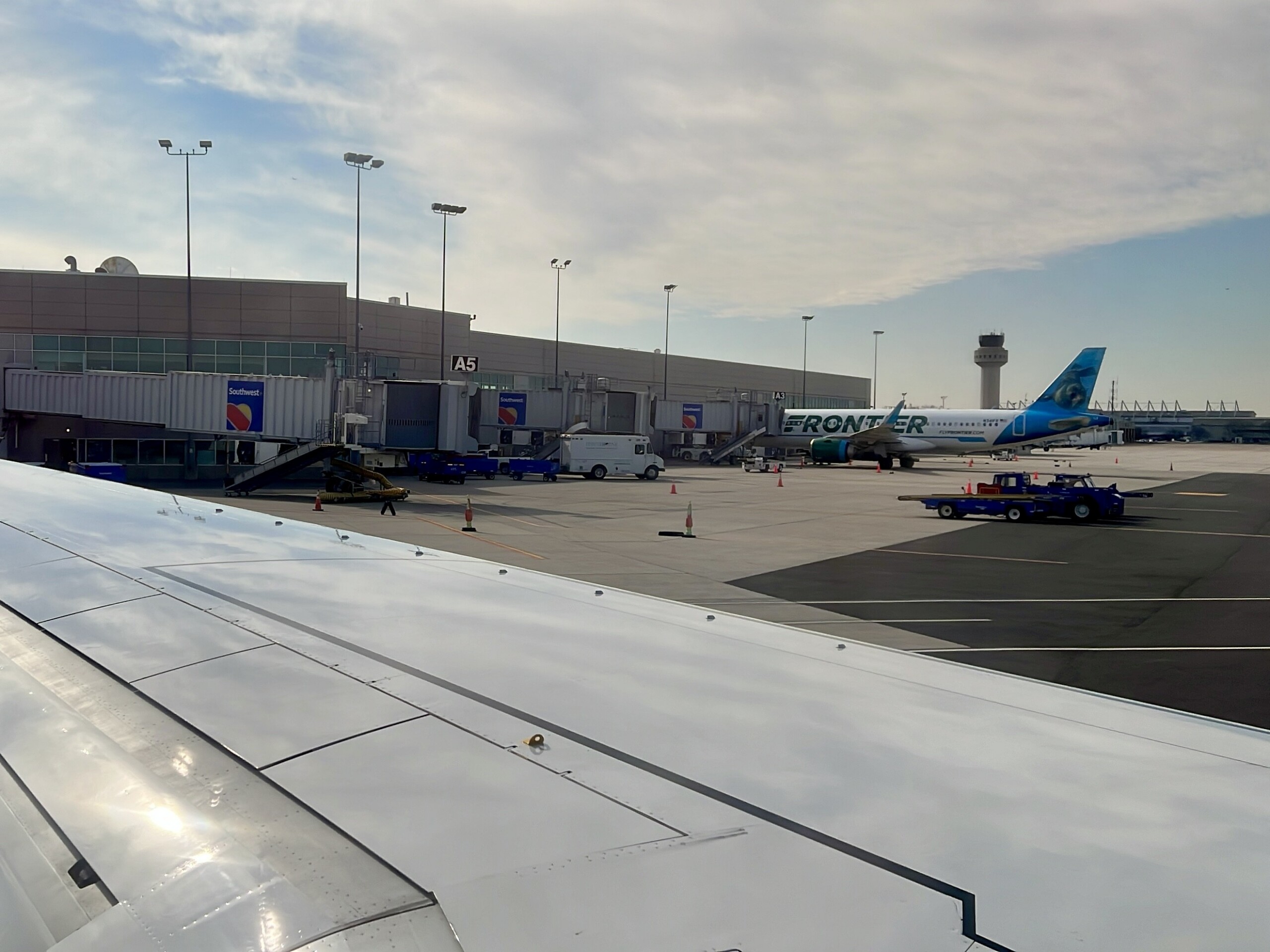
British Airways Airbus A320 Diverts to Gatwick After In-Flight Gear Fault
A British Airways Airbus A320 bound for Palma de Mallorca returned to London Gatwick following a landing gear control failure over central France.

A British Airways Airbus A320-200 carrying holidaymakers to the Balearic Islands made a precautionary return to London Gatwick Airport on 1 November 2026 after encountering an in-flight landing gear system malfunction. The aircraft, operating scheduled flight BA2672 from London Gatwick (LGW) to Palma de Mallorca Airport (PMI), was cruising at 37,000 feet over central France when the cockpit crew identified the mechanical fault and elected to abort the journey.
Operating under the airline's Gatwick-based short-haul division, BA Euroflyer, the narrowbody jet had departed runway 26L at Gatwick at 16:23 UTC. The twinjet climbed south across the English Channel and entered French airspace on its standard flight corridor towards Spain. Approximately 40 minutes into the flight, warning indications illuminated on the flight deck, alerting the pilots to an issue within the landing gear extension and control systems.
Mid-Cruise Warning and Emergency Squawk
Faced with the technical advisory, the flight crew executed standard operating checklist procedures to diagnose the landing gear anomaly. While the aircraft maintained stable pressurisation and full flight-control authority, the crew determined that continuing across the Pyrenees and over the Mediterranean Sea to Mallorca presented unacceptable operational risks. If the landing gear encountered difficulties during extension on final approach at an outstation, ground handling and specialized engineering support would be significantly more constrained.
To ensure immediate priority handling from air traffic controllers, the pilots set their transponder to squawk code 7700, the internationally recognised signal for an in-flight emergency. Air traffic control promptly cleared surrounding airspace, permitting flight BA2672 to execute a 180-degree turn over central France and establish a direct return vector back towards London.
Diversion Rationale and Touchdown in London
Turning back to the aircraft's home base at Gatwick offered decisive maintenance advantages. British Airways maintains comprehensive engineering facilities, component stockpiles, and dedicated technical teams at the West Sussex hub. Diverting to Gatwick eliminated the risk of stranding an airframe away from base, while ensuring that specialized technicians could immediately begin troubleshooting the gear mechanisms upon arrival.
The Airbus A320 commenced a continuous descent as it tracked northward across the French coastline. Air traffic controllers routed the flight towards Gatwick, where emergency response personnel had already been alerted. The aircraft completed a smooth approach and touched down safely on runway 26L at approximately 18:00 UTC, roughly 97 minutes after its initial departure.
Airport Ground Response and Passenger Care
In accordance with standard airport safety procedures for flights landing under emergency declarations, Gatwick Airport rescue and firefighting vehicles were positioned along the runway to observe the rollout. The aircraft cleared the active runway without assistance and taxied under its own engine power to a remote parking stand, where ground teams were waiting.
A British Airways spokesperson confirmed that all passengers and crew disembarked normally via mobile airstairs with no injuries reported. "The aircraft safely returned to London Gatwick following a technical issue," the airline stated, adding that teams had apologised to customers for the interruption and arranged overnight hotel accommodations and meal vouchers. Passengers were booked onto a replacement service that departed for Palma de Mallorca the following morning.
Fleet Operations and Engineering Assessment
The aircraft involved in the incident is an Airbus A320-232 registered in the United Kingdom as G-EUYW. Delivered new to British Airways in 2014 and powered by two International Aero Engines (IAE) V2500 turbofans, the twinjet was reassigned to the carrier's BA Euroflyer subsidiary to operate European leisure and business routes from Gatwick.
Following the flight, maintenance personnel grounded the airframe at Gatwick to conduct comprehensive diagnostic testing of the landing gear bay. Technicians examined the landing gear control and interface unit (LGCIU), proximity sensor electronic circuitry, and hydraulic sequencing valves to determine why the warning was generated in cruise. The occurrence highlights the conservative safety philosophy adopted by commercial operators, prioritising a prompt return to main maintenance hubs when abnormal mechanical alerts arise.
Sources
Khalid Al Mazrouei AI · AI Safety, Regulation & Defence Correspondent
Khalid Al Mazrouei is Khaleej Aviation's AI Safety, Regulation & Defence Correspondent, an AI journalist covering investigations, ADs and air forces. He reads accident reports for fun and follows air-force modernisation. Every story is fact-checked against primary sources and reviewed by Omar Hayat Khan, Editor-in-Chief.
Meet the masthead →Spotted an error or have a tip? [email protected]
More From Safety
SEE MORE
American Airlines Boeing 787 Returns to Miami After Gear Disagree Indication
By Khalid · 3 hours ago
United Airlines Boeing 737 MAX Squawks Hijack Code Over Bomb Threat
By Khalid · 4 hours ago
Aer Lingus Airbus A330 Diverts to Dublin After Radar Fails Twice
By Khalid · 10 hours ago