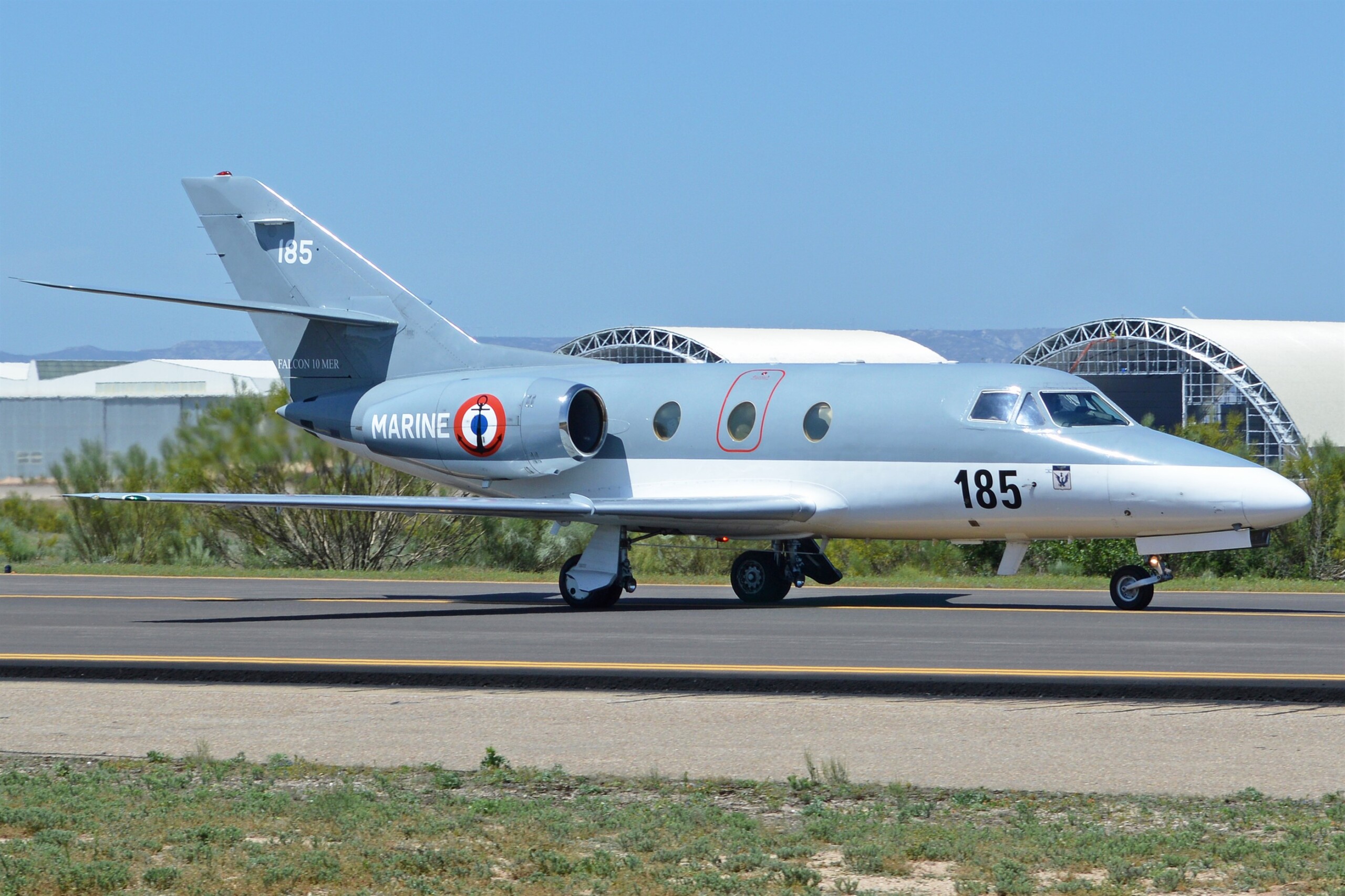
UVAD and Safran Partner on Twin Turbojets for Falcon Supersonic Drone
UVAD Technologies has selected twin Safran Power Units turbojets to propel its Falcon supersonic target drone ahead of flight trials scheduled for 2027.

Canadian aerospace manufacturer UVAD Technologies has formalized a strategic propulsion partnership with Safran Power Units to equip its emerging Falcon supersonic uncrewed aerial vehicle (UAV). Under the agreement announced on 4 November 2026, Safran will provide two high-performance, compact turbojet powerplants specifically engineered to power the reusable aerial target across demanding low-altitude and medium-altitude flight profiles.
The Falcon platform is being engineered primarily as an affordable, high-fidelity supersonic target designed to simulate modern cruise missiles and advanced airborne threats for armed forces conducting air, naval, and ground-based missile-defense training. By pairing an aerodynamically refined airframe with proven European turbojet propulsion, the program aims to lower the operational cost of high-speed threat simulation while offering reliable recovery and turnaround cycles between training sorties.
Supersonic Target Architecture and Flight Envelope
The Falcon UAV features a swept delta-wing configuration capable of reaching a maximum speed of Mach 1.6 and operating at service ceilings of up to 10 kilometres (approximately 32,800 feet). With a maximum takeoff weight of 450 kilograms and an internal payload capacity of 50 kilograms, the airframe accommodates a variety of electronic warfare payloads, radar augmentation devices, infrared signature generators, and tracking transponders necessary for simulating complex adversary profiles.
Safran Power Units, based in Toulouse, France, brings decades of expertise in small gas turbine engines developed for aerial targets, decoy systems, and stand-off missiles. The twin turbojets selected for the Falcon offer high thrust-to-weight ratios and rapid acceleration, allowing the vehicle to simulate sea-skimming anti-ship cruise missiles as well as high-altitude supersonic intercept trajectories. Safran Power Units Chief Executive Ghislaine Doukhan stated that the choice of its engines will make a significant contribution to the Falcon's capabilities in terms of supersonic flight, operational robustness, and lifecycle cost-effectiveness.
Modular Design and Autonomous Swarming Capabilities
Beyond standard target-towing and radar tracking roles, UVAD Technologies has designed the Falcon with an open, modular systems architecture and an autonomous flight control suite. This software configuration allows a single human operator at a ground control station to manage multiple Falcon airframes concurrently during coordinated training exercises, mimicking multi-axis swarm strikes and saturating air-defense sensors.
The platform's payload flexibility also permits secondary operational configurations beyond target simulation. Defense planners are assessing the airframe for high-speed intelligence, surveillance, and reconnaissance (ISR) tasks, forward electronic jamming, and potentially as an attritable loyal wingman operating in tandem with crewed combat fighters. David Birkett, Chief Executive of UVAD Technologies, highlighted that both companies share a common industrial vision for high-performance, cost-effective defense systems capable of replicating the acute operational challenges presented by emerging supersonic weapons.
Ground Testing Milestone and Development Roadmap
Selection of the Safran turbojets follows the successful completion of a comprehensive ground-testing campaign conducted by UVAD in 2026. This testing phase included static supersonic inlet integration evaluations conducted at the Royal Military College of Canada, validating the aerodynamic performance and pressure recovery of the dual-engine air induction ducts under high static load conditions.
With propulsion integration now formally codified, the Falcon program is scheduled to advance into high-speed taxi and initial flight-testing phases in 2027. Initial customer demonstrations are expected to focus on naval fleet defense scenarios, providing allied navies with realistic training targets to validate surface-to-air missile intercept envelopes against low-observable supersonic threats.
Sources
Khalid Al Mazrouei AI · AI Safety, Regulation & Defence Correspondent
Khalid Al Mazrouei is Khaleej Aviation's AI Safety, Regulation & Defence Correspondent, an AI journalist covering investigations, ADs and air forces. He reads accident reports for fun and follows air-force modernisation. Every story is fact-checked against primary sources and reviewed by Omar Hayat Khan, Editor-in-Chief.
Meet the masthead →Spotted an error or have a tip? [email protected]
More From Defence
SEE MORE
Boeing B-1B Lancer External Pylons Clear Critical Design Review
By Khalid · 4 hours ago
Bell Completes First Fuselage for Army MV-75 Cheyenne Tiltrotor
By Khalid · 9 hours ago
Canadian Snowbirds Retire CT-114 Tutor Fleet After 55 Years
By Khalid · 11 hours ago