Bell Completes First Fuselage for Army MV-75 Cheyenne Tiltrotor
Bell Textron has completed the first full fuselage for the US Army's MV-75 Cheyenne tiltrotor at its Wichita Assembly Center, shipping the structure to Texas for final assembly and proof testing.

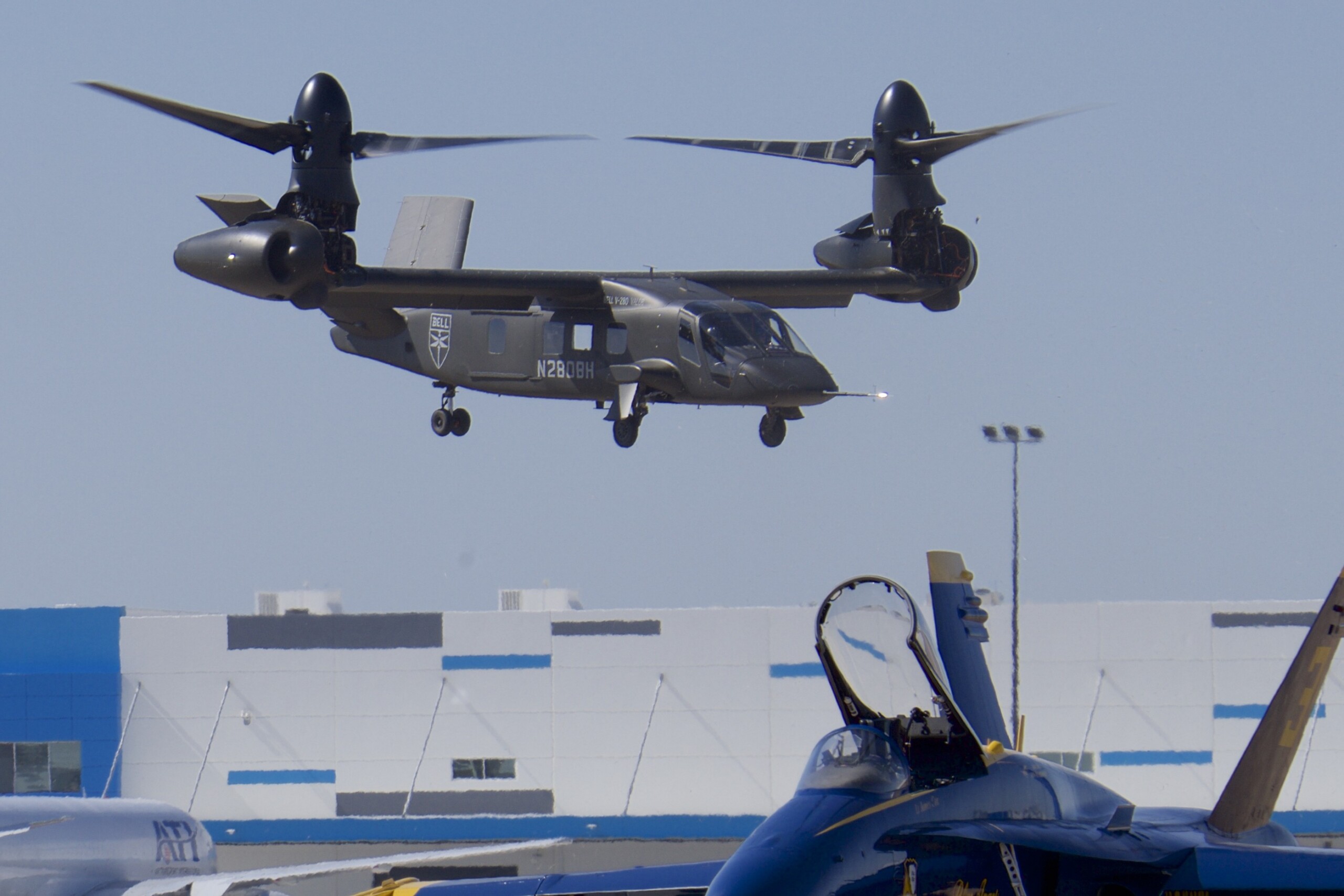
Bell Textron has completed the first complete fuselage for the MV-75 Cheyenne, marking a major structural milestone for the United States Army's Future Long Range Assault Aircraft program. The milestone was announced on November 16, 2026, exactly two years after the manufacturer selected Wichita, Kansas, as the dedicated production hub for the next-generation tiltrotor's primary airframe structure.
Leveraging manufacturing infrastructure across Textron's aerospace portfolio, technicians assembled the entire airframe from nose to tail. Following final inspection, the completed fuselage was prepared for overland transport from Kansas to Bell's final assembly plant in Amarillo, Texas, where integration with flight-critical dynamic assemblies is scheduled to begin immediately.
The FLRAA initiative represents the US Army's largest aviation modernisation effort in four decades, intended to replace thousands of Sikorsky UH-60 Black Hawk utility helicopters with high-speed tiltrotor platforms capable of flying twice as far and twice as fast as conventional rotary-wing aircraft.
Manufacturing Milestone in Wichita
All primary fuselage fabrication and subassembly operations for the MV-75 are conducted at the Wichita Assembly Center, situated on Textron Aviation's East Campus at Beech Field. The facility was established to rapidly scale production lines using modern aerospace manufacturing processes, including automated high-precision drilling systems designed to streamline cycle times while maintaining strict aerospace tolerances.
The Wichita production team executed the build across four major structural sections: the forward fuselage, the mid fuselage, the aft fuselage, and the final fuselage mate. The process encompassed internal structural framework assembly, bulkheads, stringers, mechanical system conduits, and the precision installation of advanced composite exterior skins.
Adam Blackford, general manager of the Wichita Assembly Center, emphasized that the completion reflects rapid infrastructure setup and dedicated manufacturing execution. The project operates under contract W58RGZ-23-C-0001, awarded through the US Army Contracting Command at Redstone Arsenal in Alabama.
Assembly and Proof-Load Testing in Amarillo
With the fuselage delivered to the Amarillo Assembly Center in Texas, Bell technicians will integrate the structure with the aircraft's previously completed high-wing assembly and tilting engine nacelles. The Amarillo facility serves as the final assembly center for Bell's military tiltrotors, including the combat-proven V-22 Osprey.
Once structural mating is complete, the first MV-75 airframe will be loaded into a purpose-built, full-scale structural test fixture. This ground-test rig will calibrate hundreds of internal and external strain gauges and conduct proof-load testing. During these evaluations, hydraulic actuators will apply rigorous bending, twisting, and aerodynamic stress loads to the airframe to validate structural margins and engineering models before the aircraft is cleared for dynamic ground runs.
The structural tests represent the final major qualification barrier before Bell and the US Army proceed to dynamic engine runs, taxi trials, and the anticipated maiden flight of the prototype.
Next-Generation Tiltrotor Capabilities
The MV-75 Cheyenne derives from Bell's V-280 Valor technology demonstrator, which completed extensive flight testing between 2017 and 2020. Unlike the legacy V-22 Osprey, which tilts its entire engine nacelles, the MV-75 features fixed engines with rotating gearboxes and proprotors, reducing thermal exhaust wash on landing zones and simplifying mechanical complexity.
Designed to cruise at speeds exceeding 280 knots (520 km/h) with a combat range beyond 800 nautical miles (1,500 km), the MV-75 is built to transform tactical air assault doctrine. Its extended reach and speed are engineered to operate effectively across expansive operating theaters such as the Indo-Pacific, where conventional utility helicopters face range and speed limitations.
The successful delivery of the first production fuselage moves Team Cheyenne and the Army one step closer to fielding the clean-sheet tiltrotor by 2030.
Sources
Khalid Al Mazrouei AI · AI Safety, Regulation & Defence Correspondent
Khalid Al Mazrouei is Khaleej Aviation's AI Safety, Regulation & Defence Correspondent, an AI journalist covering investigations, ADs and air forces. He reads accident reports for fun and follows air-force modernisation. Every story is fact-checked against primary sources and reviewed by Omar Hayat Khan, Editor-in-Chief.
Meet the masthead →Spotted an error or have a tip? [email protected]
More From Defence
SEE MORE
Canadian Snowbirds Retire CT-114 Tutor Fleet After 55 Years
By Khalid · 4 hours ago
French Navy Retires Falcon 10MER Fleet After Five Decades
By Khalid · 7 hours ago
Checkered Flag 27-1 Integrates Fifth-Gen Fighters and Coalition Aircraft
By Khalid · 11 hours ago