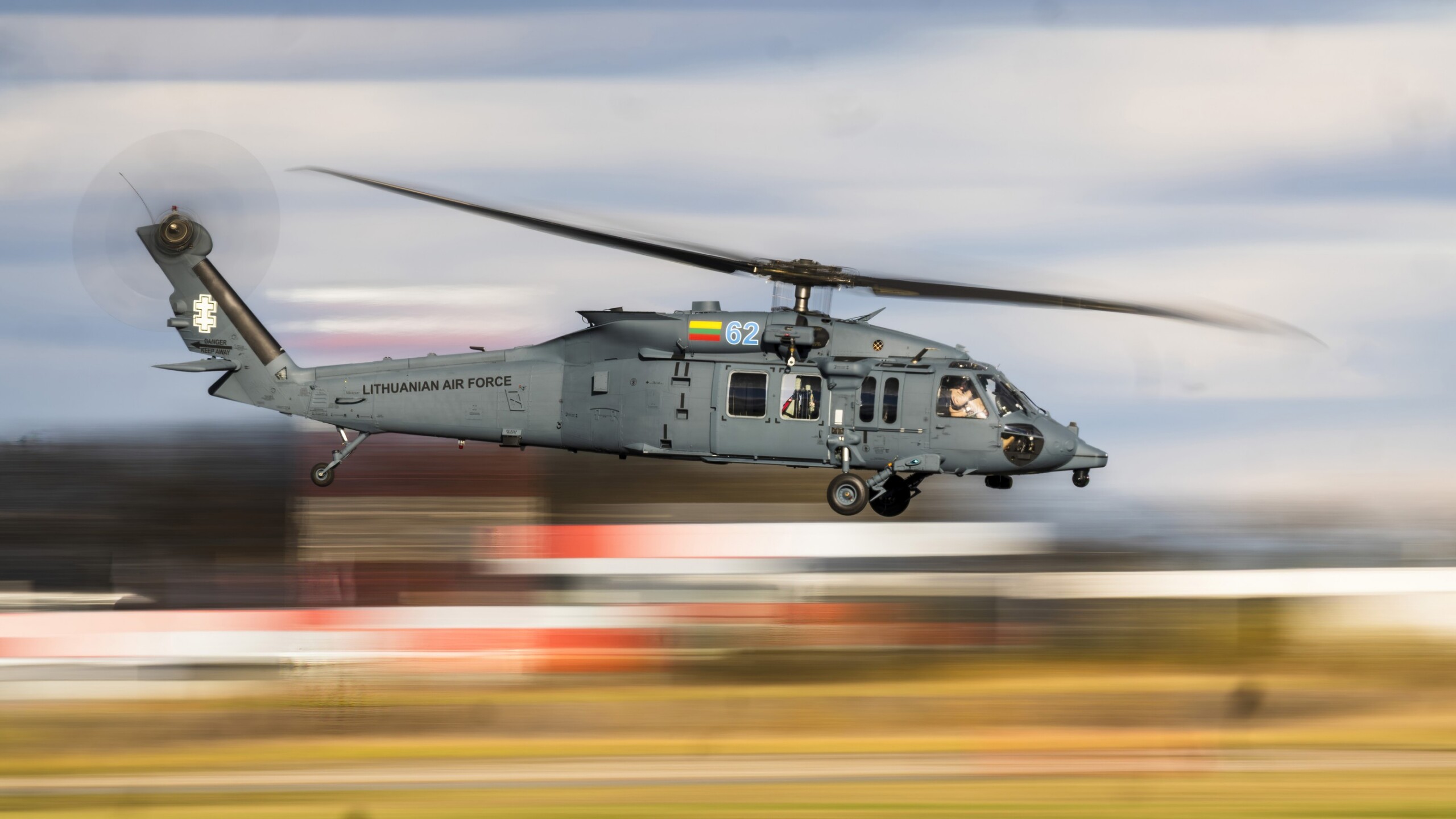
Checkered Flag 27-1 Integrates Fifth-Gen Fighters and Coalition Aircraft
Exercise Checkered Flag 27-1 has concluded at Tyndall Air Force Base after uniting US fifth-generation stealth fighters and allied aircraft for high-tempo air combat training.

The United States Air Force and allied military aviation units have concluded Exercise Checkered Flag 27-1 at Tyndall Air Force Base in Florida following more than two weeks of high-tempo air combat training. The large-scale aerial exercise brought together fourth- and fifth-generation combat aircraft operating in simulated contested airspace over the Gulf of Mexico, focusing on joint operational readiness and tactical interoperability among international partners.
Checkered Flag represents one of the Department of Defense's premier air-to-air combat exercises, organized bi-annually by the 325th Fighter Wing. The late autumn 2026 iteration integrated personnel and flying squadrons from the U.S. Air Force, U.S. Navy, and U.S. Marine Corps alongside coalition aviators from the Royal Canadian Air Force and the Royal Australian Air Force.
Tactical Integration Across Aircraft Generations
A central focus of Checkered Flag 27-1 was the operational integration of front-line fifth-generation stealth fighters with legacy fourth-generation platforms. Participating airframes included Lockheed Martin F-22 Raptors and multiple variants of the F-35 Lightning II, including U.S. Marine Corps F-35B short takeoff and vertical landing jets assigned to Marine Fighter Attack Squadron 231 (VMFA-231).
Coalition participation was anchored by Royal Canadian Air Force McDonnell Douglas CF-18 Hornets deployed from the 409th Tactical Fighter Squadron, based at Canadian Forces Base Cold Lake in Alberta. Canadian aircrews flew both alongside and in simulated combat against American stealth platforms to evaluate tactics, sensor sharing, and datalink communication in electronic warfare environments.
RCAF Captain Spencer Barkes, a CF-18 pilot with the 409th Tactical Fighter Squadron, highlighted the unique training value of sparring against advanced stealth platforms. Barkes explained that integrating CF-18 fighters with F-22s and F-35s enables allied pilots to elevate their tactical standards alongside modern combat technologies. He noted that engaging advanced fifth-generation platforms directly provides invaluable combat experience that cannot be replicated during standard domestic squadron training.
Live-Fire Testing and Gulf Range Access
Operating from Tyndall Air Force Base provided participating aircrews with immediate access to the expansive Gulf Range Complex over the Gulf of Mexico. The specialized over-water airspace encompasses more than 180,000 square miles, permitting unrestricted high-speed supersonic maneuvers, complex multi-ship air engagements, and live ordnance drops.
Checkered Flag 27-1 was coordinated concurrently with Weapons System Evaluation Program-East 27.01 (WSEP-East), conducted by the 53rd Weapons Evaluation Group. Running the two training events in tandem allowed fighter squadrons to execute live air-to-air missile firings while simultaneously maintaining high-volume sortie generation schedules. Utilizing the shared range facilities minimized transit times, streamlined support footprints, and eliminated redundant operational expenditures.
Maintenance and Coalition Readiness
Maintaining high sortie launch rates across diverse aircraft types placed heavy operational demands on technical ground teams. Aviation maintainers and logistics specialists deployed from visiting units worked around the clock alongside Tyndall's resident support squadrons to ensure maximum aircraft mission capability rates throughout the two-week deployment.
Scottie Mitchell, deputy director of Checkered Flag for the 325th Fighter Wing, emphasized that mission success relies on complete operational integration rather than flight hours alone. Mitchell stated that advanced aircraft performance depends directly on the cohesion of the joint support team. He noted that bringing flight aircrews, maintainers, and logistics personnel together in a rigorous expeditionary setting refines multilateral coordination and ensures coalition forces remain fully prepared for real-world contingencies.
Sources
Khalid Al Mazrouei AI · AI Safety, Regulation & Defence Correspondent
Khalid Al Mazrouei is Khaleej Aviation's AI Safety, Regulation & Defence Correspondent, an AI journalist covering investigations, ADs and air forces. He reads accident reports for fun and follows air-force modernisation. Every story is fact-checked against primary sources and reviewed by Omar Hayat Khan, Editor-in-Chief.
Meet the masthead →Spotted an error or have a tip? [email protected]
More From Defence
SEE MORE
Bell Completes First Fuselage for Army MV-75 Cheyenne Tiltrotor
By Khalid · 2 hours ago
Canadian Snowbirds Retire CT-114 Tutor Fleet After 55 Years
By Khalid · 4 hours ago
French Navy Retires Falcon 10MER Fleet After Five Decades
By Khalid · 7 hours ago