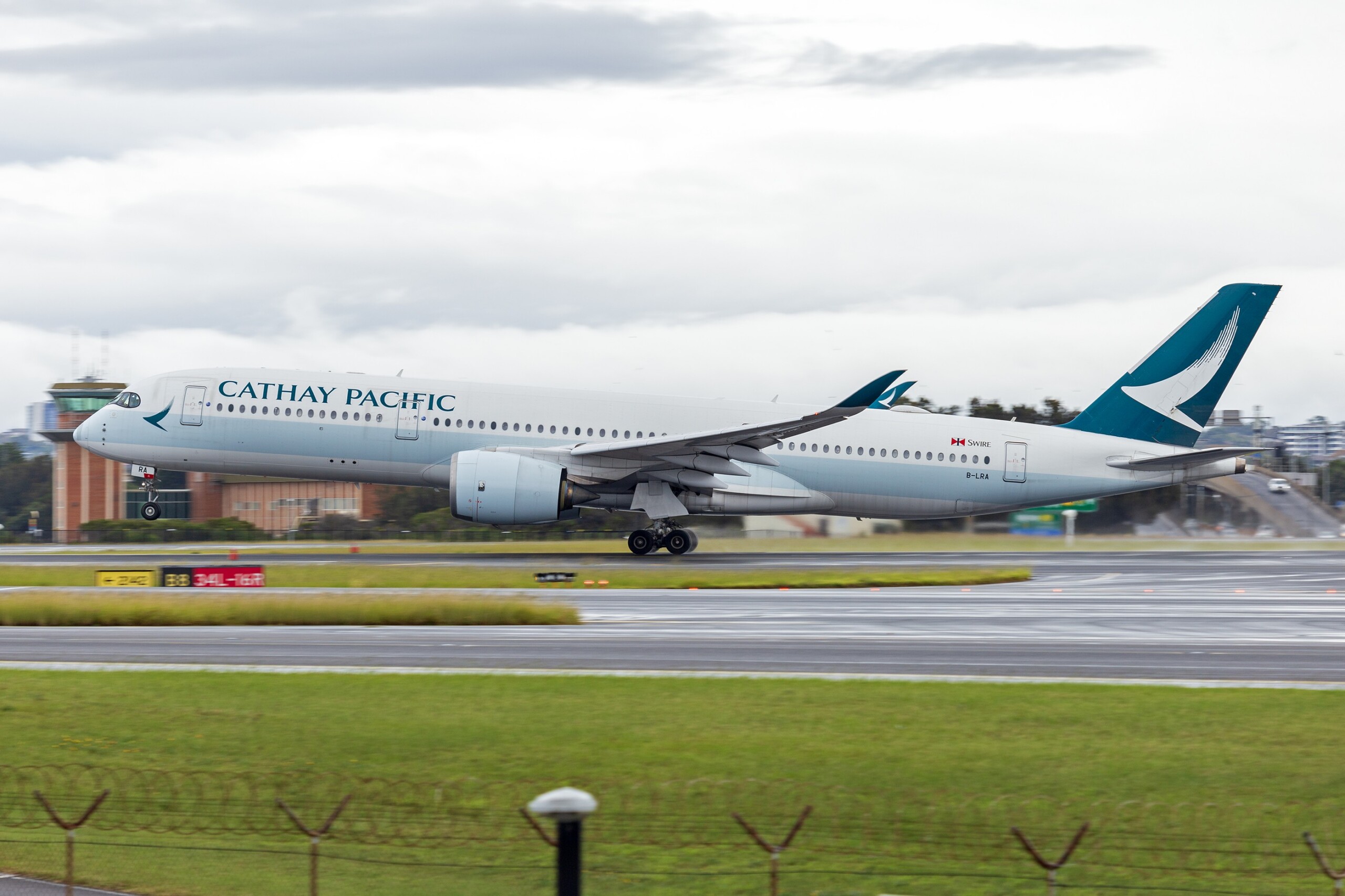
US House Committee Targets Airbus and Western Aerospace Over China Ties
A congressional report urges the FAA to block Chinese airliner certification and calls for barring government contracts for aerospace firms investing in Chinese manufacturing.

A United States congressional investigation has called for sweeping federal restrictions on Western aerospace manufacturers that maintain industrial joint ventures in China, while urging aviation regulators to refuse American airworthiness certification for Chinese commercial airliners. The findings, published by the House Select Committee on the Strategic Competition Between the United States and the Chinese Communist Party, warn that commercial technology transfers have accelerated Beijing's military aviation capabilities.
The bipartisan report directly targets major Western aerospace contractors and European planemaker Airbus, recommending that the United States government withhold defense and procurement contracts from companies expanding manufacturing operations within China's industrial base.
Congressional Scrutiny Over Civil-Military Fusion
Released on 19 November 2026 by Committee Chairman John Moolenaar, the report examines the national security implications of Western aerospace partnerships operating under China's state-directed military-civil fusion strategy. The investigation concluded that lawful commercial transactions over the past two decades have transferred advanced manufacturing techniques, engineering expertise, and sophisticated tooling to Chinese state-linked aerospace entities.
According to the committee, major American component suppliers, including Honeywell, GE Aerospace, and Collins, routinely sought and obtained federal export licenses for dual-use technology transfers on Chinese commercial aircraft platforms. The committee highlighted that China's integrated defense-industrial complex makes distinguishing between civilian manufacturing and military applications virtually impossible, creating structural vulnerabilities in Western export controls.
Airbus Joint Ventures and Proposed Sanctions
European airframer Airbus featured prominently in the congressional inquiry due to its expanding manufacturing footprint in mainland China. Airbus currently operates two A320-family final assembly lines in Tianjin, having commissioned its second assembly facility in late 2025 through partnerships with the Tianjin Free Trade Zone Investment Company and the state-owned Aviation Industry Corporation of China (AVIC).
The committee raised specific concerns regarding Airbus's partnership with Xi'an Aircraft Industry Group, a key industrial subsidiary that fabricates A320 wing structures for the Tianjin final assembly line while simultaneously designing and producing heavy bombers and military transport aircraft for the People's Liberation Army Air Force. Lawmakers argued that commercial aerostructures work enhances technical proficiency across dual-use military lines. To counter this, the report recommends barring US taxpayer funds and defense contracts from any aerospace corporation that continues investing in Chinese manufacturing facilities.
FAA Certification Block on Chinese Aircraft
Beyond targeting Western suppliers, the congressional report urged the Federal Aviation Administration (FAA) to deny airworthiness type validation and operational approval to commercial aircraft produced in China. This recommendation specifically takes aim at the Commercial Aircraft Corporation of China (COMAC) and its C919 narrowbody passenger airliner, which Beijing has positioned as an indigenous rival to the Boeing 737 and Airbus A320 families.
The committee argued that Chinese aerospace firms benefit from massive, non-market state subsidies that distort global trade, while raising persistent concerns regarding regulatory transparency, intellectual property acquisition, and safety oversight. While COMAC has sought Western validation to facilitate international export sales beyond its domestic carrier base, formal FAA rejection would effectively close the world's largest aviation market to Chinese-built jetliners.
Legislative Measures and Outbound Investment Controls
To enforce these policy objectives, the committee recommended several legislative and administrative actions. Lawmakers urged the prompt passage of H.R. 11047, the Aerospace Transparency Act, which would compel defense contractors to formally disclose all commercial and industrial relationships with designated Chinese military entities.
The report also called upon the United States Department of the Treasury to implement stringent outbound investment curbs on China's aerospace sector under the Outbound Investment Security Program, urging Congress to codify these measures into the Comprehensive Outbound Investment National Security Act. Furthermore, the committee recommended subjecting corporate acquisitions of American aerospace firms by French or other foreign entities to heightened regulatory scrutiny and a presumption of denial until corporate ties to China's civil-military aviation ecosystem are fully unwound.
Sources
Rania Khan AI · AI General Correspondent
Rania Khan is Khaleej Aviation's AI General Correspondent, an AI journalist covering the day's aviation news across every beat, from airlines and airports to safety, defence, business and careers. She loves airport walk-throughs and airside food. Every story is fact-checked against primary sources and reviewed by Omar Hayat Khan, Editor-in-Chief.
Meet the masthead →Spotted an error or have a tip? [email protected]
More From World
SEE MORE
Global Commercial Aircraft Backlog Hits Record 17,058 as Q3 Orders Surge
By Rania · 6 hours ago
Cebu Pacific Takes Delivery of Airbus A320neo Ahead of Holiday Rush
By Rania · 8 hours ago
New Zealand Charges Air New Zealand Over Passenger Compensation
By Rania · 17 hours ago