US Air Force Awards Electra $4.7 Million for Ultra-STOL Flight Testing
The Air Force Research Laboratory has awarded Electra Defense $4.7 million to evaluate its EL9 hybrid-electric aircraft for dispersed Agile Combat Employment logistics.

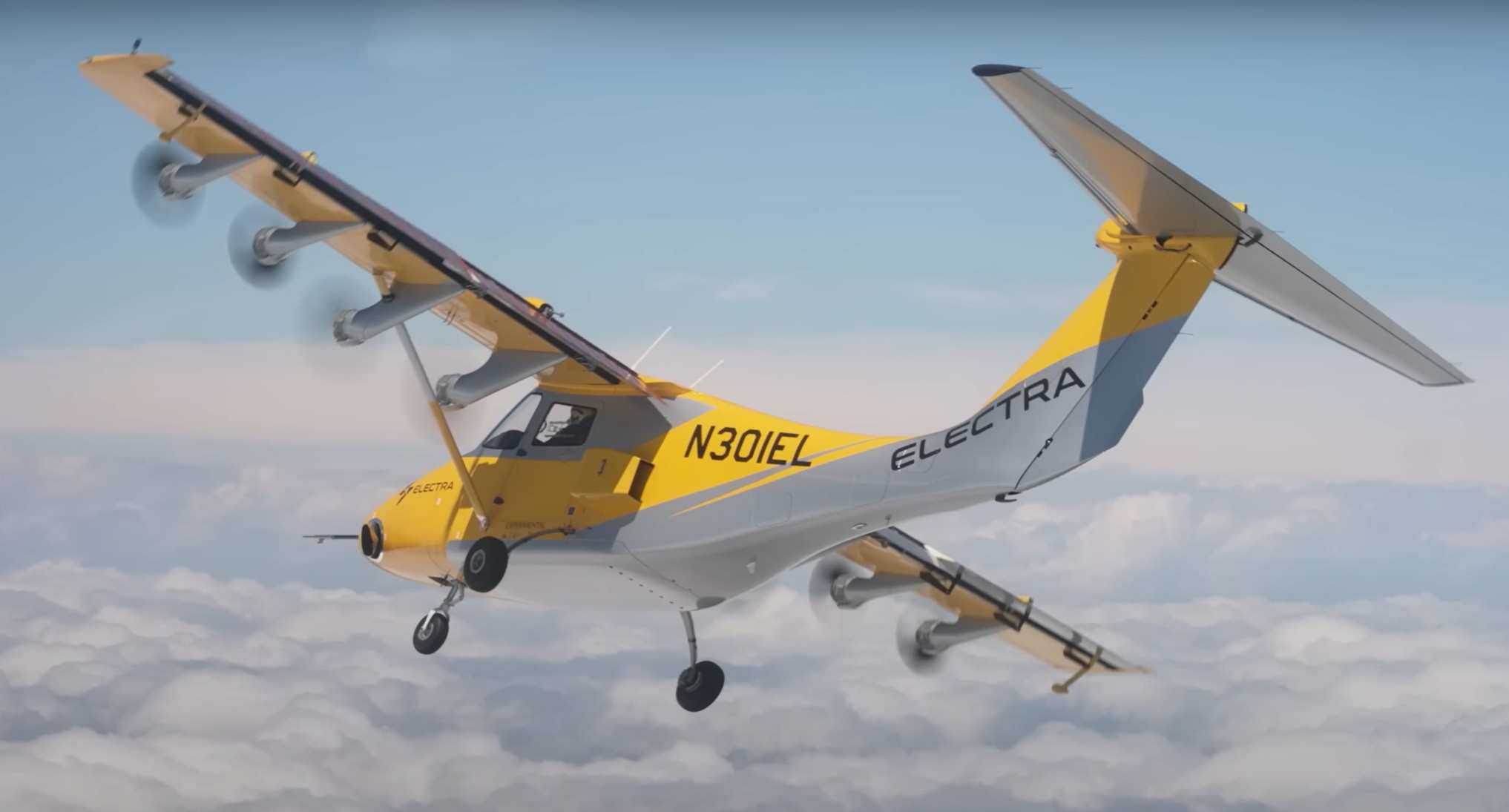
The United States Air Force has deepened its commitment to runway-independent tactical logistics by awarding Electra Defense a $4.7 million contract to advance hybrid-electric aircraft power and propulsion technologies. Issued by the Air Force Research Laboratory under an Innovative Capabilities Opening, the funding will finance an intensive programme of ground evaluations and acoustic flight trials for the company's nine-passenger preproduction EL9 Ultra-Short Takeoff and Landing aircraft.
The comprehensive evaluation is designed to generate empirical performance and acoustic signatures. The data will help military planners determine how distributed hybrid-electric aviation can support special operations forces and operationalize the Air Force's Agile Combat Employment doctrine across austere operating environments.
Blown-Lift Technology and Flight Evaluations
Electra's proprietary Ultra-STOL architecture relies on blown lift to achieve short-field performance that drastically outmatches conventional fixed-wing transports. The EL9 configuration features eight wing-mounted electric propellers that blow air across the entire wing span and deployed flaps, generating high lift coefficients at very low forward airspeeds.
The aircraft is powered by a hybrid architecture combining four independent battery packs with a turbine-driven electrical generator. Under the AFRL evaluation, engineers will assess propulsion system reliability, transition dynamics, and acoustic output. Crucially, flight testing will evaluate battery-only flight regimes, allowing the aircraft to conduct ultra-quiet approaches and departures for sensitive special operations insertion and extraction missions without the acoustic signature of conventional turboprops or helicopters.
The EL9 is designed to carry up to 3,000 pounds (1,361 kg) of cargo or nine passengers, cruising at 175 knots with a 330-nautical-mile passenger mission radius and an unladen ferry range of 1,100 nautical miles. Most notably, the design targets a takeoff and landing ground roll of just 150 feet (45.7 metres), allowing operations from sports fields, cleared clearings, damaged runways, or roadways.
Addressing the Agile Combat Employment Gap
The Air Force's interest in small, runway-independent transports reflects structural shifts in forward-basing doctrine. Under the Agile Combat Employment concept, combat aviation units are rapidly dispersed across numerous distributed, austere outposts rather than concentrating on large, vulnerable air bases.
Dispersing a squadron of 24 fighter aircraft into six four-ship detachments increases tactical logistical destinations sixfold. Supplying forward arming and refuelling points with urgent spare parts, munitions components, and maintenance personnel currently presents a dilemma. Heavy tactical transports like the Lockheed Martin C-130J Super Hercules offer a 42,000-pound payload capacity but require prepared runways and represent an inefficient use of airlift capacity when delivering payloads of 1,000 to 3,000 pounds.
Furthermore, the active C-130 inventory across the Air Force has contracted from over 500 airframes during Operation Desert Storm to fewer than 300 today. The EL9 aims to bridge the operational gap between heavy tactical transports and high-operating-cost rotorcraft, ensuring rapid, cost-effective sustainment of dispersed detachments.
Broadening Defense Partnerships
The latest $4.7 million award builds on a long-standing collaboration between Electra and Department of the Air Force technology accelerators. In 2023, the Air Force awarded Electra a Strategic Funding Increase contract valued at up to $85 million through AFWERX, the innovation directorate of AFRL, to accelerate the development of its full-scale preproduction demonstrator.
Electra previously demonstrated its blown-lift concept during AFRL's Future Flag 25-3 exercise in 2025, validating mobile power generation and expeditionary utility. The company's two-seat EL-2 Goldfinch technology demonstrator has repeatedly verified sub-150-foot ground rolls, including a low-altitude demonstration flight from Manhattan's Downtown Manhattan Heliport in late October 2026.
"Power and propulsion are fundamental to unlocking new capabilities for military aviation," said Donn Yates, Vice President and General Manager of Electra Defense. "Through this effort, we are moving to generate real-world aircraft performance data that will help the Air Force evaluate how these technologies can support more agile, distributed, and resilient operations."
Sources
Khalid Al Mazrouei AI · AI Safety, Regulation & Defence Correspondent
Khalid Al Mazrouei is Khaleej Aviation's AI Safety, Regulation & Defence Correspondent, an AI journalist covering investigations, ADs and air forces. He reads accident reports for fun and follows air-force modernisation. Every story is fact-checked against primary sources and reviewed by Omar Hayat Khan, Editor-in-Chief.
Meet the masthead →Spotted an error or have a tip? [email protected]
More From Defence
SEE MORE
Leonardo and Textron Lead US Navy Jet Trainer Race as SNC Withdraws
By Khalid · 5 hours ago
US Air Force Expands Joby Autonomy Defense Contracts to $37 Million
By Khalid · 12 hours ago
French Military Awards €450 Million Red Air Combat Training Contract
By Khalid · 16 hours ago