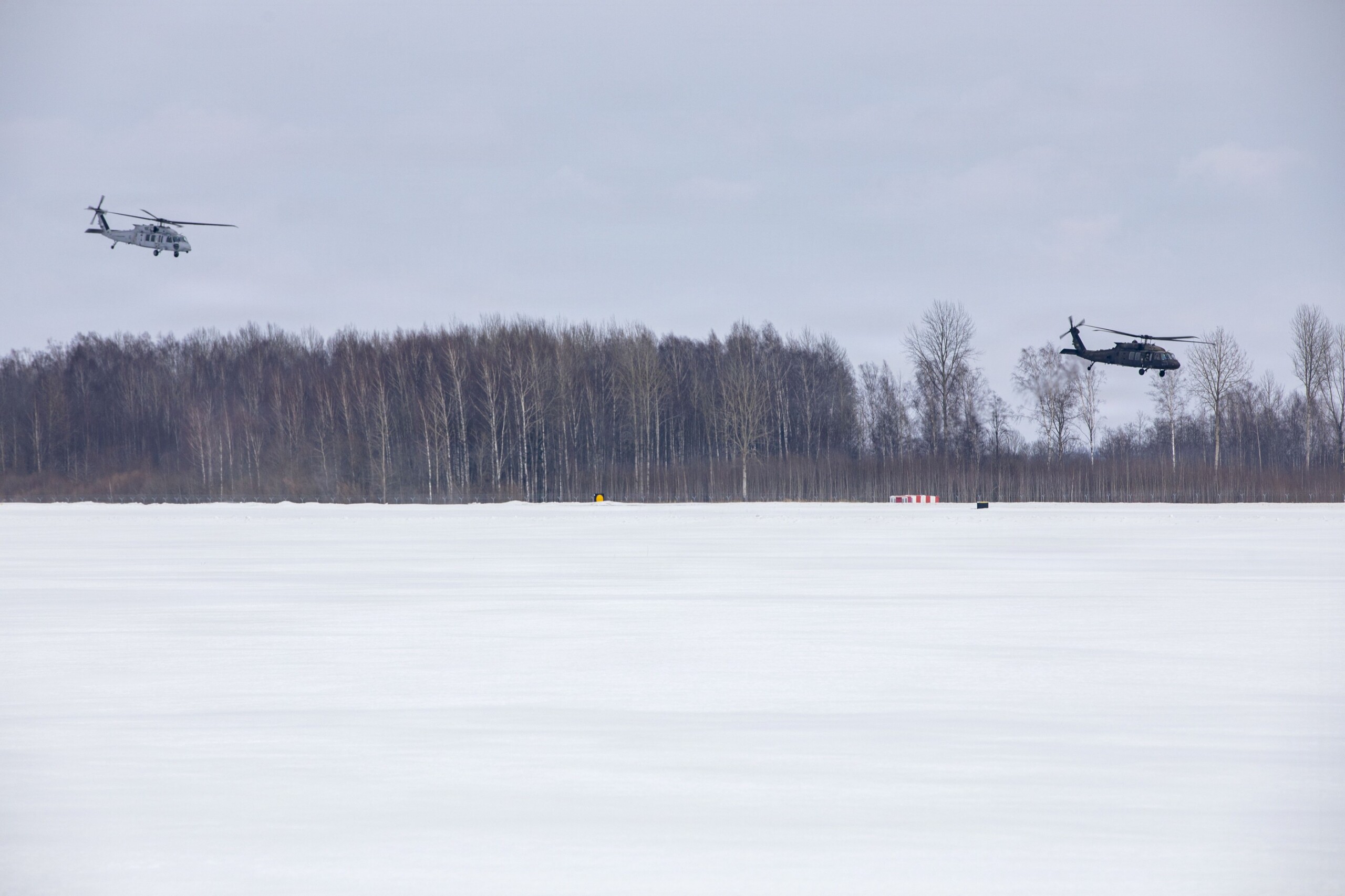
Leonardo and Textron Lead US Navy Jet Trainer Race as SNC Withdraws
Textron Aviation Defense and Leonardo are the sole remaining major bidder for the US Navy's 216-aircraft T-45 Goshawk replacement after Sierra Nevada Corporation withdrew.

The United States Navy's effort to replace its aging Boeing T-45 Goshawk fleet has seen a dramatic consolidation after Sierra Nevada Corporation confirmed it did not submit a bid for the Undergraduate Jet Training System competition. The decision leaves the industrial partnership between Textron Aviation Defense and Leonardo—offering the navalized M-346N—as the only remaining established aerospace manufacturer in the multi-billion-dollar acquisition program.
Sierra Nevada Corporation had developed a purpose-built clean-sheet airframe designated the Freedom Trainer. However, the company determined it could not responsibly bid under the Pentagon's current contractual structure, following the withdrawal of partner Northrop Grumman in September.
Fixed-Price Acquisition Pressures
The withdrawal follows earlier departures by other major defense primes from the 216-aircraft procurement contest. Lockheed Martin abandoned its TF-50N offering, developed with Korea Aerospace Industries, in April 2026. Boeing followed in June 2026, opting against proposing its T-7A Red Hawk.
Industry contenders cited concerns over the Navy's firm-fixed-price Engineering and Manufacturing Development contract structure. The arrangement required prospective contractors to commit to rigid production pricing before achieving design maturity or completing flight trials. Although naval aviation leadership expanded the initial development ceiling to $2.7 billion, contractors proved reluctant to shoulder potential inflationary risks and development cost overruns without structural flexibility.
Revised Naval Training Philosophy
The Undergraduate Jet Training System represents a fundamental departure from four decades of carrier qualification doctrine. Unlike the legacy T-45 Goshawk, the winning aircraft will not require catapult launches, arrested recoveries on aircraft carrier decks, or touchdown field carrier landing practice.
Instead, the Navy's updated training curriculum relies on simulated carrier approaches terminating in wave-offs at low altitude. Actual arrested carrier landings will transition entirely to operational aircraft during Fleet Replacement Squadron training in Boeing F/A-18E/F Super Hornets and Lockheed Martin F-35C Lightning II fighters. Modern flight-control technologies, including the Navy's Precision Landing Mode software suite (Magic Carpet), substantially reduce the manual pilot workload required for glideslope tracking. By eliminating heavy tailhooks, reinforced landing gear, and airframe structural strengthening, the aircraft avoids severe weight and maintenance penalties.
Transatlantic Industrial Footprint
With SNC's departure, Textron and Leonardo present an established, flying platform adapted for American service. Under the joint production arrangement, Leonardo will manufacture the main fuselage, wing assemblies, and empennage at its Venegono Superiore manufacturing plant in northern Italy while retaining management of core fly-by-wire flight control software and avionics integration.
Final assembly and flight acceptance testing will take place at Textron Aviation's east Wichita campus in Kansas. Textron has committed more than $38 million to upgrade 50,000 square feet of specialized aerospace manufacturing facilities, creating approximately 100 direct high-skilled manufacturing positions. The commercial baseline M-346 Master has accumulated over 100,000 flight hours across military customers worldwide, including Italy, Singapore, Poland, Israel, Greece, and Qatar, providing a mature supply chain and established spares network.
Fleet Sustainment and Procurement Timeline
Replacing the legacy T-45 Goshawk remains an urgent priority for Naval Air Training Command. Entering service in 1991, roughly 190 to 200 airframes remain active between Training Air Wing One at Naval Air Station Meridian in Mississippi and Training Air Wing Two at NAS Kingsville in Texas. The fleet has experienced severe physiological episodes, oxygen generation faults, and compressor blade issues that prompted multiple groundings over recent years.
Naval Air Systems Command currently expects to award the formal development contract between July and September 2027. Production deliveries of the new jet trainers are scheduled to commence in 2032, eventually scaling to 25 aircraft annually to sustain the naval strike fighter pilot training pipeline into the 2050s.
Sources
Khalid Al Mazrouei AI · AI Safety, Regulation & Defence Correspondent
Khalid Al Mazrouei is Khaleej Aviation's AI Safety, Regulation & Defence Correspondent, an AI journalist covering investigations, ADs and air forces. He reads accident reports for fun and follows air-force modernisation. Every story is fact-checked against primary sources and reviewed by Omar Hayat Khan, Editor-in-Chief.
Meet the masthead →Spotted an error or have a tip? [email protected]
More From Defence
SEE MORE
US Air Force Expands Joby Autonomy Defense Contracts to $37 Million
By Khalid · 10 hours ago
French Military Awards €450 Million Red Air Combat Training Contract
By Khalid · 14 hours ago
USAF Begins Flying Operational F-15EX Fighters With Conformal Fuel Tanks
By Khalid · 16 hours ago