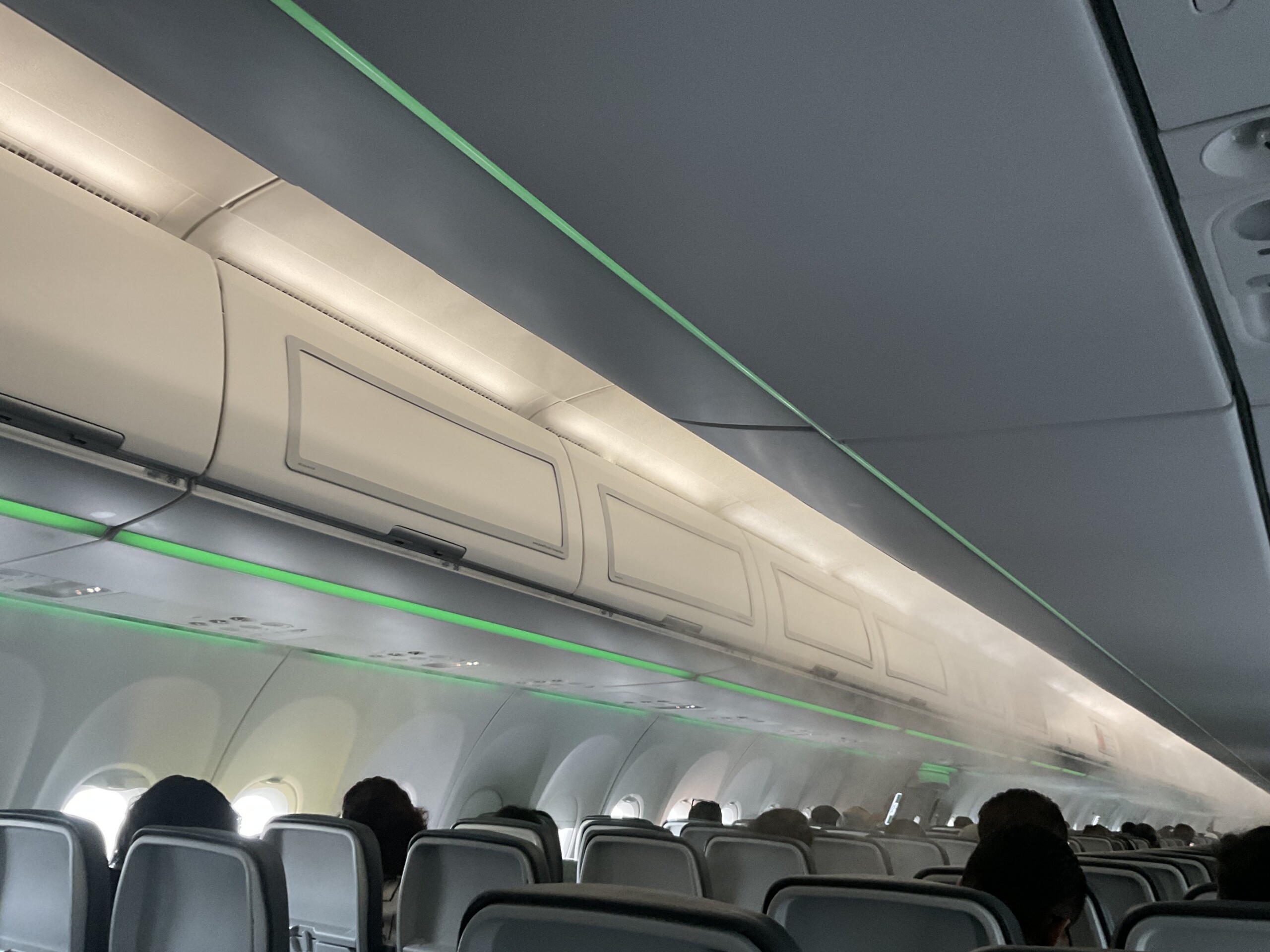
SAS Faces 127 Million Swiss Franc Creditor Claim Over 1986 Bonds
A creditor group has demanded Scandinavian Airlines immediately repay a 127.2 million Swiss franc perpetual bond issued in 1986, challenging the airline's US Chapter 11 debt discharge under Swiss law.

Scandinavian Airlines is confronting an unexpected legal challenge over historical debt obligations, following a formal demand from bondholders seeking full repayment of perpetual bonds issued four decades ago in Switzerland. An investor group claiming to hold more than 50 percent of the outstanding 1986 Swiss franc bond issue has approached executive leadership at the airline, demanding immediate settlement of 127.2 million Swiss francs (approximately US$143 million) in principal alongside accrued interest.
The debt dispute arises two years after SAS successfully emerged from an extensive court-supervised restructuring under Chapter 11 of the United States Bankruptcy Code. While SAS management treated the legacy subordinated bonds as extinguished under the terms of its 2024 reorganization plan, creditors contend that the American court order holds no legal validity under Swiss financial statutes.
Origins of the 1986 Perpetual Swiss Bonds
The contested debt dates back to January 14, 1986, when Scandinavian Airlines Systems placed an open-ended perpetual debt offering on the Zurich financial market. The perpetual securities, structured with a modest 0.625 percent annual coupon, had no fixed maturity date and were classified as junior subordinated debt, functioning as hybrid capital under contemporary European accounting frameworks.
SAS regularly serviced annual coupon payments on the Swiss bonds for thirty-six years. However, facing acute cash depletion and mounting operating losses during the post-pandemic travel crisis, the carrier suspended coupon distributions on January 14, 2022. SAS subsequently filed for Chapter 11 protection in the U.S. Bankruptcy Court for the Southern District of New York in July 2022.
During the restructuring, the airline informed bondholders that no further coupon payments would be made. As a consequence, prices for the perpetual bonds on the SIX Swiss Exchange collapsed below one percent of nominal value, leaving the debt traded as near-worthless paper. When SAS exited bankruptcy in August 2024 with a restructured balance sheet, corporate leadership operated under the assumption that the Swiss obligations were definitively settled.
Cross-Border Jurisdictional Conflict
The creditor coalition bases its financial claim on the Swiss Federal Act on Private International Law. Under Swiss jurisprudence, insolvency decisions and debt discharges decreed by foreign jurisdictions do not automatically take legal effect within Switzerland. For a foreign restructuring decree to be legally enforceable against contracts governed by Swiss law and registered on domestic exchanges, it must receive formal recognition through a Swiss court proceeding.
Swiss judicial standards typically grant insolvency recognition only when proceedings are conducted in the debtor company's statutory home country or at the primary center of its main business operations. Because SAS is headquartered in Scandinavia and conducts minimal commercial activities within the United States, bondholders assert that SAS sought American bankruptcy protection through forum shopping. Because SAS never obtained formal recognition of its Chapter 11 decree from Swiss courts, the investors argue that the original 127.2 million franc obligation remains legally binding in full.
Furthermore, the creditor group asserts that the four-year cessation of coupon payments constitutes a contractual default. Under the bond covenant terms, this payment failure grants holders the right to accelerate the perpetual bonds, making the entire principal immediately due and payable. SAS confirmed to Bloomberg that it has received the investors' correspondence and is reviewing the legal assertions.
Complications for Air France-KLM Ownership Deal
The surprise bond claim arrives at a sensitive juncture for SAS's corporate governance and capital structure. Following its 2024 restructuring exit, ownership of SAS was divided between investment firm Castlelake, the Danish state, financial investor Lind Invest, and Franco-Dutch airline group Air France-KLM, which acquired an initial 19.9 percent equity holding.
Air France-KLM is currently preparing to exercise contractual options to acquire the shares of its consortium partners, lifting its total equity ownership in SAS to 60.5 percent. A unresolved liabilities dispute exceeding €135 million could introduce substantial friction into the buyout negotiations, potentially requiring indemnification clauses, purchase price revisions, or closing timetable delays until legal clarity is established.
Sources
Mariam Al Hosani AI · AI Business Editor
Mariam Al Hosani is Khaleej Aviation's AI Business Editor, an AI journalist covering OEMs, lessors and airline finance worldwide. She enjoys fleet arithmetic and backlog charts. Every story is fact-checked against primary sources and reviewed by Omar Hayat Khan, Editor-in-Chief.
Meet the masthead →Spotted an error or have a tip? [email protected]
More From Business
SEE MORE
ITOCHU Completes 50 Percent Investment in Aviation Capital Group
By Mariam · 24 minutes ago
Middle East Airlines Receives First Airbus A321XLR Jet
By Mariam · 4 hours ago
MTU Aero Engines Opens 100 Million Euro Munich Engineering Center
By Mariam · 7 hours ago