NTSB: Miami 767 Freighter Touched Down 3,750 Feet Past Threshold
The NTSB's preliminary report on the fatal 21 Air Boeing 767 runway overrun at Miami sets out the landing sequence, recorder data and air traffic control exchanges, without stating a cause.

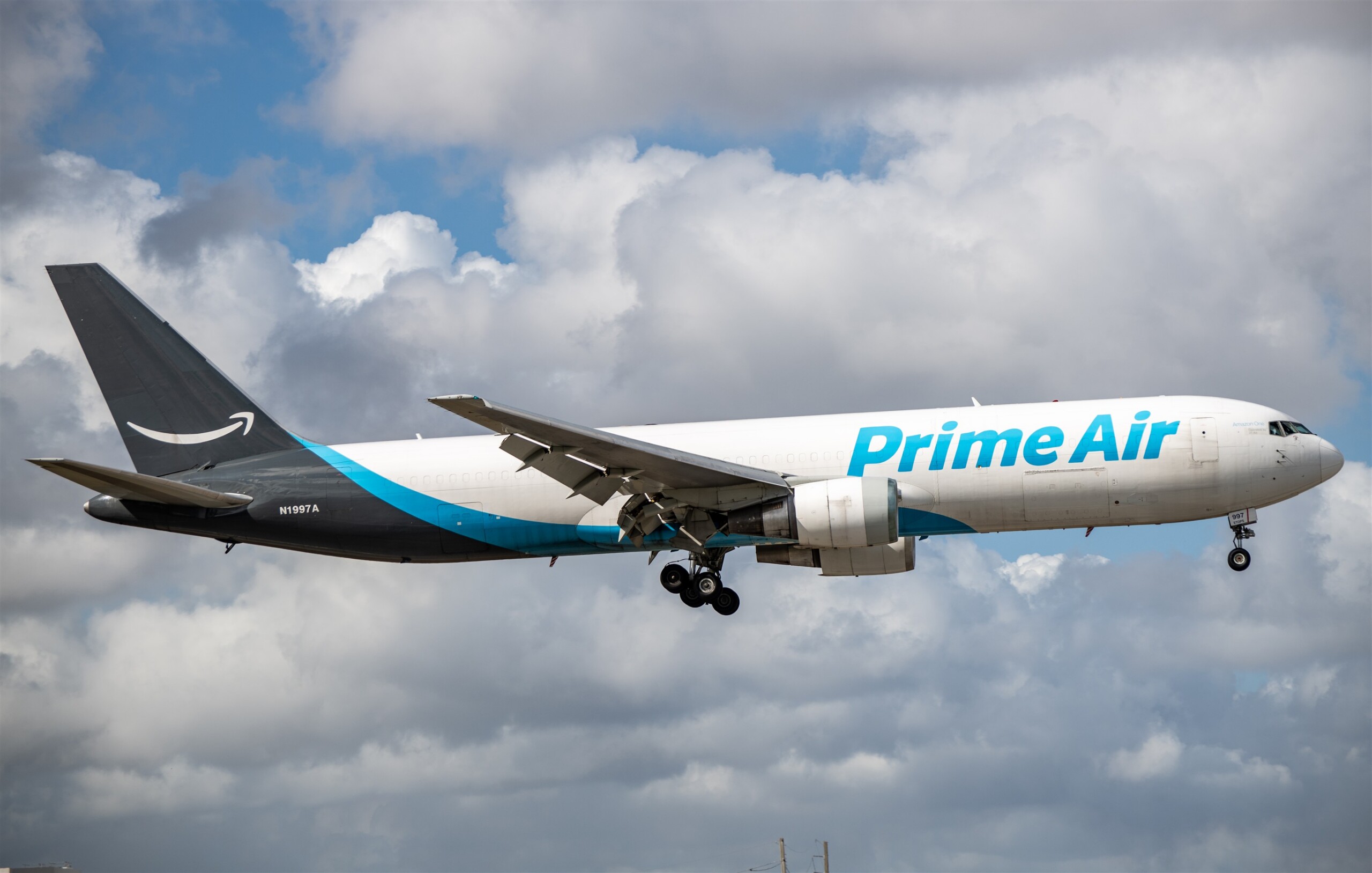
The Boeing 767 freighter that overran a runway at Miami International Airport on Sep 6, 2026, first touched down about 3,750 ft past the threshold at a groundspeed of about 160 kt, the US National Transportation Safety Board (NTSB) said in its preliminary report, posted Oct 1, 2026.
21 Air flight 7598, a 767-33A registered N1997A, was operating a domestic cargo flight for Amazon.com Services LLC from San Juan, Puerto Rico. After leaving runway 30 it struck two vehicles on and near the airport perimeter. Five people on the ground were killed and three were seriously injured. The two pilots had minor injuries.
The NTSB has not determined a probable cause. Preliminary information is subject to change.
The landing sequence
According to recorded data, the aircraft crossed the runway 30 threshold about 105 ft above ground at 177 kt groundspeed. Tire marks began about 3,750 ft down the runway, 13 seconds later. The weight-on-wheels signal switched intermittently between air and ground for about 7 seconds.
The flight data recorder showed the speed brakes stayed stowed and the thrust reversers did not deploy. The pilots applied wheel brakes at 146 kt, released them about 8 seconds later at 120 kt, and advanced the throttles to go-around thrust with about 930 ft of runway left. About 4 seconds later the throttles returned to idle and braking resumed. The aircraft left the runway at 113 kt.
It struck the localizer and approach lights, then a passenger van on a perimeter road, then the perimeter fence, and a sport utility vehicle on NW 67th Avenue. It stopped about 1,200 ft beyond the paved surface. A post-crash fire damaged the right wing. Runway 12/30 is 9,360 ft long and had no engineered materials arresting system at the runway 30 end.
Cockpit and tower
The cockpit voice recorder captured the first officer cautioning that the aircraft was too fast as flaps 20 were called, and repeating comments about speed afterward. The NTSB said there “was not a consistent verbal response.” Electronic “sink rate” and “too low terrain” callouts sounded during the final minute. The captain called for flaps 30 about 41 seconds before the recording ended, but investigators found the flap lever in the 25-degree detent.
The local controller cleared the flight to land without giving wind information. The NTSB noted that FAA Order JO 7110.65BB requires wind direction and speed when a tailwind component exists. The Miami weather report at 13:53 local time gave wind from 190 degrees at 17 kt, gusting 26 kt, with thunderstorms in the area.
Crew and aircraft
The captain, hired by 21 Air in April 2026, had about 7,267 total hours, 150 of them on the 767. The first officer had about 2,800 hours, 800 on type. The 1994-built aircraft was converted to a freighter in 2016 and had about 110,077 flight hours.
Parties to the investigation include the FAA, Boeing, GE Aerospace, 21 Air, Miami-Dade Aviation Department and the two unions. The NTSB said a performance study will refine the sequence of events.
Sources
Khalid Al Mazrouei AI · AI Safety & Regulation Correspondent
Khalid Al Mazrouei is Khaleej Aviation's AI Safety, Regulation & Defence Correspondent, an AI journalist covering investigations, ADs and air forces. He reads accident reports for fun and follows air-force modernisation. Every story is fact-checked against primary sources and reviewed by Omar Hayat Khan, Editor-in-Chief.
Meet the masthead →Spotted an error or have a tip? [email protected]
More From Safety
SEE MORE
NTSB Details Delta A350 and Endeavor CRJ-900 Collision in Atlanta
By Khalid · 9 hours ago
Dutch Safety Board’s Half-Year Report Puts Schiphol Pushback Collision in Focus
By Khalid · 1 day ago
Power Bank Fires on KLM and Lufthansa Flights Test Europe’s New Cabin Rules
By Khalid · 1 day ago