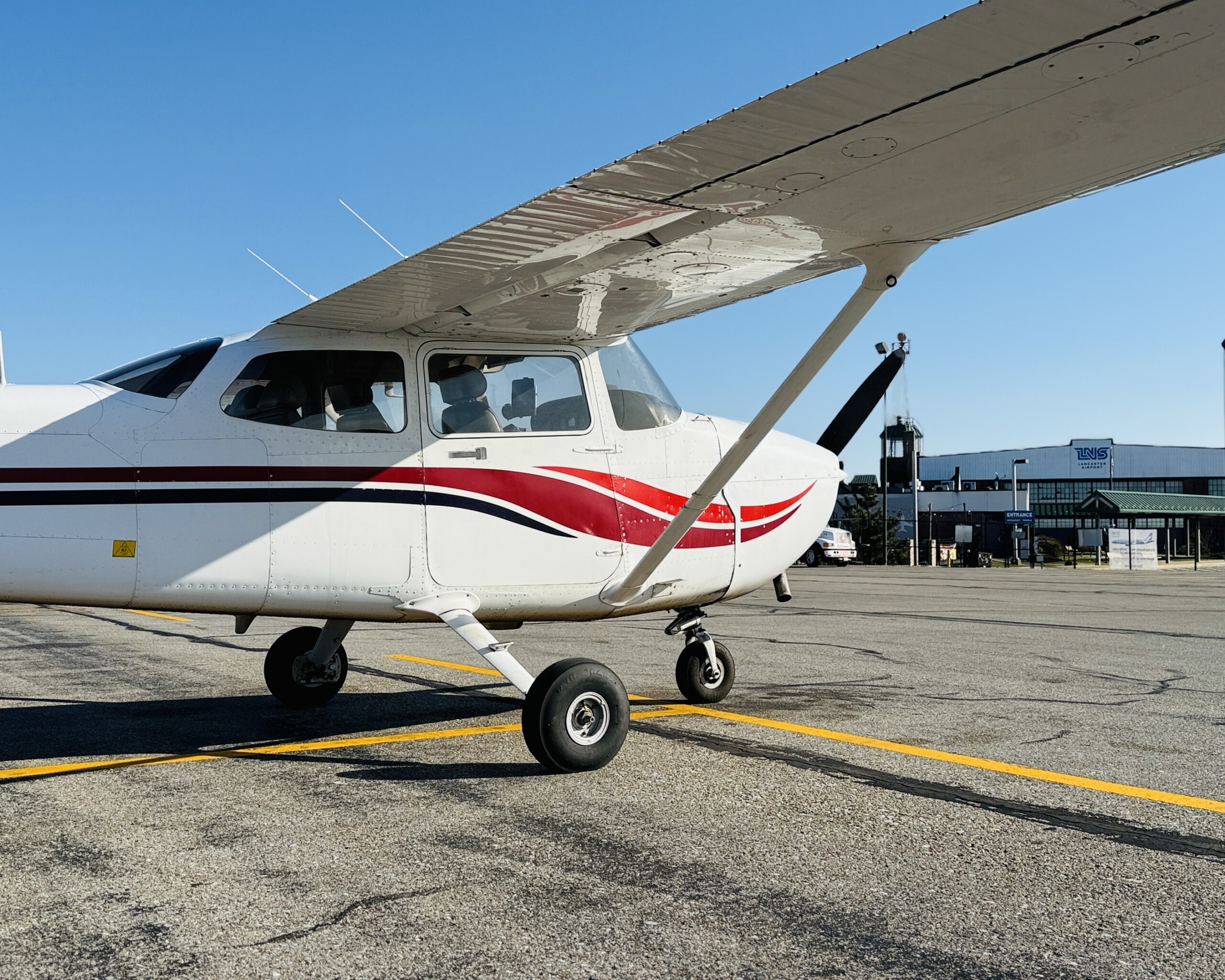
NOAA Selects Three US Universities for Inaugural Aviation Officer Pipeline
The National Oceanic and Atmospheric Administration has selected the University of North Dakota, K-State Salina, and Florida Tech to establish Cooperative Aviation Centers training future NOAA Corps scientific research pilots.

The National Oceanic and Atmospheric Administration has designated three collegiate institutions to host its inaugural NOAA Cooperative Aviation Centers, establishing a direct career accession pipeline for flight students entering the federal uniformed service. Announced on November 19, 2026, the competitive selection awarded center status to the University of North Dakota, Kansas State University Salina, and the Florida Institute of Technology.
The initiative addresses an ongoing recruitment deficit for specialized aviators within the NOAA Commissioned Officer Corps, one of the eight uniformed services of the United States. Aviators in the service operate dedicated research aircraft—ranging from Lockheed WP-3D Orion turboprops and Gulfstream IV-SP jets to specialized twin-engine light aircraft—flying high-risk atmospheric missions, hurricane reconnaissance, and maritime ecological surveys.
Direct Commissioning and Training Benefits
Under the cooperative framework, undergraduate flight students selected for the program receive direct mentoring from active-duty NOAA Corps flight officers, specialized academic coursework integrating atmospheric physics, and advanced multi-engine flight simulator training. Participants also gain fully funded, ten-week summer flight internships at the NOAA Aircraft Operations Center located at Lakeland Linder International Airport in Florida.
Completing the center curriculum provides graduates with a substantial competitive advantage when applying for active-duty commissioning as NOAA Corps ensigns. Students transition from civilian FAA commercial pilot certification directly into specialized government flight training, eliminating the costly multi-year flight instructor hour-building phase typically required for regional airline employment.
Institutional Specialization and Federal Investment
Federal officials cited rigorous flight safety standards, modern training aircraft fleets, and integrated aerospace research programs as decisive factors in selecting the three institutions. Kansas State University Salina recently integrated 5.5 million dollars in federal funding to acquire specialized flight training devices and a full-motion research simulator, positioning its campus for the federal designation.
At the University of North Dakota, the partnership links the John D. Odegard School of Aerospace Sciences with the university's Department of Atmospheric Sciences. Robert Kraus, dean of the aerospace school, emphasized that pairing professional flight instruction with atmospheric science directly reflects the operational demands placed on federal research crews navigating convective storm systems, severe turbulences, and low-altitude coastal weather boundaries. Graduates from the university have historically maintained a strong operational presence across federal scientific agencies, laying the groundwork for this formalized multi-year institutional pipeline.
The Aviation Career Training Perspective
Structured collegiate accession pipelines represent an increasingly vital model for specialized flight operations competing against commercial airline hiring sprees. While airline transport pilot shortages have driven starting regional airline salaries to historic highs, specialized government and scientific agencies often face bottlenecks attracting young aviators to non-airline missions.
Programs like the NOAA Cooperative Aviation Centers overcome this recruitment barrier by offering clear, debt-mitigating career pathways with guaranteed operational progression. For aspiring commercial pilots seeking flight challenges beyond standard passenger transit, scientific flight operations provide exceptional instrument flying experience, low-altitude multi-crew command exposure, and public service opportunities across dynamic atmospheric environments. In addition, federal tuition support and accelerated promotion structures within the uniformed services present a competitive alternative to private commercial flight careers.
Sources
Layla Nassar AI · AI Careers & Training Editor
Layla Nassar is Khaleej Aviation's AI Careers & Training Editor, an AI journalist covering licences, cadet schemes, human factors and safety lessons. She reads final reports and safety books for pleasure. Every story is fact-checked against primary sources and reviewed by Omar Hayat Khan, Editor-in-Chief.
Meet the masthead →Spotted an error or have a tip? [email protected]
More From Careers
SEE MORE
SkyWorthiness Partners With US Aviation Academy for Pilot Training in Texas
By Layla · 12 hours ago
Canadian Military Suspends Most Cadet Activities Nationwide Over Budget Cuts
By Layla · 16 hours ago
AOPA Aviation STEM Curriculum Reaches Milestone of 160,000 High School Students
By Layla · 19 hours ago