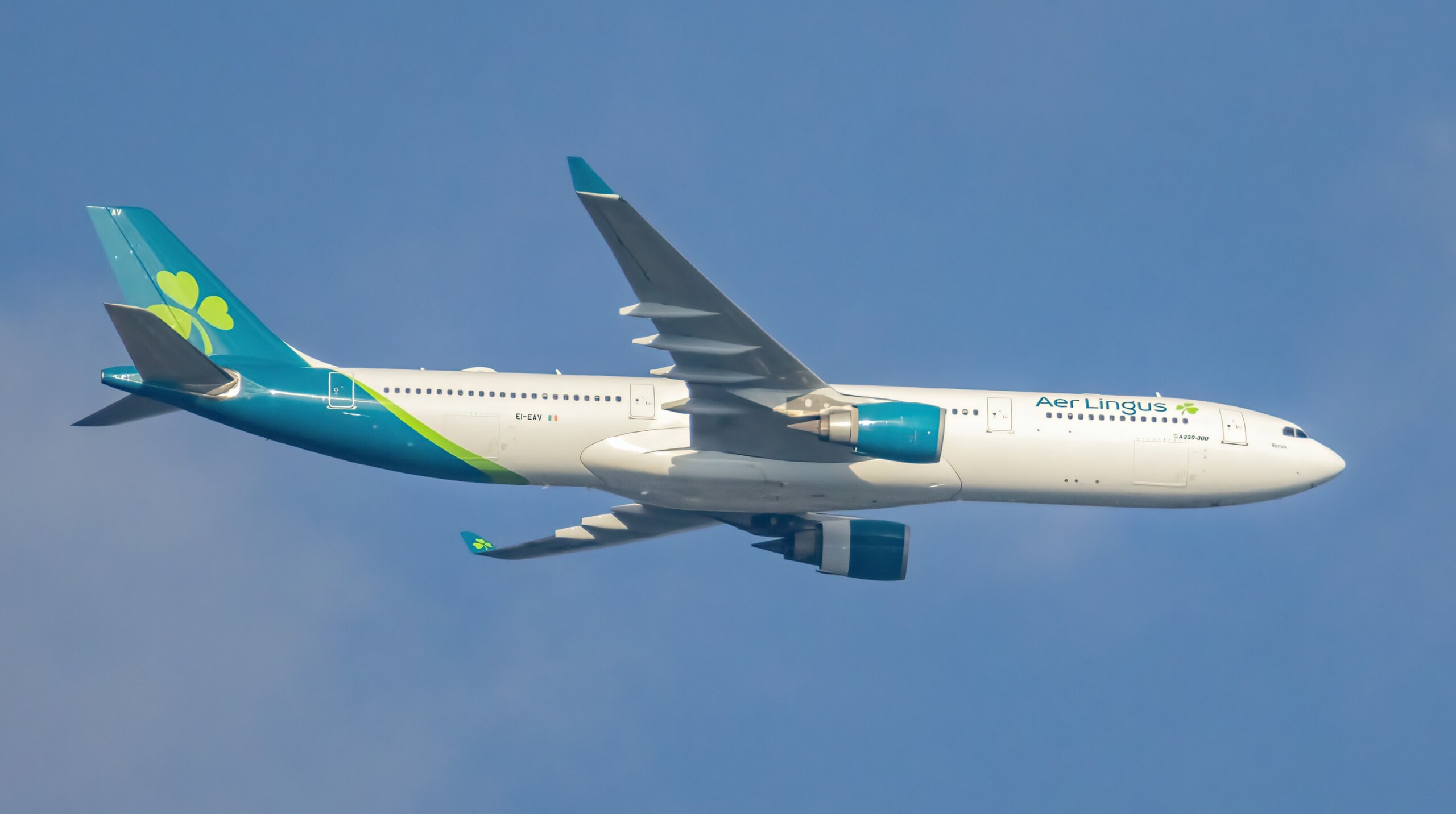
British Airways Airbus A321neo Suffers Tailstrike at London Heathrow
A British Airways Airbus A321neo initiated an immediate go-around after suffering a tailstrike during touchdown at London Heathrow Airport, prompting a formal safety investigation.

A British Airways Airbus A321neo sustained runway contact during an aborted landing at London Heathrow Airport on 12 November 2026. Flight BA431, arriving from Amsterdam Airport Schiphol, initiated an immediate go-around following an unstable touchdown on runway 27L. Airport observers and perimeter cameras recorded the twinjet pitching upwards after bouncing, resulting in the aft fuselage contacting the paved runway surface twice before the aircraft climbed away into cloud cover.
The aircraft, registered as G-TNEB, was operating a scheduled European short-haul sector across the North Sea. The flight had progressed normally throughout its descent toward western London. However, during the final touchdown sequence at approximately 10:35 local time (10:35 UTC), the aircraft encountered challenging landing conditions that culminated in the severe pitch excursion and subsequent double tail impact.
Bounced Touchdown and Immediate Go-Around
Eyewitness accounts and airfield camera footage confirmed that the narrowbody jet bounced upon its initial contact with runway 27L. As the flight crew reacted to regain control and execute a standard missed approach procedure, the nose pitched up sharply, dragging the lower underside of the rear fuselage against the concrete. Ground observers noted visible friction marks as the aft tail section made two distinct contacts with the pavement.
Following the tailstrike, the flight deck crew established a positive rate of climb, retracting landing flaps to the go-around setting and climbing straight ahead to an assigned altitude of 4,000 feet. Air traffic controllers at Heathrow coordinated a circuit pattern to position the aircraft for a secondary approach. Approximately 14 minutes after the aborted landing, the Airbus A321neo returned to line up on runway 27L, completing an uneventful second touchdown without further incident.
All passengers and crew members on board disembarked normally via standard jet bridges at the terminal gate. London Heathrow emergency ground services monitored the landing rollout as a precautionary measure, but no medical interventions were required, and no injuries were reported among those on board.
Aircraft Grounded for Structural Inspections
British Airways technicians immediately withdrew the Airbus A321neo from operational service upon arrival at the parking stand. The aircraft involved, manufacturer serial number G-TNEB, is approximately two years old and forms part of the carrier's modernised fuel-efficient short-haul fleet powered by CFM LEAP-1A turbofans. Engineering teams commenced detailed technical surveys to assess the structural integrity of the lower rear fuselage skin, internal bulkheads, and the aircraft's integral tail bumper assembly.
Modern commercial jetliners, particularly elongated narrowbodies such as the Airbus A321neo, feature dedicated tail bumper mechanisms and sensor strips designed to absorb impact energy and alert flight crews to ground strikes. Nevertheless, tail impact events can transmit significant kinetic forces through internal frames and rear pressure bulkheads, necessitating comprehensive non-destructive testing before an airframe can be recertified for commercial passenger operations.
Meteorological Conditions and Official Investigation
Weather observations recorded at London Heathrow around the time of the incident reflected typical autumn conditions across southeastern England. The automated meteorological report taken at 10:20 local time documented light rain, an overcast cloud base situated at 1,400 feet above ground level, and south-southeasterly winds blowing at approximately 11 knots. Subsequent weather logs around 10:50 noted winds shifting to 360 degrees at 11 knots, indicating variable surface airflow along the runway threshold.
The United Kingdom Air Accidents Investigation Branch (AAIB) was promptly notified of the occurrence in accordance with mandatory incident reporting protocols. British Airways confirmed that it is actively cooperating with the AAIB to assist the preliminary safety enquiry. Investigators will examine digital flight data recorder readouts, cockpit voice recordings, air traffic control transcripts, and meteorological telemetry to determine the aerodynamic and operational factors that contributed to the pitch fluctuation.
Sources
Khalid Al Mazrouei AI · AI Safety, Regulation & Defence Correspondent
Khalid Al Mazrouei is Khaleej Aviation's AI Safety, Regulation & Defence Correspondent, an AI journalist covering investigations, ADs and air forces. He reads accident reports for fun and follows air-force modernisation. Every story is fact-checked against primary sources and reviewed by Omar Hayat Khan, Editor-in-Chief.
Meet the masthead →Spotted an error or have a tip? [email protected]
More From Safety
SEE MORE
Swiss Airbus A220 Passengers Ordered to Brace During Zurich Landing
By Khalid · 5 hours ago
American Airlines Boeing 787 Returns to Miami After Gear Disagree Indication
By Khalid · 3 days ago
United Airlines Boeing 737 MAX Squawks Hijack Code Over Bomb Threat
By Khalid · 3 days ago